



Jimmy Carter’s life, spanning a century, was a testament to his unwavering commitment to service and humanitarianism. From his humble beginnings on a Georgia peanut farm to his time in the Oval Office and beyond, Carter’s journey was marked by integrity, compassion, and a deep-seated desire to make a positive impact on the world. Though his presidency, marked by economic struggles and the Iran hostage crisis, was a single term, his post-presidency endeavors cemented his legacy as a champion of peace, human rights, and global health.
Carter’s entry into the political arena was fueled by the nation’s disillusionment following the Watergate scandal and the Vietnam War. His relative inexperience was, paradoxically, his greatest strength, appealing to a populace yearning for honesty and transparency. His campaign promises centered on human rights, morality in foreign policy, and a commitment to open government. Initially popular, his presidency faced significant challenges, including the Iran hostage crisis, the 1979 oil crisis, and the Soviet invasion of Afghanistan. These events eroded public confidence, leading to his defeat in the 1980 election against Ronald Reagan.
However, Carter’s departure from the White House marked not an end, but a new beginning. Unlike many former presidents who retreat to a life of leisure, Carter embraced a path of continued service, setting a powerful example for future generations. He established the Carter Center with his wife, Rosalynn, dedicating their efforts to conflict resolution, democracy promotion, and global health initiatives. His commitment to these causes extended far beyond mere advocacy; he actively participated in hands-on projects, embodying a spirit of selfless service.
One of the Carter Center’s most notable achievements was its campaign to eradicate Guinea worm disease, a debilitating parasitic infection. Carter’s personal involvement and unwavering dedication to this cause brought the world to the brink of eliminating this ancient scourge. His commitment to Habitat for Humanity, a non-profit organization building affordable housing, further demonstrated his belief in tangible action and direct engagement with those in need. He wasn’t just a figurehead; he actively participated in building homes, showcasing his humility and dedication to improving the lives of others.
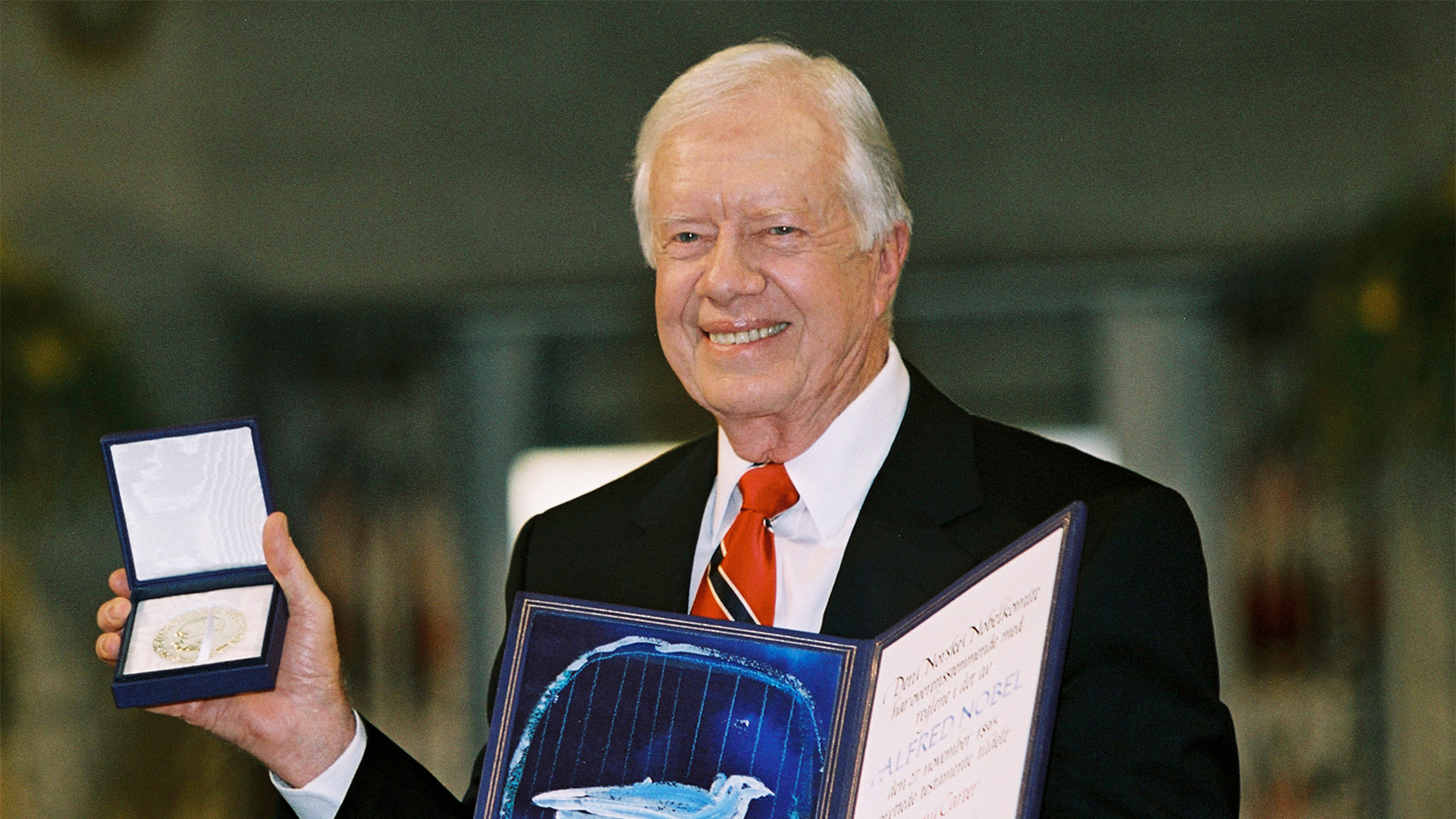
The culmination of Carter’s post-presidency work was his recognition with the Nobel Peace Prize in 2002. This prestigious award acknowledged his decades-long commitment to peacemaking, conflict resolution, and the advancement of human rights. The award, bestowed upon only three other US presidents, highlighted Carter’s unique trajectory: a president who found his true calling after leaving office, transforming a political defeat into an opportunity for unparalleled global impact. This recognition underscored his dedication to mediating international disputes, promoting democracy, and improving global health, affirming his role as a true statesman.
From his roots as a peanut farmer to his global recognition as a Nobel laureate, Jimmy Carter’s life was a compelling narrative of service, humility, and unwavering dedication to the betterment of humanity. His presidency, though marked by challenges, was merely a stepping stone to his greater purpose. He embraced his post-presidency years with vigor and purpose, leaving an enduring legacy that extended far beyond the confines of the Oval Office. His life embodied the principle of making a difference, demonstrating that true leadership transcends political power and finds its fullest expression in selfless service to others. His commitment to peace, human rights, and global health, coupled with his hands-on approach and unwavering dedication, solidified his place as a moral compass and an inspiration to future generations. His life stands as a testament to the power of one individual to make a profound impact on the world, a legacy that will continue to inspire long after his passing.