


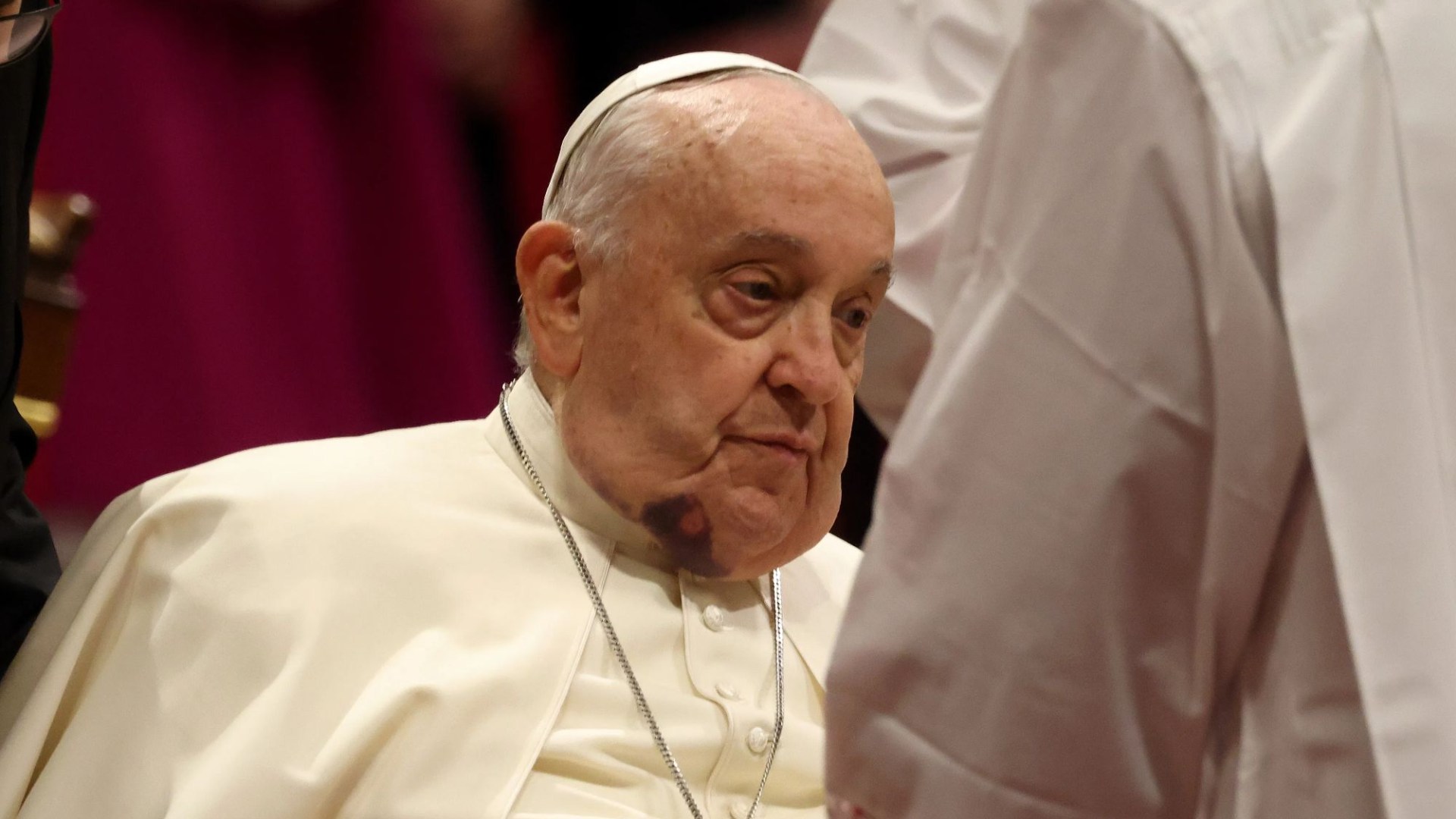
Pope Francis, the 86-year-old leader of the Catholic Church, recently sparked renewed health concerns after appearing with a prominent bruise on his chin and a swollen neck during a Vatican ceremony. The incident, which occurred just days before his 87th birthday, fueled existing anxieties surrounding the pontiff’s well-being, which have been amplified by a series of cancelled events and medical procedures in recent years. While the Vatican attributed the bruise to a minor fall against his bedside table, the incident served as a stark reminder of the Pope’s advancing age and the accumulating health challenges he faces.
The ceremony, held in St. Peter’s Basilica, marked a significant event in the Catholic calendar, with Pope Francis installing 21 new cardinals. This act carries considerable weight, as cardinals are the highest-ranking officials in the Church after the Pope and are responsible for electing his successor. This particular ceremony was notable for the large number of new cardinals appointed, the largest during Francis’ 11-year papacy. The appointments solidify the current Pope’s influence on the future direction of the Church, as he has now appointed a significant majority of the cardinal electors, potentially paving the way for a successor who shares his progressive vision.
The Pope’s recent health scare comes against a backdrop of ongoing medical issues. He has openly discussed his struggles with knee and back pain, which necessitate his use of a wheelchair. Earlier this year, he was hospitalized due to breathing difficulties, a concerning development given his history of lung problems, including the removal of one lung in his youth due to pleurisy. He also underwent a three-hour operation for an abdominal hernia earlier in the year. These health challenges have forced the Pope to cancel several appearances, including a Good Friday service, underscoring the increasing impact of his physical limitations on his papal duties.
The visible bruise and signs of fatigue during the ceremony, despite the Vatican’s explanation, inevitably fueled speculation about the Pope’s overall health and his ability to continue leading the Catholic Church. While he carried out the ceremony without apparent difficulty, the incident served as a visual reminder of his frailty and the potential for further health complications. The cumulative effect of these health concerns has led to increased discussion about the possibility of his retirement, a step taken by his predecessor, Pope Benedict XVI.
The Pope’s advanced age and recurrent health issues have made the question of succession a prominent topic within the Catholic Church and beyond. Each new appointment of cardinals adds another layer to this discussion, as the composition of the electoral college shapes the potential direction of the Church after Pope Francis. His focus on appointing cardinals who align with his progressive views suggests a desire to ensure the continuity of his vision, even after he is no longer at the helm.
The incident of the bruise, while seemingly minor, serves as a focal point for broader concerns about the Pope’s health and the future of the Catholic Church. It underscores the challenges of leading a global religious institution while managing the limitations imposed by age and illness. The Pope’s resilience and determination to continue his duties despite these challenges are evident, but the ongoing health concerns raise questions about the long-term sustainability of his papacy and the potential implications for the 1.3 billion Catholics worldwide.