



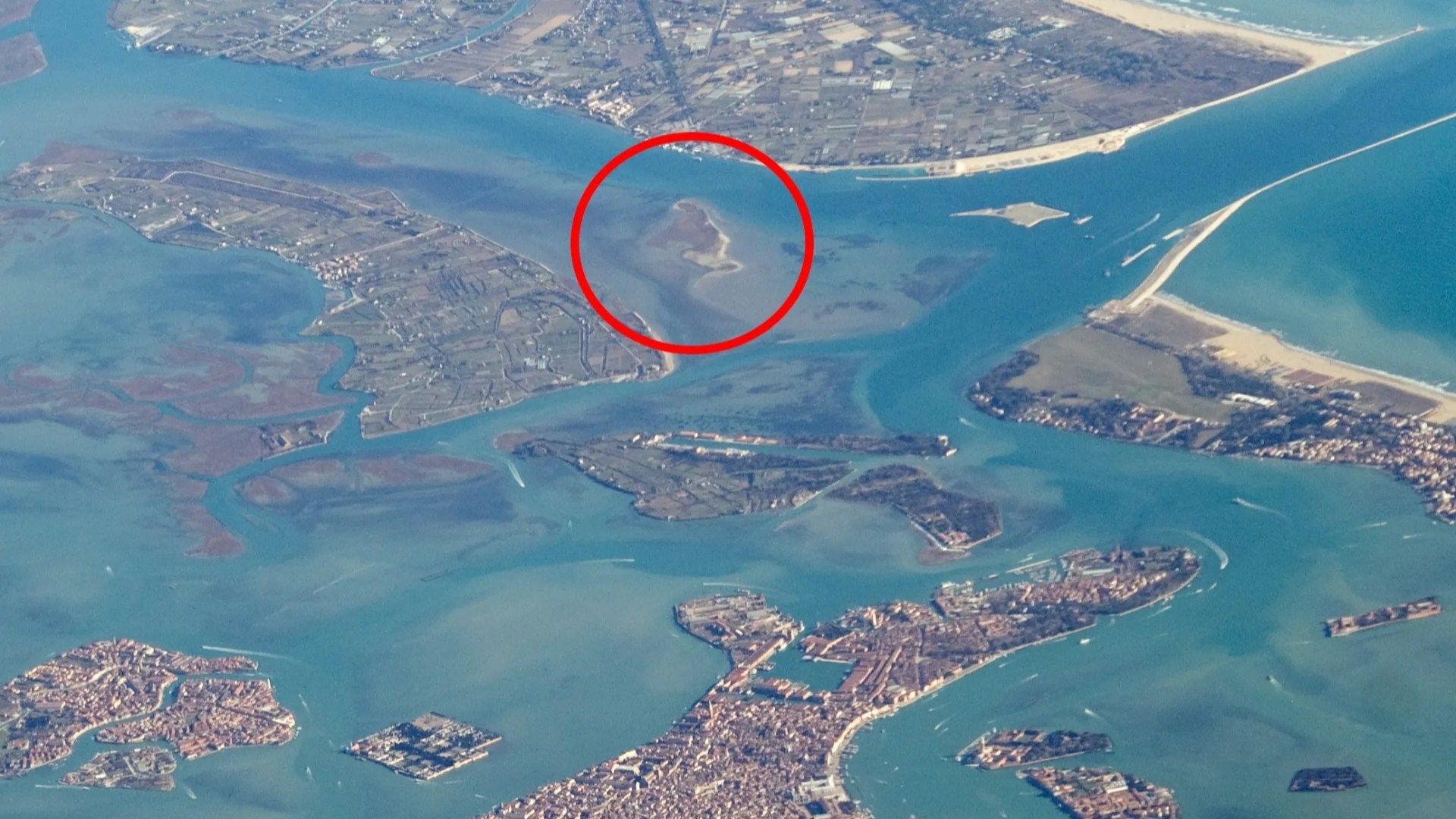
A nascent island, christened Bacan, has materialized near Venice, Italy, offering a tranquil sanctuary year-round for sunbathers seeking respite from the city’s teeming crowds. This small landmass, situated near the entrance of the Venetian lagoon, previously exhibited a fleeting existence, emerging each summer only to be swept away by the relentless winter storms and surging tides. However, a transformative shift has occurred since 2020, solidifying Bacan’s presence as a permanent fixture in the lagoon’s landscape. This permanence is attributed to Venice’s newly implemented flood defense system, Mose, which has shielded the island from the erosive forces that once dictated its ephemeral nature.
For years, Venetians have sought solace on Bacan during the summer months, basking in the warm embrace of its sands and the gentle lapping of its shallow waters. The island provided a secluded haven, a stark contrast to the bustling city overrun by tourists. Now, with its newfound permanence, this idyllic escape is accessible to Venetians throughout the year. Measuring a modest 250 meters in length and a mere 10 meters in width, Bacan owes its existence to the gradual accumulation of silt deposited by the lagoon’s currents each spring. Since the cessation of its cyclical disappearance, the island has witnessed a remarkable flourishing of life.
A diverse array of flora has taken root on Bacan’s sandy expanse, including samphire, rushes, and the indigenous tamarisk trees. The intricate network of roots woven by these plants strengthens the island’s structure, bolstering its resilience against the ceaseless push and pull of the tides. This burgeoning ecosystem also supports a thriving population of shellfish, adding another layer of richness to the island’s biodiversity. One engineer involved in the Mose project, Giovanni Cecconi, recounted anecdotes of friends collecting substantial quantities of razor clams from the island, a testament to its burgeoning ecological wealth.
The pivotal factor in Bacan’s transformation, according to Cecconi, is the Mose flood defense system. He elucidates how the open barrier accelerates the flow of water into the lagoon, carrying with it a greater volume of sand that contributes to the island’s sustenance. Furthermore, the barrier’s ability to rise during winter effectively shields Bacan from the destructive high waters that previously eroded its fragile form. Implemented in 2020, the Mose system comprises three mobile gates positioned at the lagoon’s entrances, capable of being raised during high tide to safeguard the bay. The correlation between the system’s implementation and Bacan’s continued existence above water has led many to attribute the island’s permanence to Mose.
However, alternative perspectives exist within the scientific community. Andrea D’Alpaos, a hydrologist from Padua University, counters that the raised Mose barriers impede the influx of silt and sand, a process crucial for the replenishment of salt marshes like Bacan. D’Alpaos emphasizes the significant role of storm surges in the growth and maintenance of these marshes, stating that approximately 70% of their growth is dependent on these surges. He further underscores the vital role salt marshes play in combating climate change due to their remarkable carbon absorption capacity, which is 30 times greater than that of forests. D’Alpaos also highlights the long history of Bacan’s formation, predating the implementation of Mose, suggesting that the flood defense system is likely just one piece of a more intricate puzzle.
The city of Venice has long grappled with the overwhelming influx of tourists, numbering around 30 million annually. This challenge has necessitated the implementation of measures such as a day-trip tax and restrictions on group sizes to mitigate the strain on the city’s resources. Italian tourism boards have also encouraged visitors to explore the broader lagoon area, aiming to alleviate the pressure on the main city. However, the Venetians who cherish Bacan’s tranquil atmosphere will undoubtedly hope to preserve the island’s serenity, shielding it from the overwhelming tide of tourism that threatens to engulf Venice itself. The delicate balance between preserving the ecological integrity of this newfound island and managing the ever-increasing influx of tourists presents a complex challenge for the city of Venice.