



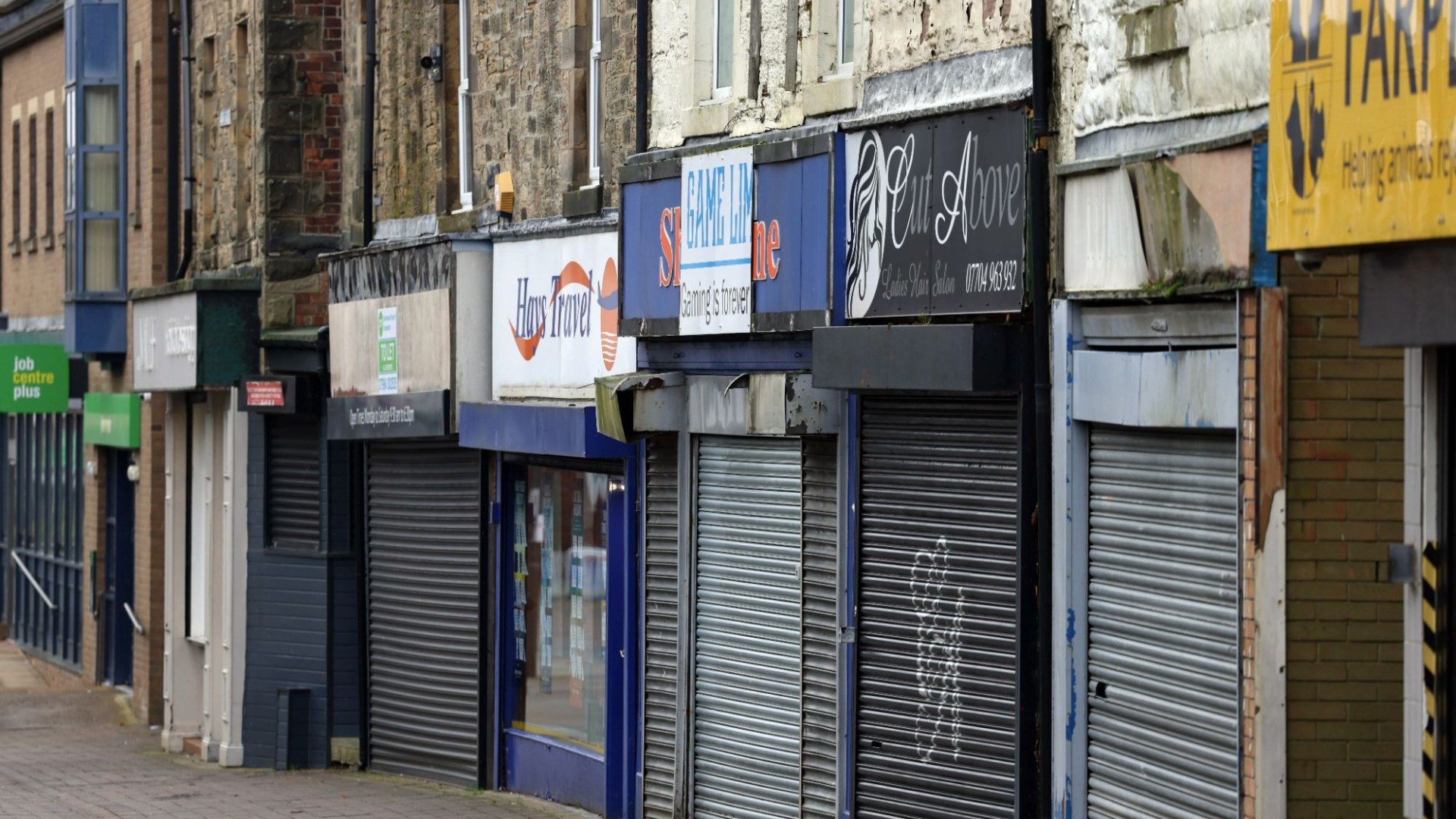
Stanley, a former mining town in County Durham, has recently been thrust into the spotlight, not for its industrial heritage, but for its unfortunate ranking as the seventh ugliest town in Britain according to a Telegraph survey. This disheartening label, based on a scoring system assessing factors such as shop fronts, historical architecture, traffic levels, litter, views, and greenery, has ignited a debate among residents and observers about the true state of the town. While the survey acknowledged Stanley’s appealing natural surroundings, awarding decent scores for greenery and views, it criticized the town’s encirclement by roads and roundabouts, creating a sense of being besieged. The core issue, according to the survey, lies in the dilapidated state of Stanley’s Front Street, the heart of the town, which received a particularly low score for its shop fronts, many of which are boarded up, concealed by metal shutters, or simply left to decay. This visual blight, coupled with a perceived lack of historical architectural significance, ultimately contributed to Stanley’s low overall ranking.
The survey’s findings paint a stark picture of a town struggling to maintain its economic vitality and aesthetic appeal. While the outskirts have benefited from some recent investment attracting chain stores like Starbucks, McDonald’s, and Aldi, this development seems to have bypassed the town centre, leaving the high street neglected and struggling. The stark contrast between the relative prosperity of the periphery and the decay of the centre exemplifies the challenges facing many post-industrial towns across Britain. The lack of investment in the town centre has led to a decline in the retail landscape, with many traditional shops closing down, leaving a void filled primarily by charity shops, nail salons, and barbers. This shift in the retail landscape has not only impacted the visual appeal of the high street but also the diversity and vibrancy of the local economy.
However, the survey’s assessment has been met with mixed reactions from Stanley residents. Many disagree with the “ugly” label, emphasizing the town’s strong community spirit, the presence of essential services like the library and the regular market, and the readily accessible beautiful surrounding countryside. Long-term residents express fondness for their town, highlighting the friendly atmosphere and the convenience of local amenities. They acknowledge the decline of the high street but place more value on the social connections and practicalities of living in Stanley. This sentiment reflects a deeper attachment to place that transcends mere aesthetics, emphasizing the social fabric and everyday lived experience of the community.
While some residents downplay the survey’s conclusions, others acknowledge the need for regeneration and investment. They recognize the decline of the high street, the closure of businesses, and the lack of appealing spaces to encourage social interaction. The once-vibrant Saturday market is a shadow of its former self, and the closure of banks and other essential services further contributes to the sense of decline. These residents argue for targeted investment to revitalize the town centre, create more attractive public spaces, and support local businesses. They envision a Stanley where the high street is once again a thriving hub of activity, offering a diverse range of shops, cafes, and community spaces.
Market traders and other local business owners share concerns about the lack of investment and the dilapidated state of the town centre. They describe Stanley as “the forgotten town,” highlighting the stark contrast between the investment on the outskirts and the neglect of the high street. The long-term vacancy of a prominent school building on the high street serves as a stark reminder of the lack of development and the missed opportunities for regeneration. They stress the urgent need for intervention to revitalize the area, attract new businesses, and restore a sense of pride in the town centre. The loyalty of existing customers is appreciated, but they fear that without significant investment, the decline will continue.
The story of Stanley reflects a broader narrative of post-industrial decline and the challenges facing many towns across Britain. While the survey’s label of “ugly” may seem harsh, it has sparked a vital conversation about the future of the town. Residents and business owners alike recognize the need for change and are calling for investment and regeneration to revitalize the high street, preserve the town’s character, and create a more vibrant and appealing community for future generations. The juxtaposition of the survey’s negative assessment with the affection expressed by many residents highlights the complex relationship between a town’s physical appearance and the lived experiences of its community. The challenge for Stanley, and indeed for many other towns facing similar challenges, is to find a path towards revitalization that respects both the physical environment and the social fabric of the community.