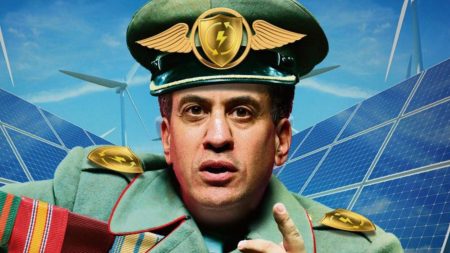




Ed Miliband, the UK’s Shadow Energy Secretary, ignited a heated debate with his assertion that the pursuit of Net Zero emissions would logically lead to lower energy bills. He reiterated his previous pledge to save consumers £300 through the government’s green energy initiatives, emphasizing that the steps taken so far, including the commitment to decarbonize the electricity grid by 2030, represent merely the initial phase of a broader transition. This statement came as the government prepares to unveil an updated plan to meet its carbon budget targets, which impose limits on the total amount of greenhouse gases the country can emit. Miliband also expressed his support for mandating solar panels on all new homes, hinting at future policy developments in this area.
Miliband’s optimistic outlook on the impact of Net Zero policies on energy costs was met with sharp criticism from the Conservative Party. They argued that the rapid push towards these targets would inevitably affect various aspects of people’s lives, including their vehicles, heating systems, and, most significantly, their energy bills. Shadow Energy Secretary Claire Coutinho accused Miliband of broken promises, highlighting the rising energy costs faced by consumers, particularly pensioners, during the winter months. She further condemned his approach, claiming it would impoverish the nation, drive industries abroad, and burden taxpayers with exorbitant costs. Coutinho also questioned the efficacy of the UK’s efforts, emphasizing the country’s relatively small contribution to global emissions and suggesting that it would become a cautionary tale rather than a role model for the rest of the world.
The core of the disagreement revolves around the perceived trade-offs between achieving ambitious climate targets and managing the economic impact on consumers. Miliband’s argument rests on the premise that transitioning to cleaner energy sources will ultimately reduce reliance on volatile fossil fuels, leading to greater energy independence and price stability. He likely envisions a future where renewable energy technologies, coupled with improved energy efficiency measures, drive down the cost of electricity and heating. The £300 savings he promised likely stem from anticipated reductions in household energy consumption and the shift away from expensive fossil fuels.
The Conservative Party, on the other hand, expresses concerns about the upfront costs associated with this transition. They argue that the rapid implementation of Net Zero policies will necessitate significant investments in new infrastructure, renewable energy technologies, and energy efficiency upgrades. These costs could, in the short term, translate into higher energy bills and increased financial burdens on consumers. They also point to the potential disruption to existing industries reliant on fossil fuels and the economic consequences of shifting away from these sectors.
The debate over the economic implications of Net Zero policies is a complex one, involving various factors and uncertainties. The cost of renewable energy technologies has been declining rapidly, and advancements in energy storage and grid management are making renewable energy integration more feasible. However, the scale and pace of the transition required to meet ambitious climate targets pose significant challenges. The upfront investments needed to upgrade infrastructure and deploy new technologies can be substantial, and the transition may also lead to job losses in some sectors while creating new opportunities in others.
Furthermore, the distributional impacts of Net Zero policies are a key concern. While some households may benefit from lower energy bills and improved energy efficiency, others may face increased costs, particularly those reliant on fossil fuel-based heating systems or living in poorly insulated homes. Policymakers must carefully consider these distributional effects and implement measures to mitigate the impact on vulnerable households. This could involve targeted financial assistance, energy efficiency programs, and support for retraining and reskilling in affected industries. Ultimately, the success of the transition to Net Zero will depend on striking a balance between ambitious climate action and managing the economic and social implications for all segments of society.