



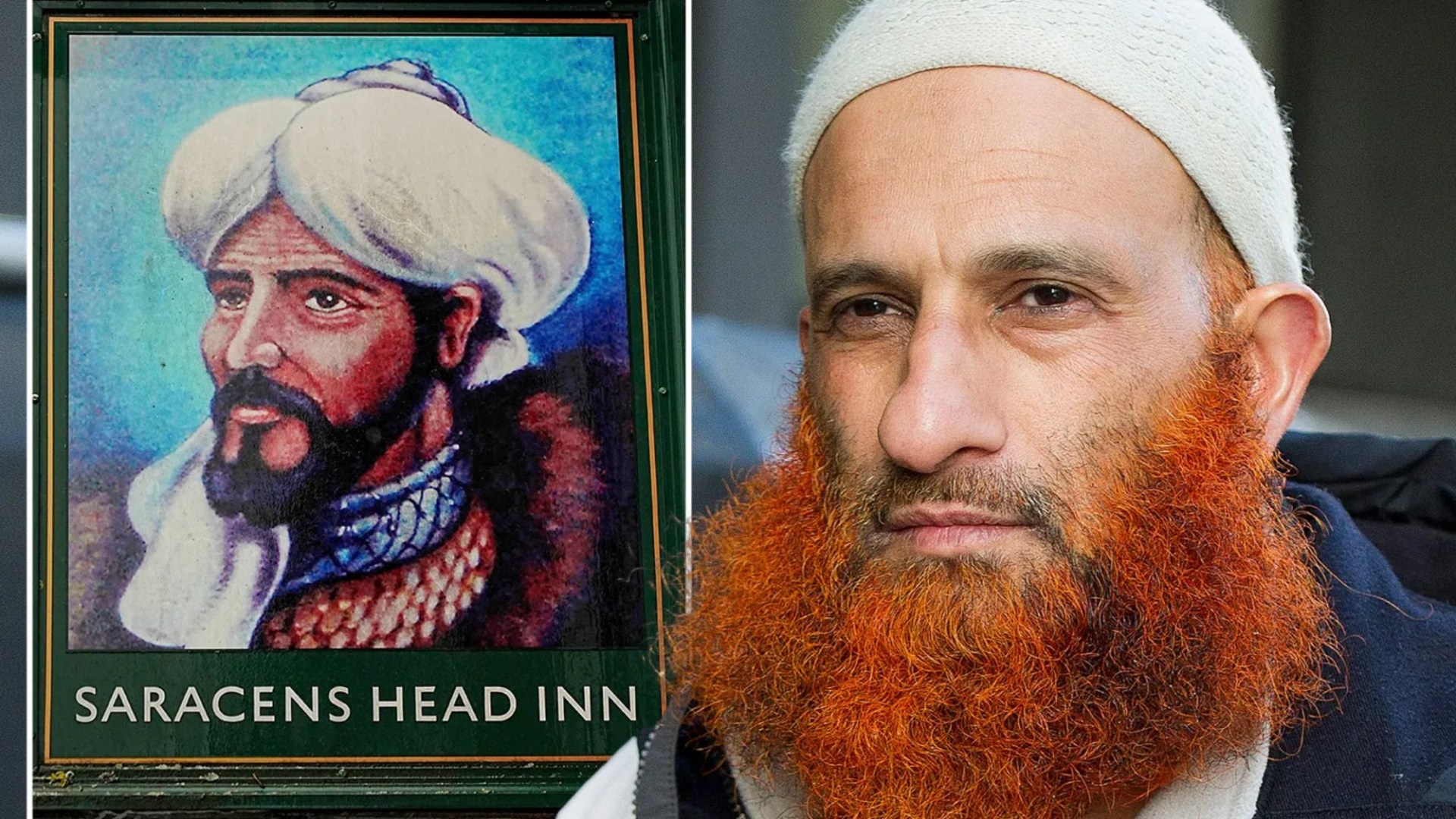
The Saracen’s Head, a historical pub name echoing the Crusades, has found itself embroiled in a contemporary controversy, sparking a united front among establishments bearing the moniker. Khalid Baqa, a 60-year-old man previously imprisoned for preparing jihadi propaganda, has launched legal action against The Saracen’s Head Inn in Amersham, Buckinghamshire, demanding £1,850 in damages. Baqa alleges that the pub’s sign, depicting a bearded man in a turban, is offensive, incites violence, and instilled fear in him. This claim has been met with strong opposition from other Saracen’s Head pubs across the country, who view it as an absurd attempt to manipulate history and tradition.
Brian Walker, owner of a Saracen’s Head in Skegness, Lincolnshire, has condemned Baqa’s lawsuit, labeling it an example of pandering to minorities and encouraging resistance against such demands. He views the lawsuit as opportunistic and believes no Saracen’s Head establishment should concede to Baqa’s claims. Similarly, Andrei Slipzenko, who runs a Saracen’s Head in Newton Abbot, Devon, expressed outrage, describing the lawsuit as a disgrace and an attack on centuries-old traditions. He emphasized the historical significance of the name and sign, expressing concern over the potential erosion of established cultural elements.
Robbie Hayes, the 52-year-old landlord of the targeted Amersham pub, welcomed the support from other Saracen’s Head establishments, calling for a coalition of pubs to stand against what he perceives as baseless claims. He believes a collective front is necessary to protect the historical integrity of their establishments and resist attempts to rewrite history based on individual sensitivities. This shared sentiment reflects a broader concern about the potential implications of such lawsuits for historical pubs and businesses across the country.
The controversy surrounding the Saracen’s Head pubs highlights the complex intersection of history, cultural sensitivity, and freedom of expression. While some argue that the imagery associated with the Crusades may be offensive to certain groups, others maintain that it represents a significant historical period and should not be erased or altered based on individual interpretations. The debate raises questions about how to balance respecting diverse perspectives while preserving historical context and preventing the suppression of established traditions.
The legal action initiated by Baqa, a convicted terrorist, adds another layer of complexity to the situation. His background and previous conviction for disseminating extremist material inevitably influence the public perception of his lawsuit. Some view his claim as disingenuous, given his own history of promoting violence and intolerance. Others argue that his past actions should not invalidate his right to express offense and seek legal redress. This nuanced aspect of the case further fuels the ongoing debate about the legitimacy of Baqa’s claims and the appropriate response from the Saracen’s Head pubs.
The case of the Saracen’s Head pubs serves as a microcosm of a larger societal struggle to reconcile historical narratives with contemporary sensitivities. As societies become increasingly diverse and aware of historical injustices, the interpretation and representation of the past become subjects of intense scrutiny. The challenge lies in finding a way to acknowledge the complexities of history, address legitimate concerns about offensive imagery, and preserve cultural heritage without succumbing to revisionist pressures or stifling freedom of expression. The outcome of this particular legal battle could have significant implications for how similar disputes are handled in the future, shaping the ongoing dialogue about history, identity, and the preservation of cultural traditions.