



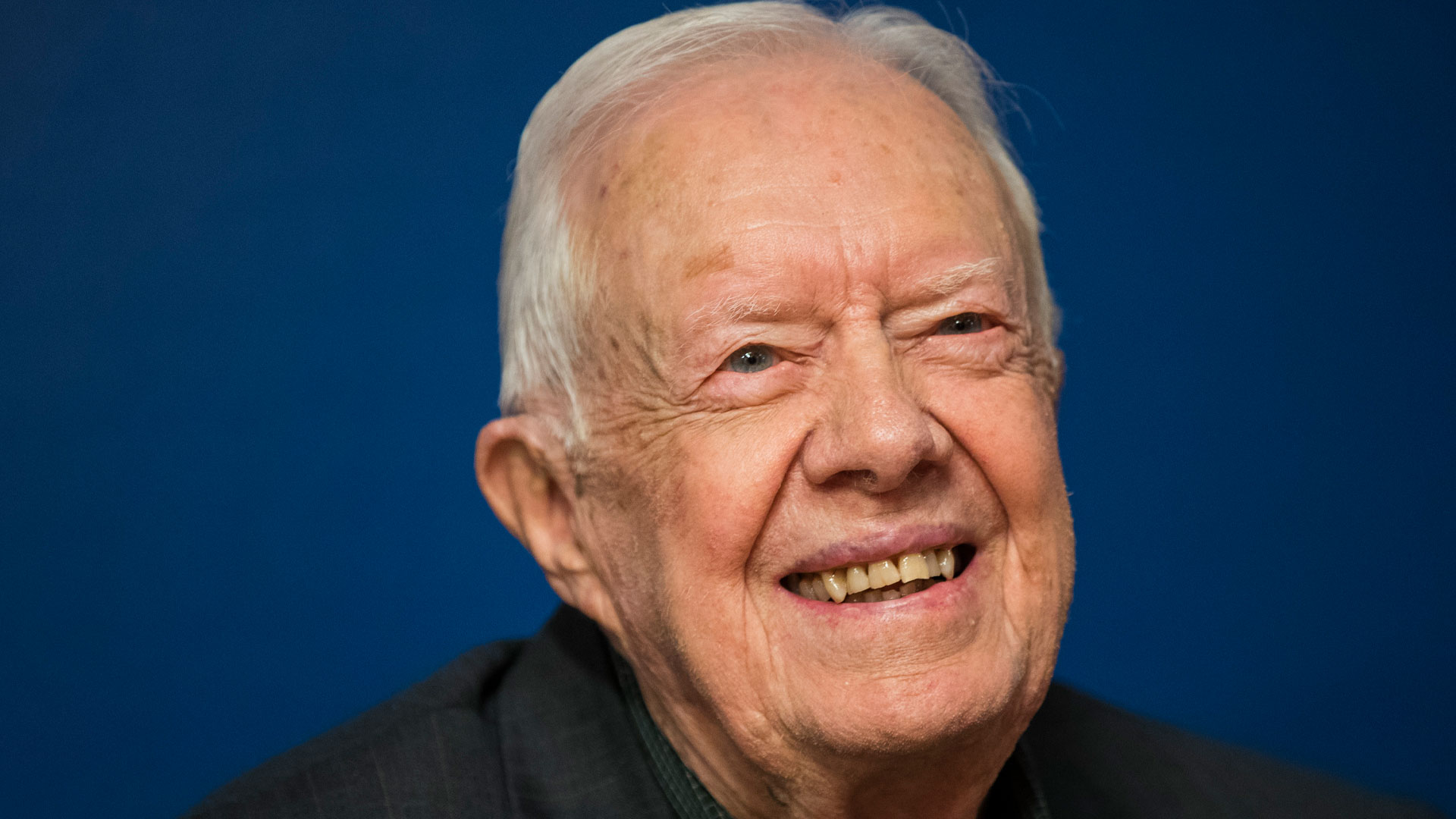
James Earl “Jimmy” Carter Jr., the 39th President of the United States, lived a life deeply intertwined with public service, both during and after his presidency. Born in Plains, Georgia, on October 1, 1924, into a family of peanut farmers, Carter’s early life was shaped by the rural South and its prevailing social norms. After graduating from the United States Naval Academy in 1946, he served in the US Navy’s submarine program. Upon his father’s death, Carter returned to Plains to manage the family’s peanut business. This experience, coupled with the burgeoning civil rights movement, fueled his growing opposition to racial segregation and sparked his interest in politics. He entered the Georgia political arena, serving as a state senator from 1963 to 1967 and then as governor from 1971 to 1975. His gubernatorial inaugural address signaled his commitment to racial equality, declaring that the “time of racial discrimination is over.” This commitment to justice and equality would become a hallmark of his presidency and his post-presidential life.
Carter’s single term as president, from 1977 to 1981, was marked by both successes and challenges. He faced a complex economic landscape, including high inflation and an energy crisis. On the international front, he brokered the historic Camp David Accords between Israel and Egypt, a landmark achievement in the pursuit of peace in the Middle East. His administration also emphasized human rights in foreign policy, a stance that sometimes led to tensions with other nations. Despite not securing a second term, Carter’s post-presidency would prove to be even more impactful in many ways. Returning to his modest two-bedroom home in Plains, he embarked on a remarkable journey of humanitarian work and global advocacy.
Carter’s post-presidential life was defined by his tireless work with the Carter Center, a non-profit organization he co-founded with his wife, Rosalynn. The Center focused on promoting peace, democracy, and human rights around the world, tackling issues such as disease eradication, election monitoring, and conflict resolution. His dedication to these causes earned him the Nobel Peace Prize in 2002, a testament to his unwavering commitment to making the world a better place. He remained active in public life, offering his insights on current events and advocating for peace and justice well into his nineties.
Rosalynn Carter, born on August 18, 1927, was a constant presence and a powerful force in Jimmy Carter’s life. Their relationship, spanning over 75 years, began with a date in 1945 while he was at the Naval Academy. Their shared commitment to service and social justice solidified their partnership. As First Lady, Rosalynn played an active role in the Carter administration, attending Cabinet meetings, advising her husband on policy, and serving as an envoy abroad. She also championed mental health awareness, a cause she continued to advocate for through the Carter Center after leaving the White House. Together, Jimmy and Rosalynn Carter formed a formidable team, dedicated to making a positive impact on the world.
The Carters’ partnership extended beyond the political sphere. They raised four children together: John William “Jack”, James Earl “Chip” III, Donnel Jeffrey “Jeff”, and Amy Lynn. Despite the demands of public life, they maintained a strong family bond. Anecdotes about their life together, like purchasing their first television and becoming New York Yankees fans, reveal a down-to-earth couple who valued simple pleasures and maintained a strong, supportive relationship. Their shared commitment to service and their enduring partnership serve as an inspiring example of a life dedicated to making a difference.
Jimmy Carter’s health declined in his later years. He battled melanoma that spread to his liver and brain, a diagnosis he publicly announced in 2015. Despite the gravity of his illness, he responded well to treatment and announced that he was cancer-free later that year. However, in 2019, his health challenges resurfaced. After a series of falls and subsequent health issues, he entered hospice care in February 2023, choosing to spend his final days at home in Plains, Georgia, surrounded by his family. He passed away peacefully on December 29, 2024, at the age of 100. His legacy as a president, humanitarian, and advocate for peace and justice continues to inspire generations. His life, from his humble beginnings in rural Georgia to his time in the White House and his decades of service through the Carter Center, is a testament to the power of empathy, integrity, and a steadfast commitment to making the world a better place.