



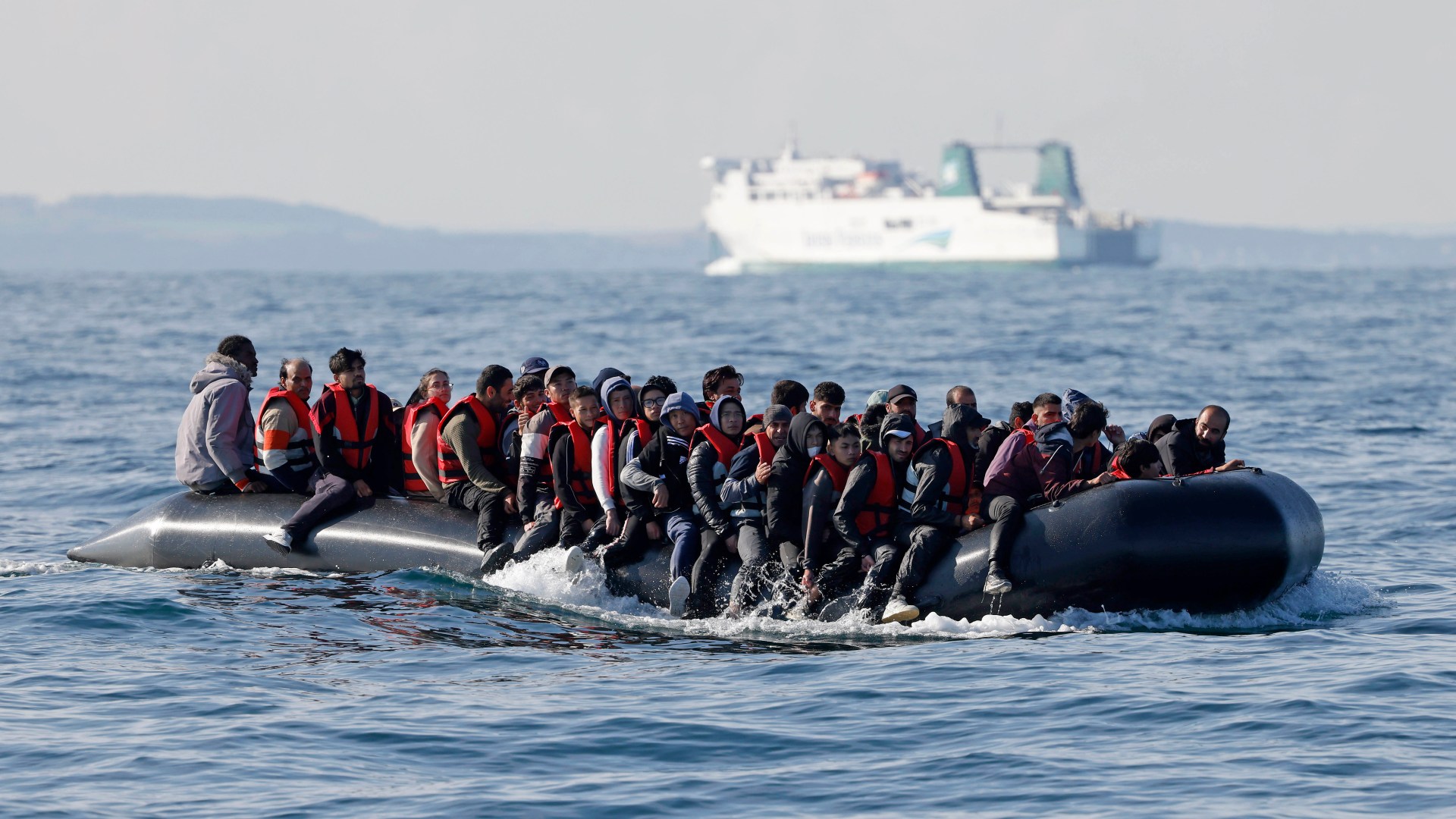
The UK’s small boats crisis, characterized by the increasing number of migrants crossing the English Channel in small vessels, remains a pressing issue with no clear resolution in sight. Home Secretary Yvette Cooper has acknowledged the severity of the situation, with over 35,000 arrivals recorded this year, a figure she admits is “far too high.” However, she has refrained from setting a specific timeline for resolving the crisis, opting instead for a “step-by-step” approach. Cooper argues that previous administrations have relied on “grand promises” without concrete plans, and she intends to prioritize effective action over symbolic pronouncements. Her strategy focuses on strengthening returns agreements with other countries and enhancing law enforcement efforts to curb illegal crossings. While declining to set a numerical target, Cooper insists that addressing migration remains a top priority for the government.
Cooper’s approach contrasts with the demands from the opposition. Shadow Home Secretary Chris Philp has criticized the lack of a specific timetable, emphasizing the need for a strong deterrent to discourage migrants from attempting the perilous Channel crossing. He argues that law enforcement alone is insufficient and advocates for measures that create meaningful consequences for those engaging in illegal migration. Philp cites the Australian model, where offshore processing centers, similar to the previously proposed Rwanda scheme, proved effective in stemming the flow of migrant boats from Indonesia. This highlights a key point of contention between the government and the opposition regarding the most effective strategies for tackling the crisis.
The debate over the Rwanda scheme, a controversial plan devised by the previous Conservative government to send asylum seekers to Rwanda for processing, adds further complexity to the issue. While the Labour government has abandoned this specific scheme, Cooper has not definitively ruled out the possibility of processing asylum claims in a third country, leaving open the potential for future exploration of similar arrangements. The government’s position suggests a willingness to consider alternative solutions while navigating the legal and ethical complexities associated with offshore processing. The Rwanda scheme’s abandonment, coupled with the lack of a concrete alternative, leaves a void in the government’s immediate strategy for deterring future crossings.
The challenge of managing undocumented migration extends beyond the immediate crisis in the Channel. Home Office Minister Angela Eagle has admitted that the government lacks precise data on the number of undocumented migrants currently residing within the UK. This admission underscores the broader difficulties in effectively controlling and monitoring migration flows. The absence of reliable figures makes it difficult to assess the full scale of the challenge and to develop targeted policies to address the various aspects of undocumented migration, including potential strains on public services and the risk of exploitation.
Cooper’s “step-by-step” approach, while emphasizing practical action over aspirational targets, faces significant challenges. The absence of a clear timeline raises concerns about accountability and the potential for prolonged inaction. The government needs to articulate specific benchmarks and milestones to demonstrate progress and maintain public confidence. Moreover, the rejection of the Rwanda scheme without a readily available alternative leaves a strategic gap in the government’s efforts to deter future crossings. Developing a comprehensive and effective deterrent remains a critical challenge.
Furthermore, the lack of data on undocumented migrants within the UK presents a significant obstacle to comprehensive migration management. The government must prioritize efforts to gather accurate information, enabling a more informed and targeted response. Addressing this data gap is essential for developing effective policies that address the broader implications of undocumented migration, including its impact on public services and the vulnerability of undocumented individuals to exploitation. Ultimately, the government’s success in tackling the small boats crisis will hinge on its ability to develop a comprehensive strategy that encompasses both immediate action and long-term solutions, while addressing the complex realities of undocumented migration.