


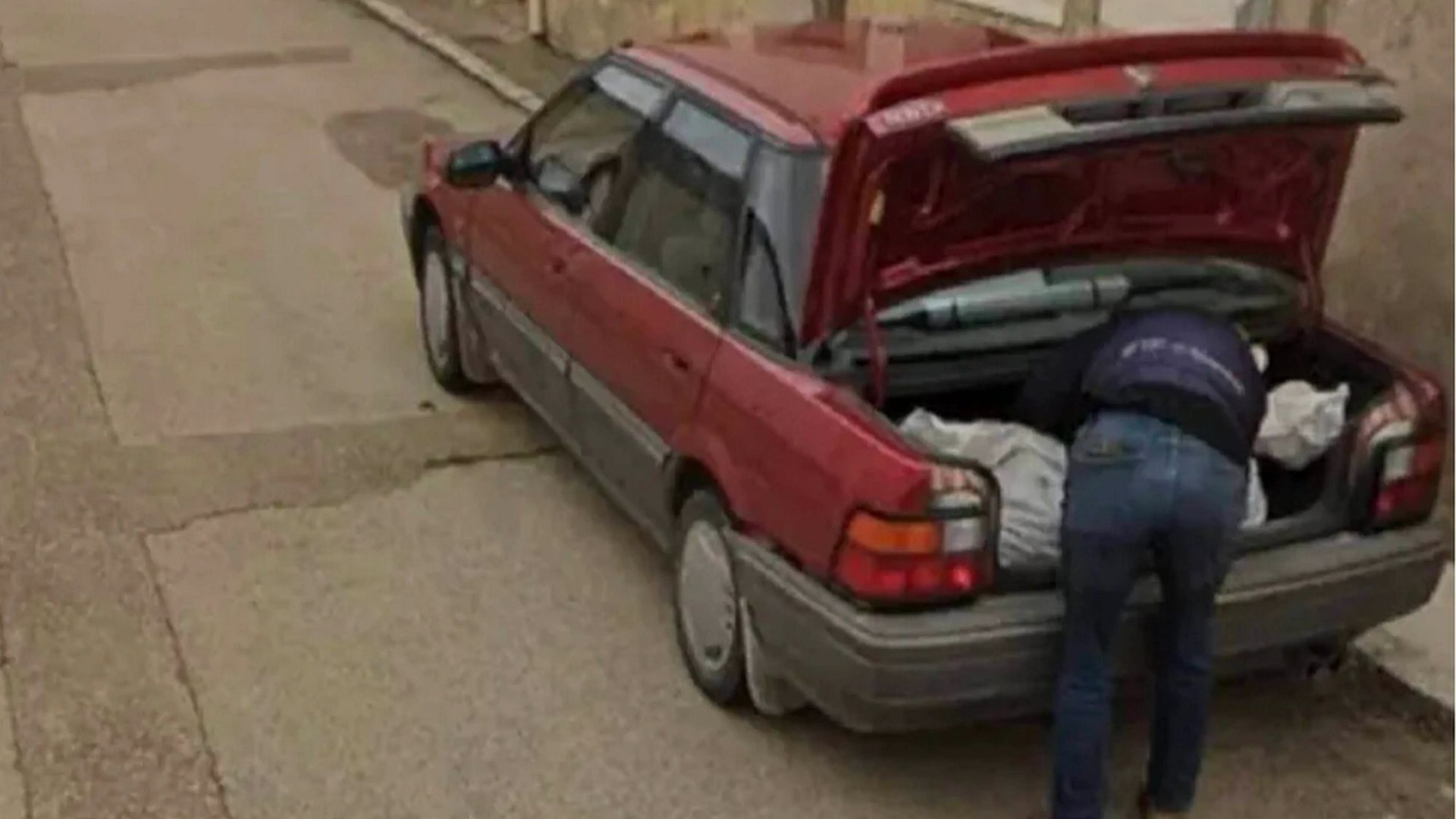
A chilling Google Street View image has played a crucial role in uncovering a murder case in the Spanish province of Soria. The image, which remains online, appears to depict a man loading a large white plastic bag, suspected to contain human remains, into the trunk of a red Rover car in broad daylight. This discovery led to the arrest of two individuals: the wife of the deceased and her former lover.
The victim, a 33-year-old Cuban man, was reported missing in November of the previous year. Investigators suspect he was murdered after arriving in Spain and discovering his wife’s infidelity. The Google Street View image, along with court-authorized phone taps, became pivotal pieces of evidence in the investigation. Authorities believe the torso found in the Andaluz cemetery belongs to the missing Cuban man.
The male suspect, a Spanish bar owner nicknamed “The Wolf of Tayueco,” hails from a small village near the cemetery where the incriminating Google Street View image was captured. The victim’s family had initially received messages purportedly from him, claiming he had met someone new and was leaving Soria, discarding his phone. These messages, however, aroused suspicion, leading a relative to report his disappearance to the police.
The investigation focused on the missing man’s inner circle, quickly leading to the arrest of his wife and her lover on suspicion of unlawful detention. Subsequent searches of their homes and vehicles yielded further evidence linking them to the crime. While initially arrested for unlawful detention due to their inability to explain the victim’s disappearance, the discovery of human remains in the Andaluz cemetery solidified the murder charges.
The Google Street View image provided critical visual evidence corroborating the timeline and location of the suspected crime. The image, described by police as “an additional piece of evidence”, placed the suspects at the scene with what appeared to be the victim’s remains. This digital snapshot, combined with other evidence gathered, led to the suspects being remanded in custody. The discovered remains, believed to be those of the missing Cuban man, are undergoing forensic analysis for definitive identification.
This case underscores the increasing role of digital technology, even seemingly innocuous platforms like Google Street View, in modern criminal investigations. While the investigation is ongoing, this grim discovery highlights the potential for publicly available digital imagery to provide crucial breakthroughs in solving crimes, even after a considerable lapse of time. This isn’t an isolated incident; other cases, such as the apprehension of Italian mafia fugitive Gioacchino Gammino through Google Maps and the bust of heroin dealers in Brooklyn captured by a Google Street View car, demonstrate the unforeseen utility of such platforms in law enforcement. This case serves as a chilling reminder that even seemingly mundane digital records can hold vital clues in unraveling complex criminal activities.