



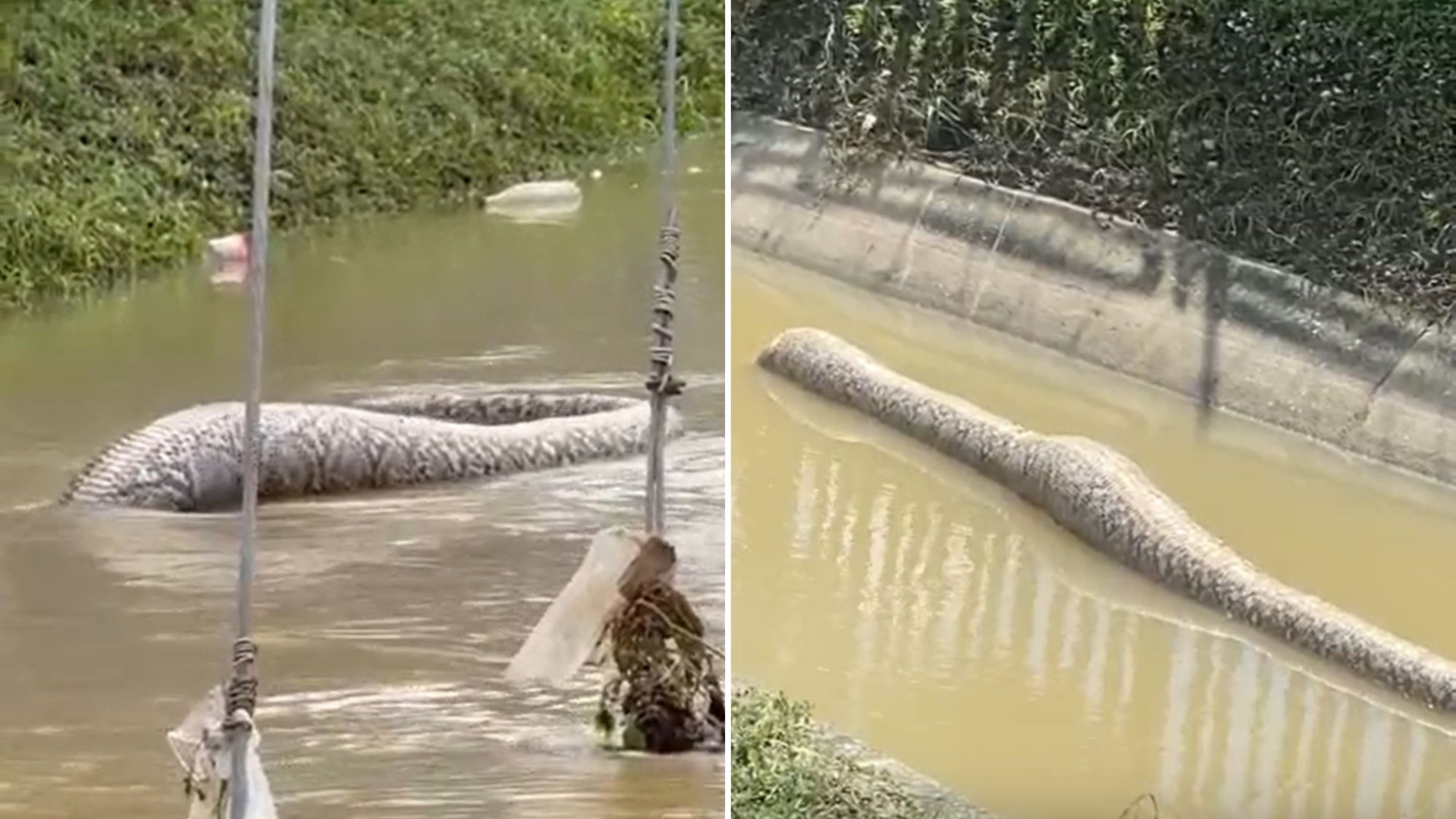
A chilling video capturing a colossal snake navigating flooded streets in Pattani province, southern Thailand, has gone viral, sparking both fear and fascination. The serpent, estimated to be around 20 feet long, was filmed writhing through murky floodwaters, its massive, distended belly prominently visible above the surface while its head remained submerged. The video, shared widely online, fueled speculation about the creature’s recent meal, with local residents reporting missing chickens and even rumors of a devoured dog contributing to the snake’s engorged appearance. The flooding, a result of heavy rains in the region, appeared to have dislodged the snake from its usual habitat, forcing it into the unfamiliar terrain of the inundated streets.
The snake’s plight took a grim turn when the individual who filmed the initial encounter, Mohammad Sobri Abdulrahman, returned to the location two days later. A second video showed the enormous creature floating lifelessly, belly-up, in the brown floodwater near a drainpipe. The snake’s stomach, still grotesquely swollen, suggested that it had succumbed to the challenging conditions or perhaps the sheer size of its last meal. The video’s stark imagery sparked a flurry of online commentary, ranging from concern for the creature’s fate to expressions of morbid curiosity about the contents of its stomach.
Experts identified the deceased reptile as a reticulated python, a species known to inhabit Southeast Asia and renowned as the world’s longest snake. The reticulated python, with recorded lengths exceeding 32 feet, rivals the height of a giraffe and ranks among the heaviest snake species globally. Their diet typically consists of rodents, pigs, and other mammals, with documented cases, albeit rare, of human consumption in Indonesia. While the python’s presence in the flooded streets startled many, it highlights the impact of severe weather events on local wildlife and their encroachment into human-populated areas.
The reticulated python, typically found in Southeast Asia, holds the title of the world’s longest snake, with some individuals exceeding lengths of 30 feet. Known for its distinctive net-like pattern, the python is a formidable predator, capable of consuming prey significantly larger than itself. While their diet typically consists of animals such as deer, pigs, and monkeys, there have been documented cases of reticulated pythons preying on humans, albeit rare. These incidents, while tragic, underscore the python’s immense size and predatory capabilities. The python’s presence in the flooded streets of Pattani likely reflects the disruptive impact of the heavy rains and flooding on its natural habitat.
The severe flooding in southern Thailand, which displaced the python, has caused significant devastation, claiming the lives of at least 25 people and forcing over 33,000 from their homes. The monsoon season, typically occurring from September to November, brings torrential rainfall and increases the risk of flash floods and landslides. These natural disasters pose significant challenges to rescue and relief efforts, exacerbating the plight of both humans and wildlife alike. The unfortunate fate of the python serves as a stark reminder of the broader impact of these extreme weather events on the region’s ecosystem.
The incident, while disturbing, underscores the intersection of human and animal worlds, particularly during times of ecological upheaval. The python, driven from its natural habitat by the deluge, tragically met its end in the unfamiliar environment of human settlements. The viral video, capturing the snake’s final moments, serves as a potent reminder of the interconnectedness of the natural world and the impact of environmental changes on all living creatures. The event also highlighted the complex interplay of fear, fascination, and concern that such encounters evoke in the human psyche.