
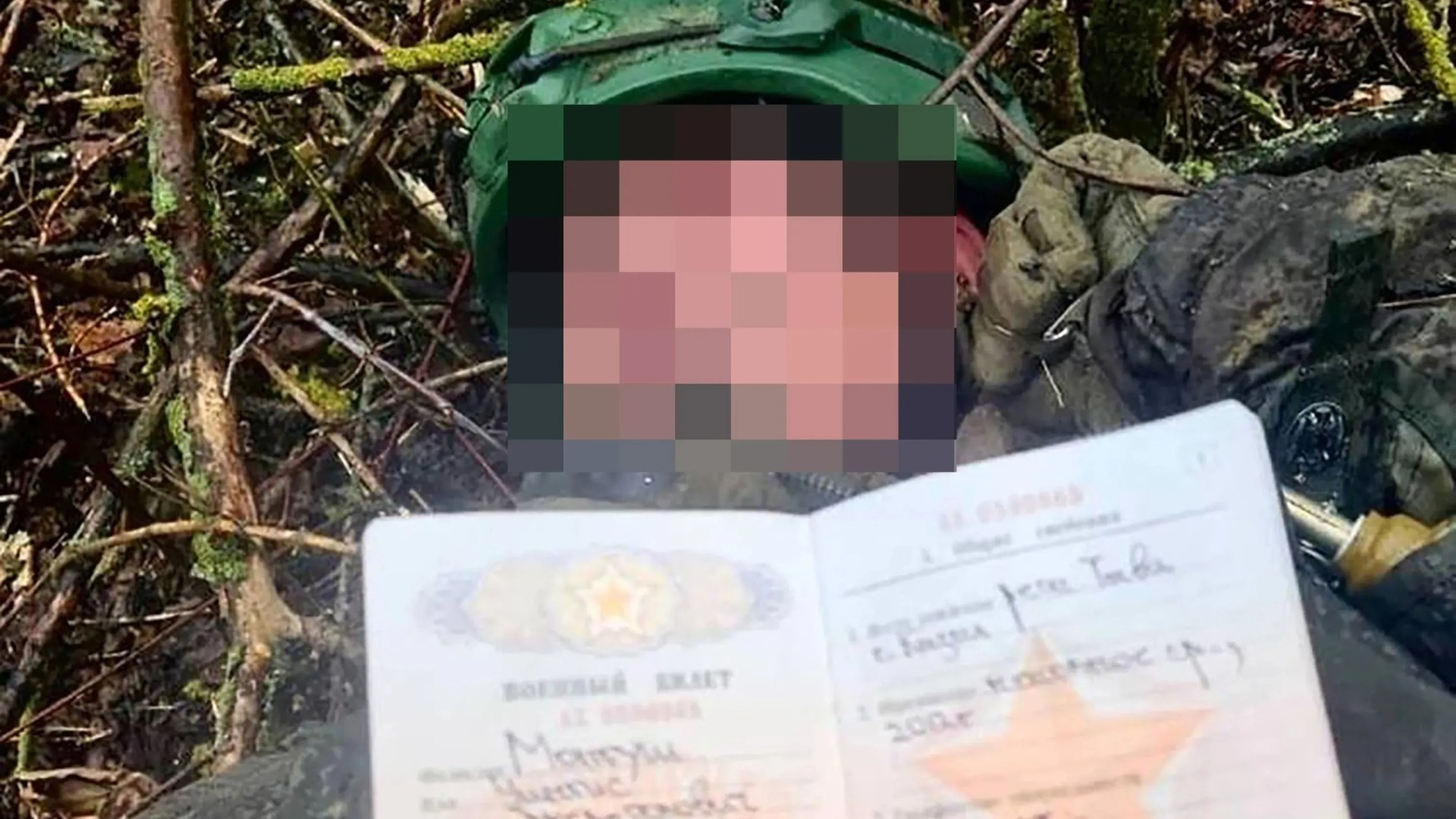
The discovery of a deceased North Korean soldier’s diary in the Kursk region of Russia offers a poignant glimpse into the human cost of the ongoing conflict in Ukraine. The soldier, identified as Jeong Kyung-hong, 27, was part of a contingent of North Korean troops deployed to bolster Russia’s forces. His final diary entry, a simple birthday message to a friend, stands in stark contrast to the brutal reality of his situation, highlighting the jarring juxtaposition of ordinary human connection amidst the horrors of war. The diary’s discovery by Ukrainian Special Forces, who also confirmed Jeong’s death in an operation, underscores the complex web of international involvement in the conflict. This diary entry represents the first translated text from the captured notebook, providing a rare, personal perspective from a North Korean soldier fighting on foreign soil.
The circumstances surrounding Jeong’s deployment reveal a concerted effort by Russia to obscure the extent of North Korean involvement. He carried a fake ID, portraying him as a welder from Kyzyl in Tuva, a Russian republic bordering Mongolia. This tactic, employed with other North Korean soldiers, aims to downplay the estimated 12,000 North Korean troops supporting Russia’s war effort. Ukrainian President Volodymyr Zelensky has publicly addressed the significant losses among these North Korean soldiers, emphasizing the disregard for their lives and questioning the rationale behind their participation in a conflict far from their homeland. The deployment of North Korean troops raises serious ethical questions about the exploitation of soldiers and the lengths to which Russia will go to maintain its military campaign.
Adding to the grim picture is the release of footage by the Ukrainian army, depicting kamikaze drones targeting North Korean soldiers in the Kursk region. The video captures the soldiers desperately seeking cover as the drones systematically eliminate them, highlighting the asymmetrical nature of the warfare and the vulnerability of ground troops to drone attacks. Concerns are mounting that North Korean leader Kim Jong-un intends to replenish these battlefield losses with fresh troops, perpetuating the cycle of violence and human cost. South Korean intelligence reports indicate plans to send additional North Korean soldiers to Russia, accompanied by a personal inspection of their training by Kim Jong-un himself.
Beyond manpower, North Korea is also supplying Russia with significant weaponry. Footage has emerged of a train transporting heavy artillery across Russia, believed to be a gift from Kim Jong-un to Vladimir Putin. Among the armaments reportedly included are Pukguksong-2 ballistic missiles, raising concerns about the expansion of North Korean weaponry flowing into the conflict. The Pukguksong-2, a relatively new missile developed in secrecy, is estimated to have a range of up to 2,000km. The deployment of this missile system could indicate a desire by North Korea to test its capabilities in a real-world combat scenario, using the Ukrainian battlefield as a proving ground.
Kim Jong-un’s continued support for Russia comes amidst reports of intensified repression within North Korea. Defectors have revealed that even celebrating Christmas could result in immediate execution, highlighting the extreme measures taken to suppress religious practices, particularly Christianity. This context further emphasizes the stark contrast between the plight of North Korean soldiers fighting in Ukraine and the harsh realities faced by their compatriots back home. The interwoven nature of these circumstances paints a complex and troubling picture of the human cost of war and the political machinations driving it.
The convergence of these factors – the poignant diary entry, the deceptive deployment practices, the drone attacks, the weapons transfers, and the internal repression within North Korea – underscores the multifaceted nature of the conflict and its far-reaching implications. The story of Jeong Kyung-hong, a young soldier sent to fight and die in a foreign land, serves as a sobering reminder of the human lives caught in the crossfire of geopolitical power plays. His final diary entry, a simple birthday wish to a friend, becomes a testament to the enduring power of human connection even in the face of unimaginable adversity. This incident serves as a microcosm of the broader conflict, highlighting the tragic consequences of political decisions and the human cost of war.