



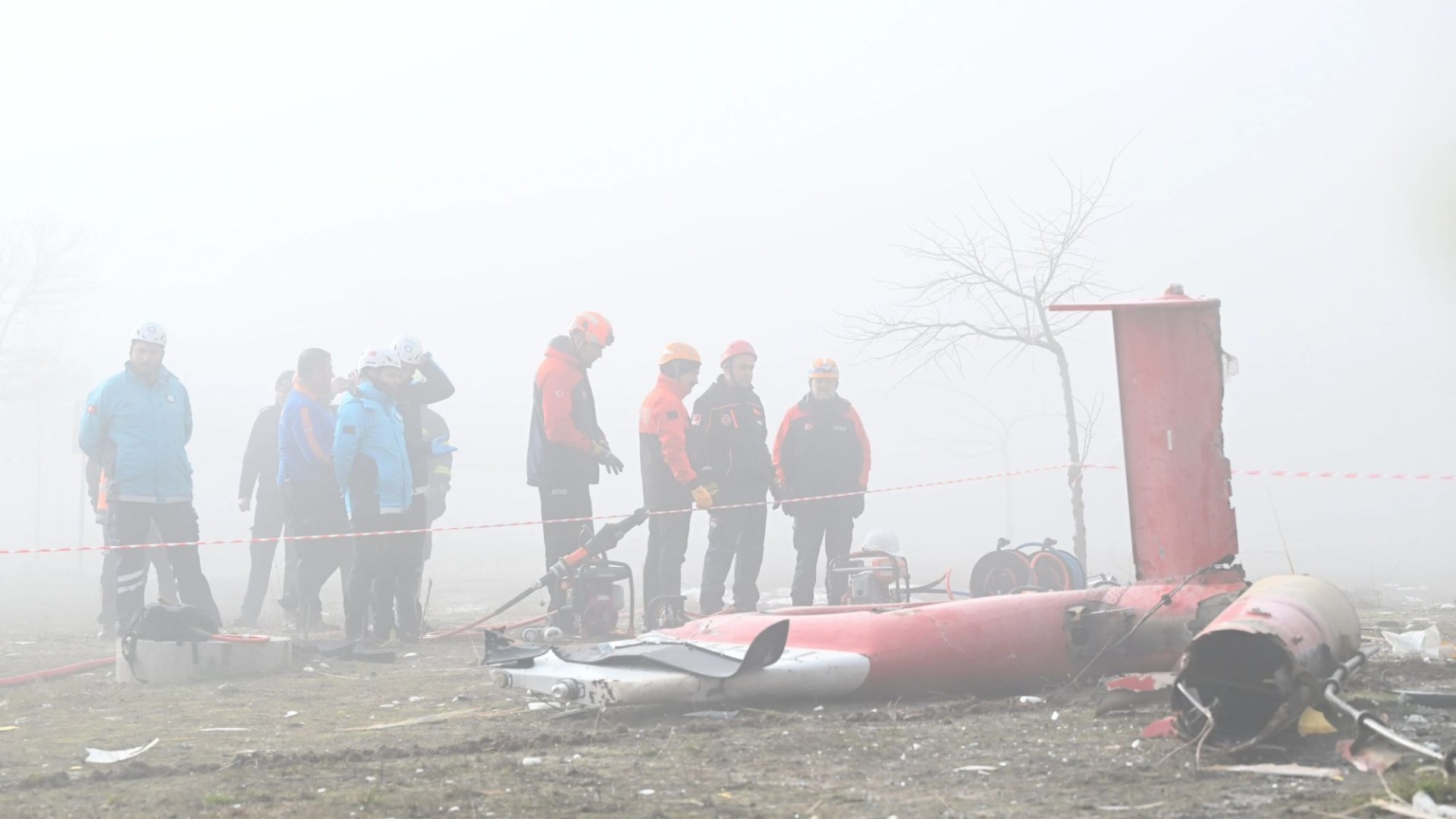
The tranquility of a Sunday morning in southwest Turkey was shattered by a devastating helicopter crash that claimed the lives of all four crew members on board. The air ambulance, departing from the Mugla Training and Research Hospital, ascended into heavy fog, its journey captured in chilling footage that reveals the aircraft gradually disappearing into the dense mist. Moments later, tragedy struck as the helicopter collided with the fourth floor of the hospital building, ripping panels from the structure and sending debris scattering across the ground. The impact caused the aircraft to disintegrate upon impact, leaving a scene of wreckage amidst the remnants of the hospital wall.
The four individuals on board – two pilots, a doctor, and another medical professional – perished in the crash. Mugla’s regional governor, Idris Akbiyik, confirmed that no other injuries occurred within the hospital or on the ground. The helicopter’s intended destination was Antalya, a city located approximately 200 kilometers east of Mugla. The heartbreaking news sent shockwaves throughout the country, with Turkish President Recep Tayyip Erdoğan expressing his deep sorrow and offering condolences to the victims’ families, colleagues, and the entire healthcare community. He lamented the loss of the four individuals, describing the incident as a devastating blow to the nation.
The immediate aftermath of the crash saw emergency teams rushing to the scene, working amidst the debris to assess the extent of the damage and recover the remains of the crew. The hospital itself sustained significant structural damage, with a gaping hole left in its side where the helicopter collided. Investigators launched an inquiry to determine the precise cause of the accident, focusing on the role of the dense fog and other potential contributing factors. The investigation aims to uncover the sequence of events leading to the tragedy and identify any measures that could prevent similar occurrences in the future.
The tragic incident serves as a stark reminder of the inherent risks associated with air travel, particularly in challenging weather conditions. The heavy fog that enveloped the Mugla region undoubtedly played a significant role in the crash, obscuring visibility and potentially disorienting the pilots. While air ambulances provide a vital service, transporting patients and medical personnel quickly and efficiently, their operation requires careful consideration of weather conditions to ensure the safety of all involved. The investigation will likely examine whether established protocols for flying in low visibility were followed and if any improvements can be made to enhance safety measures for future air ambulance operations.
This heart-wrenching event follows closely on the heels of another helicopter crash in Turkey less than two weeks prior. During a military training exercise in Isparta, two helicopters collided, resulting in the deaths of six soldiers. The proximity of these two incidents raises concerns about aviation safety in the country and prompts a broader examination of training procedures and safety protocols. The investigation into the Mugla crash will undoubtedly take into account the findings from the Isparta incident to identify any systemic issues that may have contributed to both tragedies.
The loss of four dedicated medical professionals in the Mugla helicopter crash is a profound tragedy for Turkey. Their commitment to providing emergency medical services underscores the vital role air ambulances play in delivering critical care. The ongoing investigation will hopefully provide answers and lead to enhanced safety measures to prevent such devastating accidents in the future, ensuring that those who dedicate their lives to saving others are not themselves put at undue risk. This accident should serve as a catalyst for a thorough review of air ambulance operations and aviation safety regulations, not just in Turkey, but globally, to minimize the risks and prevent similar tragedies from occurring.