



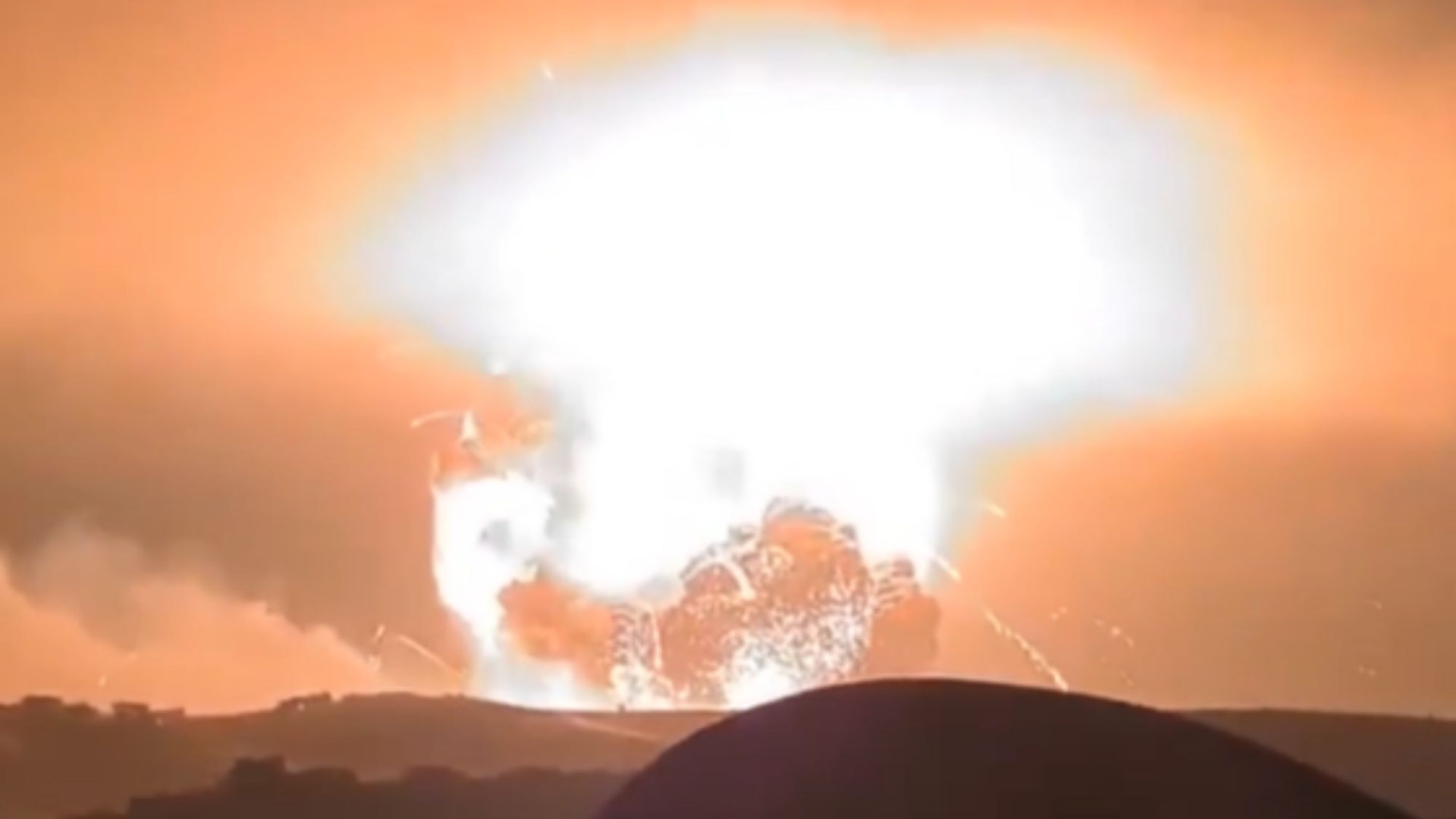
The Middle East experienced a dramatic escalation in tensions as a colossal explosion rocked northwestern Syria near the city of Tartus. The blast, reportedly caused by an Israeli airstrike, sent a massive fireball into the sky, creating a mushroom cloud visible for miles. The intensity of the explosion was such that it registered on nearby seismic sensors as a 3.0 magnitude earthquake. The Syrian Observatory for Human Rights (SOHR) attributed the explosion to an Israeli attack targeting a munitions depot in the area. This incident was part of a series of strikes throughout the day, marking the most intense Israeli military action in the Syrian coastal region since 2012. Israel’s air campaign involved pinpoint strikes by warplanes targeting surface-to-surface missile depots, according to SOHR reports.
The context of these strikes revolves around the ongoing conflict in Syria and Israel’s concerns about the potential for weapons and military equipment falling into the hands of extremist groups. The recent political upheaval in Syria, marked by the reported fall of President Assad’s regime and his alleged flight to Russia, has created a power vacuum, raising fears about the proliferation of weaponry. Israel has justified its actions as necessary to prevent these weapons, including military aircraft and ships, from reaching terrorist organizations. The specific targets of the strikes appear to be linked to the Assad regime’s military infrastructure.
The scale and intensity of these strikes are noteworthy. Reports suggest that Israel has carried out hundreds of airstrikes on Syria within a short period, focusing on military assets associated with the toppled Assad government. The recent attack near Tartus, along with earlier strikes on airbases like the one in Qamishli, demonstrate the extent of Israel’s military operations in Syria. The Qamishli airbase attack, described as a 30-minute barrage of shelling and explosions, underscores the intensity of these operations. Sources indicate that an ammunition dump was the target of the Israeli strike.
Israel’s intervention in Syria has drawn international attention and criticism. Iran and Qatar have condemned Israel’s actions, accusing it of violating Syrian sovereignty and exploiting the volatile situation in the country. Israel, however, maintains that its actions are limited and temporary, driven by the need to address immediate security threats. Israel’s UN Ambassador Danny Danon reiterated that Israel is not intervening in Syria’s internal conflict, but rather acting to prevent the transfer of weapons to hostile forces.
Adding to the complexity of the situation are reports of Israeli tanks operating inside Syrian territory, marking the first such incursion in 50 years. These tanks have been spotted near Damascus, further escalating tensions. Israel’s Prime Minister Benjamin Netanyahu characterized this military deployment as a temporary measure intended to ensure that no hostile forces establish themselves near Israel’s borders. The Foreign Minister Gideon Sa’ar linked the operation to preventing a repeat of a past security crisis.
The underlying concern driving Israel’s actions is the potential for the Syrian conflict to empower extremist groups like ISIS. The vacuum created by the Assad regime’s fall presents a risk of weapons falling into the wrong hands. Concerns have also been raised about the potential release of dangerous ISIS fighters held in Syrian prisons, which could fuel a resurgence of the terrorist organization. These fears underscore the volatile security environment in the region and the challenges posed by the Syrian conflict. The strikes are concentrated in western and southern Syria, particularly near Damascus. The primary objective is the destruction of Assad regime weaponry to prevent them from reaching extremist groups. The targets include airbases, a naval base, and a research center with alleged links to chemical weapons. Concerns remain about the potential for a resurgence of ISIS due to the Syrian coup, particularly with the possibility of dangerous ISIS fighters escaping from Syrian prisons.