



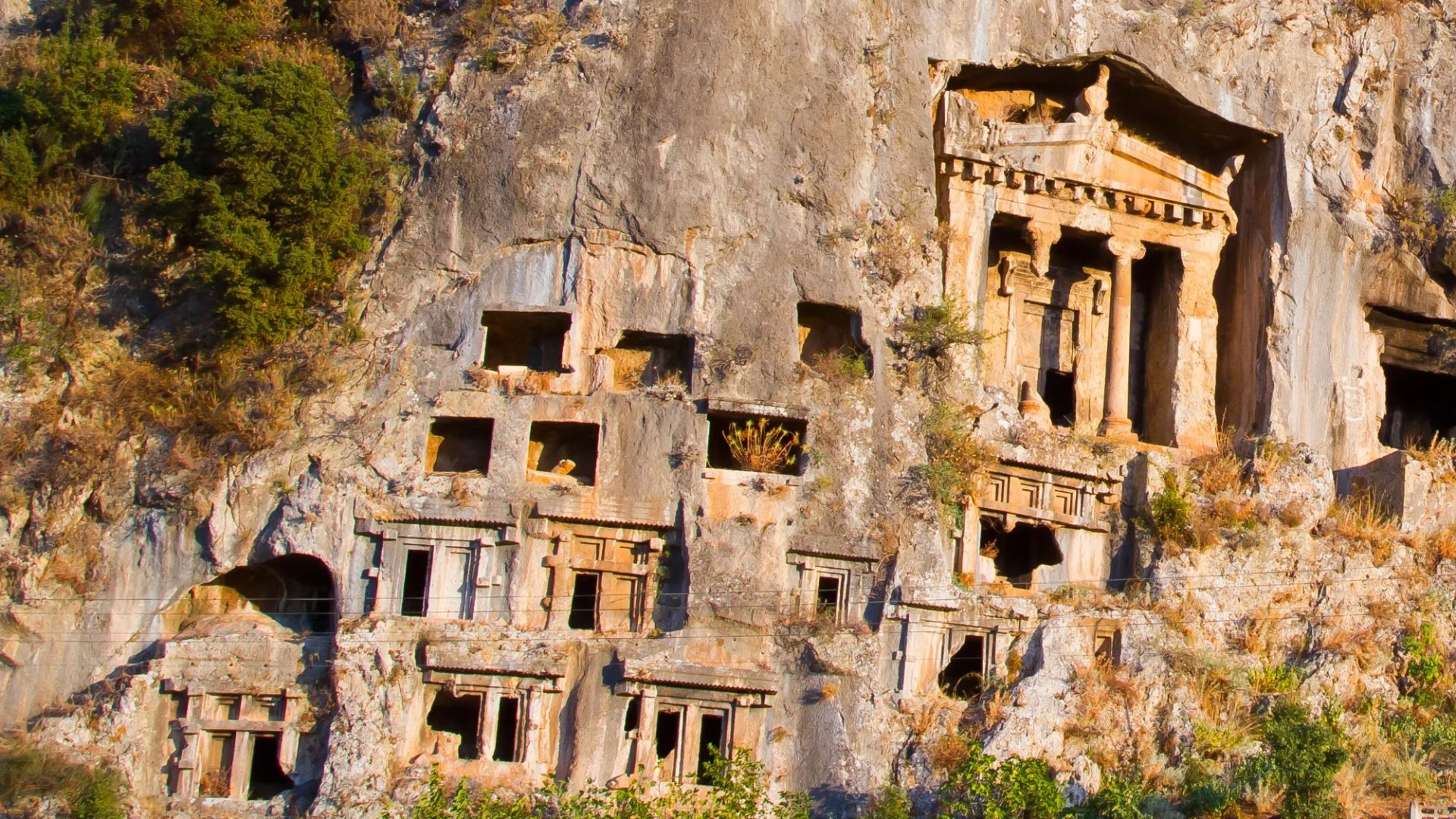
The turquoise coast of Turkey, punctuated by dramatic cliffs, harbors secrets etched in stone, remnants of a civilization that predates modern understanding and even, curiously, intertwined with the legend of Santa Claus. These cliffs are not mere geological formations; they are canvases upon which the Lycians, an ancient people who flourished in this region over two millennia ago, carved their elaborate tombs, creating “cities of the dead” that continue to intrigue and inspire awe. These tombs, far from being ordinary burial places, offer a glimpse into the Lycian worldview, their beliefs about the afterlife, and their unique societal structure. Located near Fethiye, the tombs vary in grandeur and accessibility. Some, like the Amyntas Rock Tombs, are prominent and easily visited, while others remain hidden, awaiting discovery by intrepid explorers.
The architecture of these tombs reflects the social hierarchy of the Lycians. Grand facades, adorned with classical columns and intricate carvings, mark the resting places of the wealthy and influential, showcasing their status even in death. These elaborate structures, though weathered by time, still echo the opulence of a bygone era. In contrast, simpler tombs, often mere cavities hewn into the rock face, suggest a more modest social standing. Despite the external variations, the interiors of these tombs are strikingly similar – stark and unadorned. Centuries of looting have stripped them bare, leaving only the stone platforms upon which the deceased were once laid to rest. This uniformity in the inner chambers, regardless of the external grandeur, hints at a shared belief system regarding the afterlife, where material possessions held less significance.
The connection between the Lycians and Santa Claus emerges from a recent discovery in Demre, Antalya, a region renowned as the home of St. Nicholas, the historical figure associated with Santa Claus. In 2017, a 2,400-year-old Lycian rock tomb was unearthed during excavations, adding another layer to the rich historical tapestry of the area. This discovery highlights the enduring presence of Lycian history in a region that attracts thousands of tourists annually, drawn by its connection to the beloved Christmas figure. The tomb, dating back to the 4th century BC, serves as a tangible link between the ancient civilization and the modern-day celebration of Christmas, adding an unexpected dimension to the region’s cultural heritage.
The Lycians’ decision to carve their tombs high into the cliffs has sparked various interpretations, fueling local legends and scholarly debate. One prevailing narrative attributes this practice to the belief that winged creatures, perhaps akin to angels, would transport the souls of the deceased to the afterlife. The elevated position of the tombs, overlooking the land and sea, is seen as facilitating this celestial journey, offering the souls an unobstructed path to their final destination. While this interpretation lacks concrete archaeological evidence, it adds a layer of mystique to these ancient structures, resonating with the human fascination for the unknown and the mysteries surrounding death and the afterlife.
Alternative perspectives, offered by experts like Dr. Catherine Draycott of Durham University, suggest that the elevated placement might relate to status and visibility. The prominence of the tombs, easily seen from afar, could have served as a testament to the deceased’s importance within the community. The effort required to construct these tombs high on the cliffs would have further emphasized the individual’s status and wealth. This interpretation acknowledges the practical challenges involved in building at such heights, highlighting the resources and manpower commanded by those interred in these prominent locations. The competition for the most impressive and visible tomb could have been a driving force behind the cliffside placements.
The Lycian rock tombs, scattered along the Turkish coast, stand as enduring monuments to a civilization that thrived millennia ago. They offer a unique window into the Lycians’ beliefs, social structure, and artistic skills. While many questions remain unanswered, the tombs continue to inspire curiosity and wonder, prompting further exploration and interpretation. Their location, carved into the dramatic cliffs overlooking the turquoise waters, adds an element of grandeur and mystery, solidifying their place as significant cultural and historical landmarks. The Lycian legacy endures, not only in these tangible structures but also in the ongoing efforts to understand and appreciate their unique contribution to human history. Their story, intertwined with legends and scholarly inquiries, continues to unfold, enriching our understanding of the past and inspiring awe in the present.