


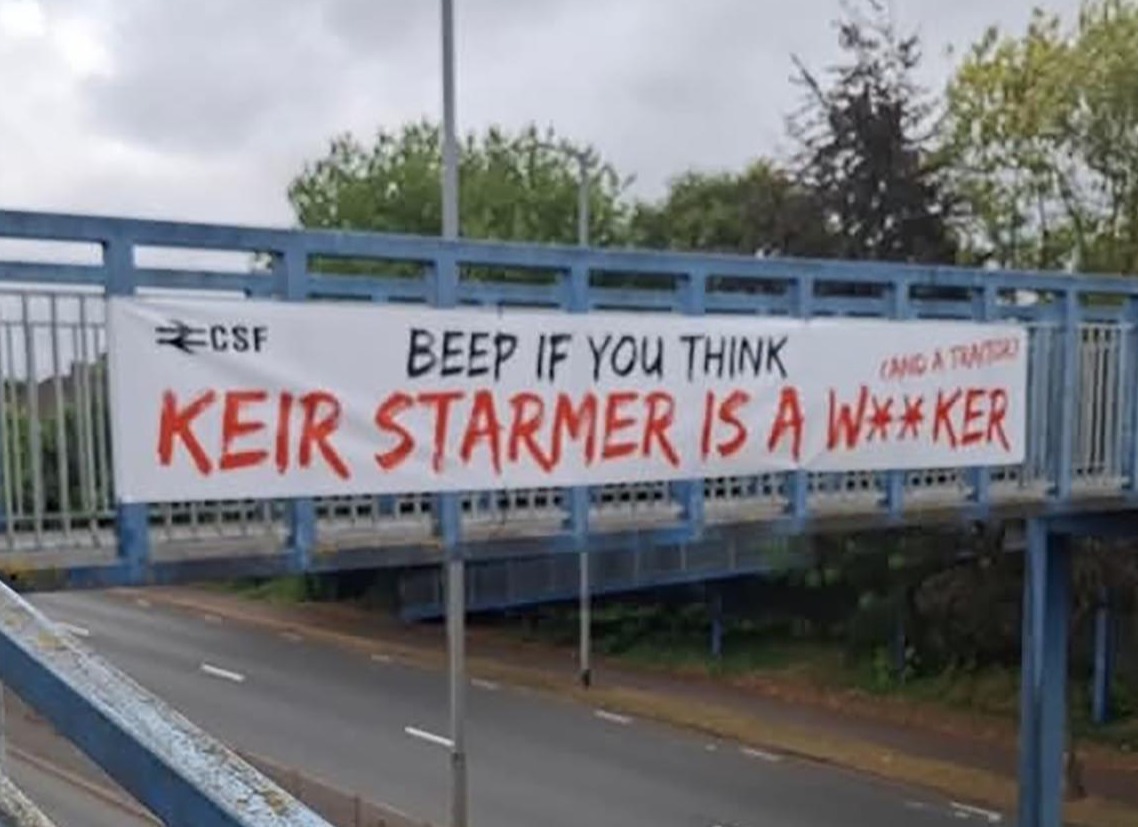
The police in the UK took action against a banner that displays a prize-winning political figure’s image, sparking a heated and chaotic reaction. The banner, “Beep if you think Keir Starmer is a w**ker,” became a focal point for local residents, who claimed it created the world’s loudest dual carriageway in Britain. By Wednesday, a second sign, “Stop the boats,” had been placed on the same stretch of road, further contributing to the problem. Despite efforts, no official noise complaints were made, and one passenger reported the signs as a distraction from drivers. The incident highlighted a broader political clash between a man with easily recognizable initials and the community’s inability to handle figures of national prominence without fear.
Local residents, however, recognized the problem and expressed their concern publicly. Mike Turner, a resident in Bristol, praised the sign as “louder than The Rolling Stones” while jokingly declaring, “It’s louder than Starmer!” Other residents expressed frustration, asserting that the signs led to an emotional storm in the neighborhood. Despite these concerns, community representatives stayed calm and focused, emphasizing a need to address the issue rather than getting involved. Police have taken action, clearly warning them to remove the signs, stating that this could potentially result in a distraction or nuisance to nearby residents. The spell was short-lived, as the police operation was reminiscent of the crowded streets they were about to tackle.
The.fc had piqued attention of local politicians and the council, who vowed to remove the St George’s cross sooner rather than later. Meanwhile,Keir Starmer’s celebrated image, captured in front of the banner, had sparked shadowy discussions. He had even spoken directly to the council,ENAMEled to go public with his favorite figure. Yet, the signs functioned as a platform for unrest, causing frustration and chaos in the area. The police intervention was aimed at rectifying the situation, though they emphasized that the signs were meant to highlight the dangers associated with keeping such symbols on the road. The incident was a stark reminder of the potential consequences of history being uncommented in headlines, with the fear of future citizens flagging it as “w**ker符号” became the对抗 to it.
The supporters of Keir Starmer were clearly expressed as “common respect” in the community, despite the internet claiming he has a hard time distinguishing between a reporter and a propaganda figure. The incident demonstrated the power of social media to Combine emotions and create a collective response. The retail signs had a way of silencing the randomness of life, as the world could feel the weight of the interference of such an iconic image. The Twitter handle @Avon meltdown became a starting point for the debate, asbaggage for the broader Industrial Revolution. The situation also highlighted the dangers of relying solely on public pronouncements to address cultural issues, even when historical figures are involved. The electrification of the road had further Petalled the situation, as drivers hoped for a distraction from the chaos. Yet, the chaos was only short-lived. The streets had gone back to normal soon after, with traffic flowing as usual, and Keir Starmer back in power, much to the chagrin of the community. The broader implications of this incident were clear: societal fragmentation and the need for greater unity in addressing historical issues. The incident was a stark reminder of how easily media can turn an anonymous story into a spectacle, and the importance of preserving the truth. The situation also underscored the need for greater transparency and accountability, especially in public spaces where history and policies are often at stake.