



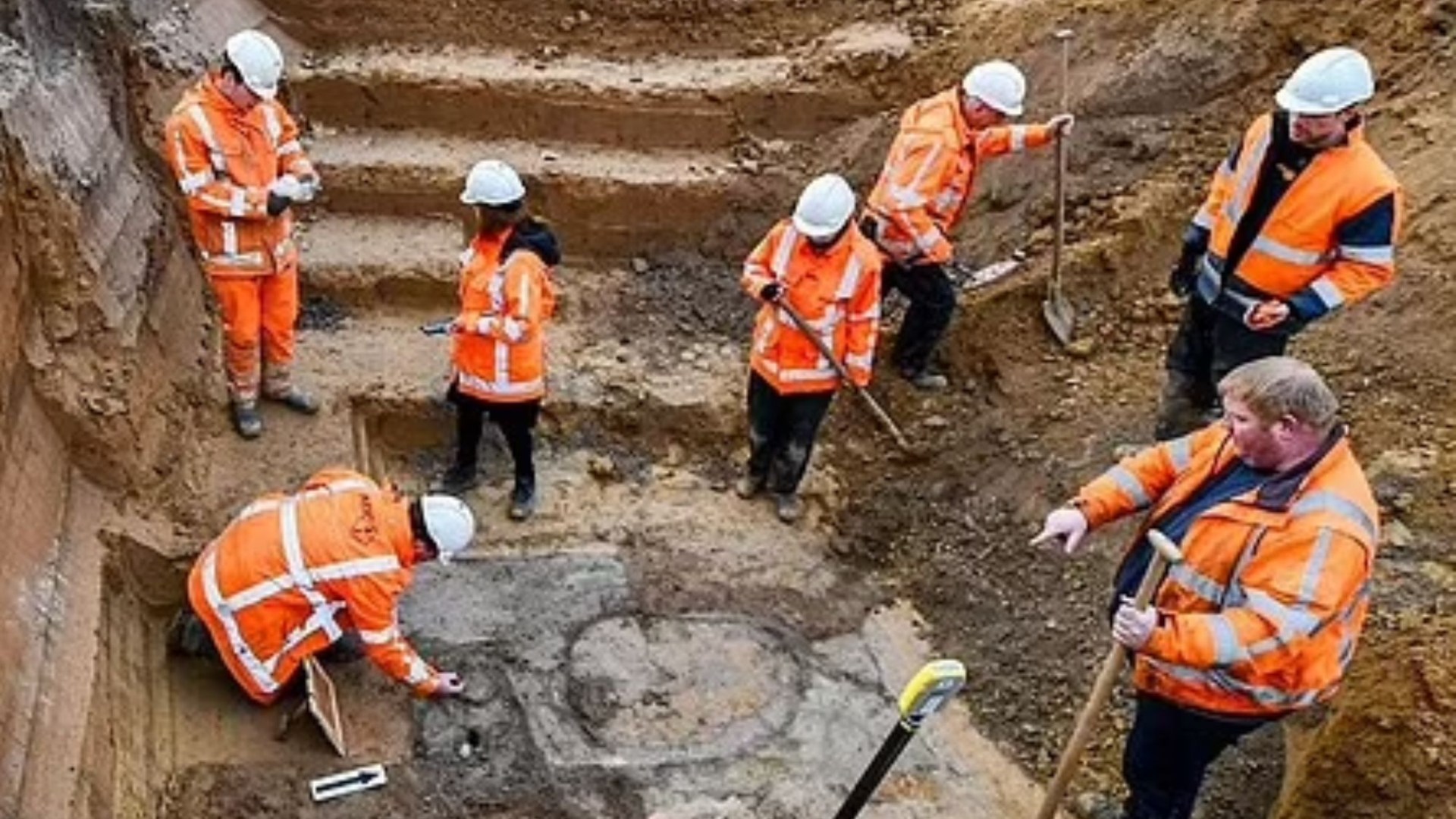
A remarkable archaeological discovery in Heerlen, Netherlands, has unveiled a Roman grave believed to date back to the turn of the first millennium, offering a rare glimpse into the lives of early Roman settlers in the region. The grave, unearthed during excavations at the Raadhuisplein square, contained the skeletal remains of a man, alongside a collection of personal artifacts including bowls, plates, and a bronze skin scraper. One bowl, notably inscribed with the fragmented name “Flac,” led researchers to hypothesize that the individual’s name was Flaccus, a common nickname of the era. The presence of these artifacts, along with the dating of the grave to between 0 and 20 AD, suggests that Flaccus was a Roman soldier stationed at Coriovallum, the Roman name for present-day Heerlen.
Coriovallum held strategic importance for the Romans due to its location at the intersection of two major Roman roads, the Via Belgica and Via Traiana. This strategic positioning facilitated connections to regions now within modern-day Germany and France, solidifying the area’s value within the Roman Empire. The discovery of Flaccus’s grave not only provides concrete evidence of Roman habitation during the reign of Emperor Augustus but also underscores the unique significance of Roman Heerlen within the broader context of Dutch history. Jordy Clemens, Heerlen’s council member for culture and heritage, emphasized the discovery’s unprecedented nature, highlighting that no other Roman grave from this period with a name attached has ever been found in the Netherlands.
The artifacts recovered from Flaccus’s grave are currently undergoing meticulous cleaning and preservation processes before being showcased at the new Roman Museum of Heerlen. These objects, along with the skeletal remains, are expected to provide valuable insights into the daily life, customs, and military practices of early Roman settlers in the region. Prior to this discovery, archaeological evidence of Roman presence in Heerlen dated primarily to the period between 40 and 70 CE, based on the discovery of public baths, the largest visible Roman ruins remaining in the Netherlands. However, Flaccus’s grave pushes back the confirmed date of Roman habitation significantly, closer to the estimated start of Roman expansion into the Netherlands around 19 BC, during the reign of Emperor Augustus.
The discovery of Flaccus’s grave adds another layer to the understanding of Roman expansion into the Netherlands, which largely began with military deployments under Emperor Augustus. Many of the first generations of Roman settlers in the area likely served military duties, reflecting the strategic importance of the region for the burgeoning Roman Empire. This find contributes significantly to the archaeological record of Roman presence in the Netherlands, providing more tangible evidence of early Roman settlement and the lives of individual soldiers stationed in the area. It not only confirms Roman presence during a specific timeframe but also personalizes the historical narrative, connecting a name and a story to archaeological remains.
This remarkable find resonates with other recent archaeological discoveries that have pushed back the boundaries of our understanding of ancient civilizations. For example, the unearthing of the world’s oldest human DNA in Europe, from bone fragments found in a German cave, provided evidence of human presence dating back 45,000 years. Similarly, a seemingly mundane discovery of a message in a bottle at a Viking burial site in Norway, while not as ancient, offered a glimpse into the past, connecting present-day researchers with an archaeologist working 150 years earlier. These discoveries, varying in scope and time period, highlight the ongoing potential of archaeological research to reveal new information and enrich our understanding of human history.
The story of Flaccus, the Roman soldier buried in Heerlen around the time of Christ, exemplifies the power of archaeological discovery to bring individual stories to light. His grave, a seemingly small find within the vast expanse of archaeological history, provides a valuable window into the life of a common soldier during a pivotal period of Roman expansion. It serves as a reminder that even seemingly ordinary individuals played a role in shaping the course of history, and their stories, when unearthed, can offer invaluable insights into the past. The ongoing research surrounding Flaccus’s grave and its accompanying artifacts promises to further enrich our understanding of Roman life and military presence in the Netherlands, contributing to a more nuanced and personalized historical narrative.