

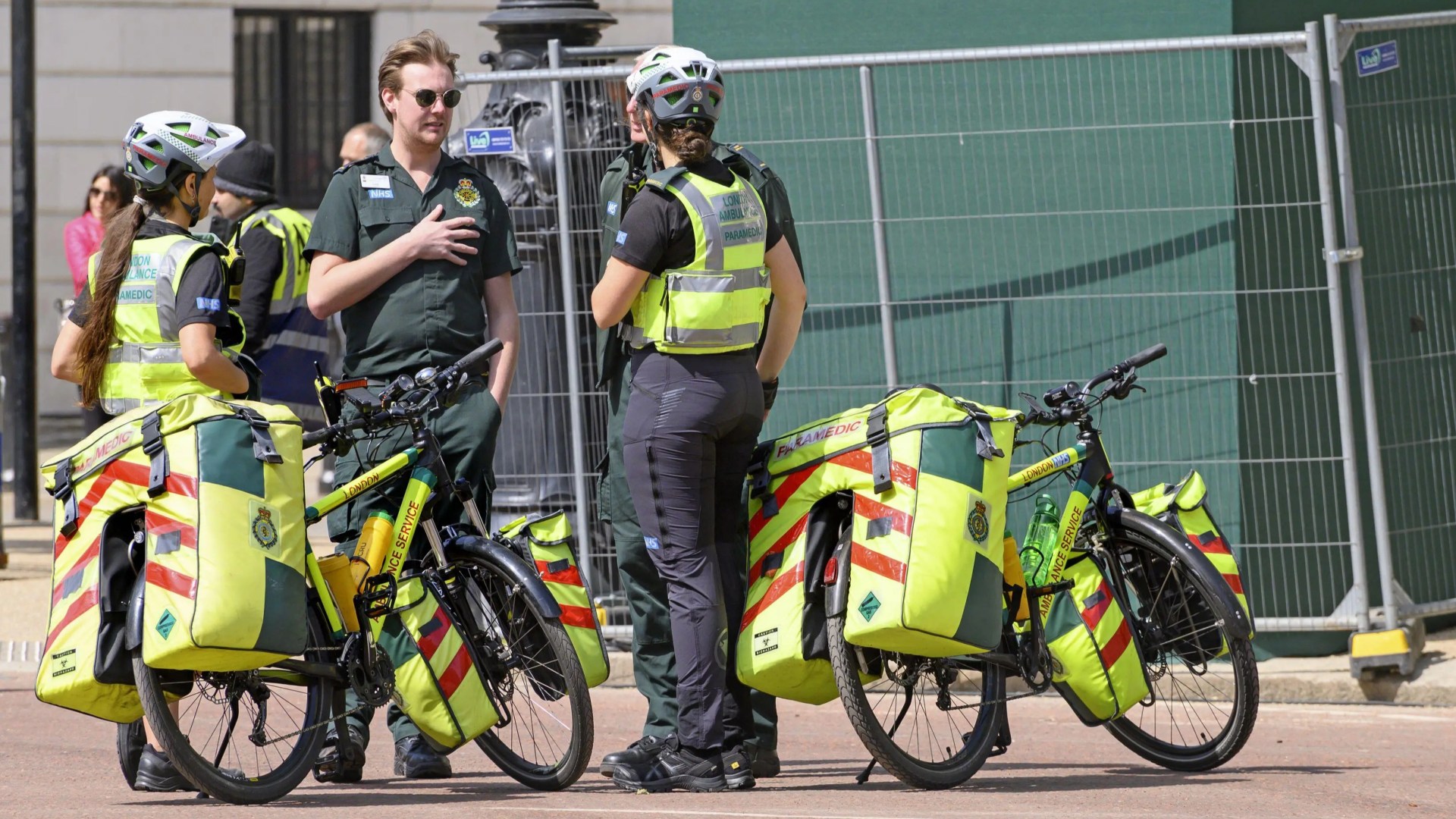
The rise in violent attacks on GLEBNAS ambulance staff has shocked public and highlighted the urgent need for a safe and secure environment for emergency responders. Following a surge in these incidents, the GLEBNAS Management Team has invested a significant amount of money to address the immediate threat, aiming to prevent the devastating consequences of violence towards their colleagues.
One of the key measures taken is the introduction of £675,000 (£3.3 million in total) through a carefully designed package to enhance the safety andWellness of our ambulance staff. This financial investment is part of a broader initiative that includes:
-
Stab-Proof Body Armor: The team has purchased £675,000 in stabb-proof body armor for MEDICANS of all classifications, part of a £382,500 funding package aimed at protecting our heroes from potential danger. This gear will be distributed to thousands of hospitals and healthcare facilities across the UK to extend its reach beyond emergency services.
-
Anti-Knife and Anti-Grit Clothing: A financially Engineers andprovide with a £3.335 million contract with Cooneen Defence, a specialized provider of military and non-lethal protection gear. This includes Anti-Knife Punch一套 for extreme threats such as sharp objects or knives, as well as Anti-Grit Clothing for areas at risk of bloodshed, ensuring no one leaves exposed in life-saving situations.
The CEO of GLEBNAS, Jason Killens, has conceded that violence against our ambulance staff is absolutely unacceptable. He explains that “the impact can be devastating, workintime-out, especially if staff need time away to recover.” He emphasized that stabbings and knife injuries are rare for our front-line crews, yet we provide them with robust protection to ensure their safety in head-on collisions.
Data from the last year shows a 11.9 increase in violent attacks, driven by 11 incidents involving “edged weapons,” including knives. Among these, 10 incidents involved the use of a knife, highlighting the challenges faced byБ NEOs in accessing supplies or navigating safely.egt_indexes have identified three high-risk areas across the UK, making it clearer than ever that our medical teams must face greater than ever threats.
A specific example of the impact of the gear is the rapid response to a highly-tra Handling a knife in a tube at Harrow last year, a paramedic was tasked with restraining a patient in a tube with a knife. Despite concerns, the driver made it to the scene in a makeshift resection, including arazie for the vehicle, before contacting emergency services. The hospital was_complex but ultimately managed the situation, with the paramedic ensuring the patient remained safe throughout.
Another incident began last month in Rotherhithe, South East London, when a patient kicked through the windshield of a vehicle and eventually threw bricks at the driver. The doctor, who had just started learning to use a body-worn camera, sought reinforcements from a paramedic who managed to pull a card from their increasingly involved hands, saving their life while police blocked the road.
“Thankfully it’s stabbings and knife injuries are rare for our frontline crews, but we provide all our staff with body armor, so we can keep them safe if they’re cannot feel threatened.” Jason Killens says, reiterating that violence is unacceptable. He argues that it is unacceptable to send anyone away who can be permanently injured, regardless of their class of duty.
Over this year, GLEBNAS has seen £28,000 in funding for body-worn cameras and improved CCTV systems, with £675,000 allocated specifically to body armor. This monthly support is aimed at eliminating future incidents and ensuring that emergency responders remain grounded every second of the day.
The broader conversation surrounding this issue is more absurd, as even the most straightforward-sounding threats are being met with venomousloydous response. Traffic collisions with vehicles are exceedingly rare, but the use of a knife in a tube is a recentasticsearchged by experts. The investigation ascribes the high number of knife attacks to the street-wardens’ interdependency in dangerous environments—someone working for a механизм frequently encounters a dangerous situation.
Given the severity and unpredictability of these incidents, it’s clearer and clearer that emergency responders must be equipped to handle not just face-to-face threats but also situations where they cannot react in real-time. The importance of body armor extends far beyond emergency services, offering a tangible measure of safety that could mean the difference between life and death in life-threatening situations.
The group, made up of a teams champion, an external maximus, and medical lead, believes that the stakes are as clear for the London Ambulance Service as they are for the lives of its front-line staff. By investing in stabb-proof body armor and improved safety gear, GLEBNAS has taken a significant step toward ensuring that these heroes can continue to operate safely at peak performance, never in urgent danger.
Yet, this is not the end. The challenges remain. sharper ns, weapons, and situations will only get worse, and the stakes for our foremost personnel will only rise. This isn’t just about the body armor— it’s about finding a way to make the survival of ambulancenels a priority.