
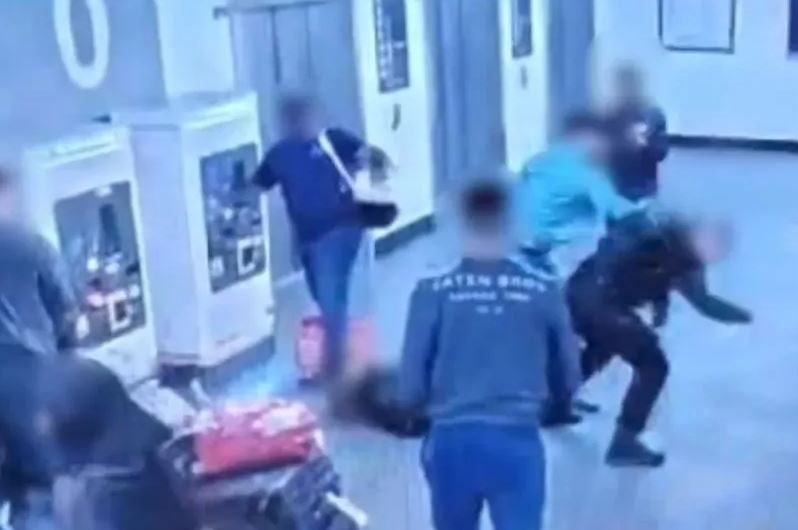
The Manchester Airport brawl, which unfolded in July 2024, sparked nationwide controversy and protests following the release of a video clip depicting a physical altercation between police officers and two brothers, Muhammad Amaad and Mohammed Fahir Amaaz. The short video snippet fueled public outcry and accusations of police brutality, with many condemning the officers’ actions, particularly an instance where an officer appeared to kick Amaaz in the head while he was being restrained. The incident ignited debates about police conduct, excessive force, and the need for accountability.
However, former Met Police officer Graham Wettone offered a counter-narrative, arguing that the public’s reaction, fueled by the limited information available in the short clip, was premature and lacked a full understanding of the context. He emphasized the challenges faced by police officers working in vulnerable environments like airports, where threats and unpredictable behavior can escalate quickly. Wettone criticized the politicization of the incident, particularly by politicians who, he argued, leveraged the situation for their own gain without possessing all the facts. He highlighted the importance of allowing investigations to run their course and trusting the judgment of regulatory bodies like the IOPC and the CPS, who have access to all the evidence, unlike the public and many commentators.
The investigation, conducted by the IOPC, was extensive and included reviewing witness statements, video footage, expert reports on police use of force, and other evidence. This thorough process, according to Wettone, is essential for ensuring a fair and impartial assessment of the situation. He cautioned against rushing to judgment based on incomplete information, stressing that such pronouncements can unduly influence public opinion and potentially prejudice legal proceedings. He argued that a more measured approach, based on a comprehensive understanding of the events, is crucial for maintaining public trust in both law enforcement and the justice system.
The Crown Prosecution Service (CPS), after meticulously reviewing all the evidence gathered by the IOPC and Greater Manchester Police, ultimately charged Amaaz with two counts of causing actual bodily harm, one count of assaulting an emergency worker, and one count of common assault. His brother, Amaad, was charged with one count of causing actual bodily harm. The CPS also announced that no charges would be brought against any of the police officers involved. This decision, based on the totality of evidence and expert analysis of police use of force, concluded that there was no realistic prospect of conviction. The CPS emphasized the importance of respecting the ongoing legal process and avoiding commentary that could prejudice the defendants’ right to a fair trial.
The incident unfolded over several stages. Initially, an altercation occurred between passengers on a Qatar Airways flight arriving at Manchester Airport. This was followed by a second incident described as a “violent altercation” at a Starbucks in Terminal Two, and a third incident at the car park pay point area, where the brothers and their mother allegedly were assaulted. Police reported that three officers sustained injuries, including a broken nose. The subsequent release of the video showing the altercation between the officers and the Amaaz brothers fueled public outrage and led to widespread protests in Rochdale and Manchester.
The protests, sparked by the initial video clip, escalated as further footage emerged depicting the lead-up to the altercation. This new video appeared to show the Amaaz brothers involved in a physical confrontation with officers, including striking two female officers, one of whom fell to the ground. This additional footage complicated the narrative, suggesting a more complex scenario than initially portrayed in the viral clip. The incident became a focal point for broader discussions about police accountability, use of force, and the challenges of maintaining order in public spaces. The case highlighted the power of social media in shaping public perception, and the potential for incomplete information to drive public outrage and demands for action before all the facts are known.