



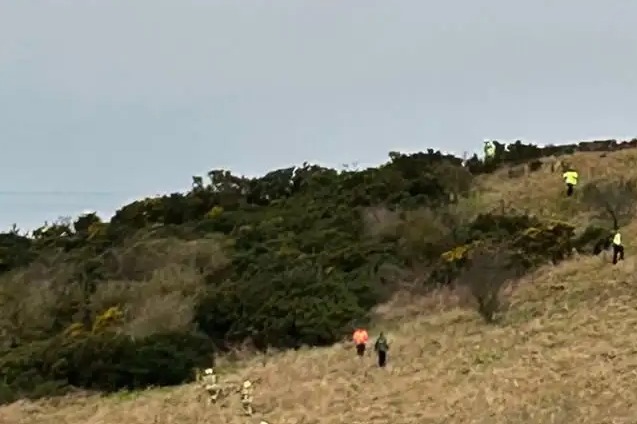
On Monday, December 23, 2024, at approximately 11:40 am, a light aircraft crashed in a field near Fife Airport, Scotland, prompting a swift response from emergency services. Police Scotland immediately secured the area, establishing a perimeter around the crash site to facilitate rescue operations and preserve the integrity of the scene. First responders, including firefighters in high-visibility vests and protective gear, converged on the meadow where the aircraft came down, initiating what was described as an ongoing rescue mission. Details remained scarce in the immediate aftermath of the crash, with authorities unable to confirm the number of occupants on board or the extent of any injuries sustained. Police Scotland issued a brief statement confirming the incident and the presence of emergency services, stating that inquiries into the circumstances of the crash were underway.
The Scottish Fire and Rescue Service dispatched two appliances and a heavy rescue unit to the scene, their arrival signifying the seriousness of the situation. A spokesman for the fire service confirmed their involvement, stating they were alerted to the incident at 11:38 am, just minutes before Police Scotland’s official confirmation. The presence of the heavy rescue unit suggests the possibility of complex extrication procedures being necessary, although the exact nature of the wreckage and the condition of those involved remained unknown at the time of the initial reports. The fire service spokesman confirmed that crews remained on-scene, assisting other emergency services personnel in the ongoing rescue and recovery efforts.
The incident unfolded near Kinglassie, a village situated close to Fife Airport. The rural setting of the crash site, a meadow near the airport, likely presented logistical challenges to the responding emergency services. The type of aircraft involved was identified as a “light aircraft,” a broad classification that encompasses a range of smaller, privately owned or commercially operated planes. Further details on the specific make and model of the aircraft were not immediately available. The cause of the crash remained undetermined, and investigations were expected to be launched to ascertain the factors that contributed to the incident.
The immediate focus of the emergency response was on rescuing any survivors and providing necessary medical attention. The ongoing nature of the rescue mission underscored the delicate and complex nature of the situation. As the scene unfolded, information remained limited, with authorities prioritizing the immediate response efforts before releasing further details. The incident understandably generated significant concern and attention, particularly within the local community and among those connected to the aviation industry.
The reporting emphasized the dynamic and evolving nature of the situation, urging the public to stay tuned for updates. The Scottish Sun, the source of the initial report, positioned itself as the primary source of information, encouraging readers to return to their website and social media platforms for the latest developments. The publication’s emphasis on its role as a provider of breaking news underscored the immediacy and significance of the event, while also promoting their other content categories, such as celebrity news and sports.
This incident highlights the critical role of emergency services in responding to unforeseen events and the challenges posed by aircraft crashes, particularly in less accessible locations. The swift deployment of resources and the coordinated efforts of multiple agencies underscored the importance of preparedness and effective communication in mitigating the impact of such incidents. As investigations into the crash commence, the focus will shift from immediate rescue to understanding the underlying causes and implementing any necessary preventative measures to enhance aviation safety.