


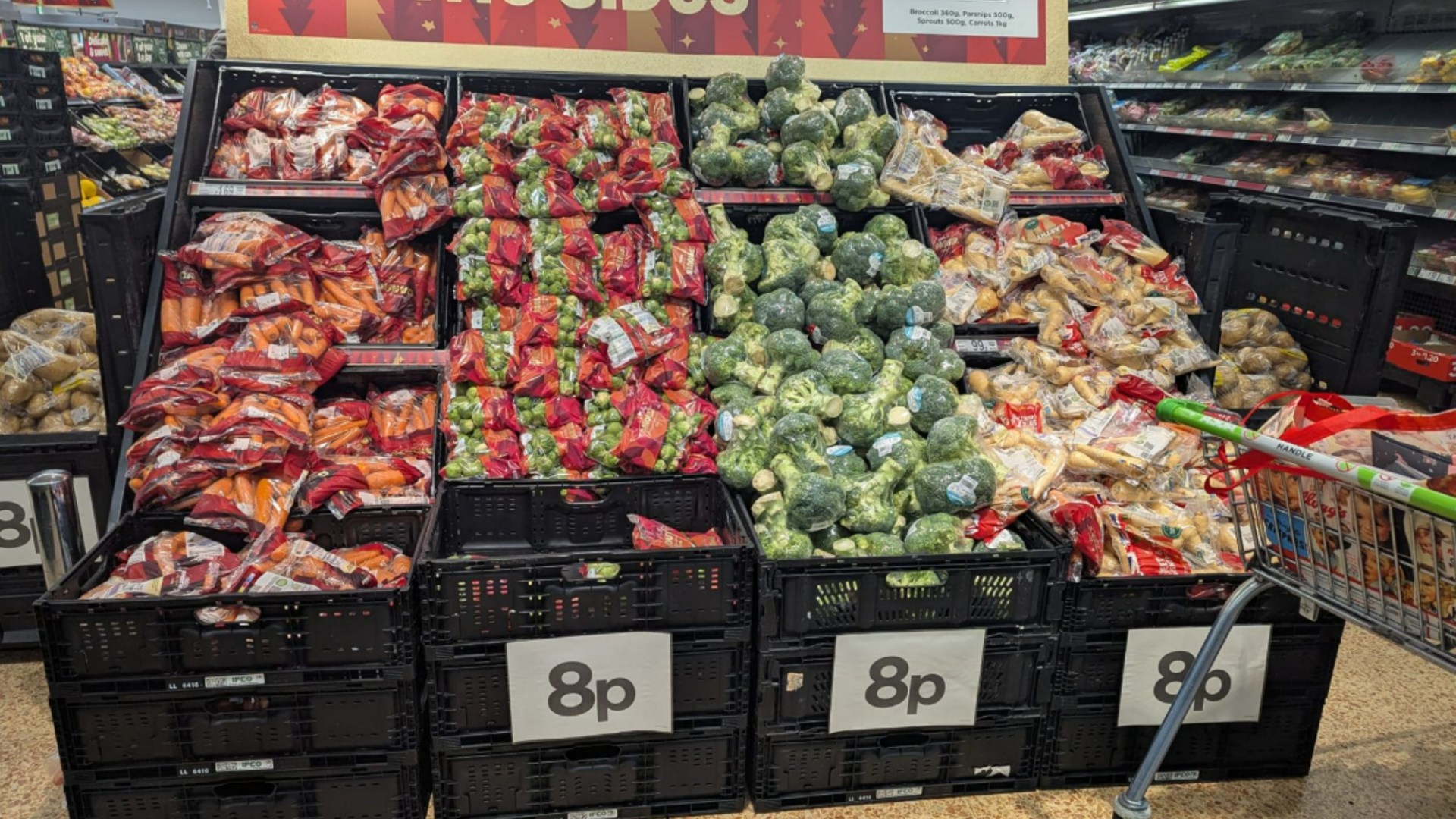
In the lead-up to Christmas 2023, major UK supermarkets engaged in a fierce price war on essential festive vegetables, offering shoppers unprecedented savings. Asda ignited the competition by slashing the price of a wide range of produce, including carrots, parsnips, Brussels sprouts, broccoli, and potatoes, to a mere 8 pence per designated weight or unit. Excited shoppers flocked to social media to share their bargain hauls, showcasing overflowing baskets brimming with Christmas dinner essentials for under a pound. This aggressive pricing strategy, available from December 19th to 24th, allowed customers to stock up on festive staples without breaking the bank, notably without needing a loyalty card.
Asda’s dramatic price reduction set off a chain reaction among competitors. Aldi swiftly matched Asda’s 8p offer on an almost identical selection of vegetables, intensifying the competition. Lidl followed closely behind, pricing their Christmas vegetables at a still-competitive 9p. This price war translated into significant savings for consumers, with Lidl estimating a full Christmas dinner with all the trimmings costing a mere £1.83 per person, or £11 for a family of six. The availability of these ultra-low prices extended from December 19th to Christmas Eve, giving shoppers ample time to take advantage of the deals.
While Asda, Aldi, and Lidl offered these rock-bottom prices without any loyalty card requirements, other major supermarkets also joined the fray, albeit with slightly higher prices and the caveat of loyalty card membership. Tesco, Sainsbury’s, and Morrisons offered comparable vegetable selections at 15p, 15p (with Nectar card), and 10p (with Morrisons More card) respectively. These offers, while not as dramatic as the 8p deals, still presented significant savings compared to regular prices and provided options for shoppers loyal to specific supermarket chains. The offers generally ran in the week leading up to Christmas, ending on Christmas Eve.
The supermarket price war on Christmas vegetables offered a welcome relief to consumers facing the pressures of rising living costs. The ability to purchase essential ingredients for a fraction of the usual price allowed families to enjoy a traditional Christmas dinner without overspending. The competitive landscape ultimately benefited shoppers, driving prices down and offering more choice. The strategies employed by the supermarkets highlight the importance of attracting and retaining customers during the highly competitive Christmas shopping period.
Beyond the specific deals offered by individual supermarkets, the broader context of Christmas shopping provides opportunities for consumers to save money. Strategies like limiting the number of gifts purchased, planning ahead by taking advantage of January sales for the following year, comparing prices online, and shopping in Boxing Day sales or outlet stores can significantly reduce the financial burden of the festive season. By combining smart shopping habits with the competitive prices offered by supermarkets, consumers can enjoy a more affordable and less stressful Christmas.
In conclusion, the 2023 Christmas season saw an unprecedented price war among UK supermarkets, focusing particularly on festive vegetables. Asda’s initial 8p offer triggered a competitive response from Aldi and Lidl, creating an environment of exceptional value for consumers. Other major supermarkets, while requiring loyalty cards, also offered discounted prices, ensuring that shoppers across the board could benefit from the competitive landscape. These deals, combined with broader money-saving strategies for Christmas shopping, provided a welcome respite for consumers navigating increasing economic pressures, allowing for a more affordable and enjoyable festive season.