

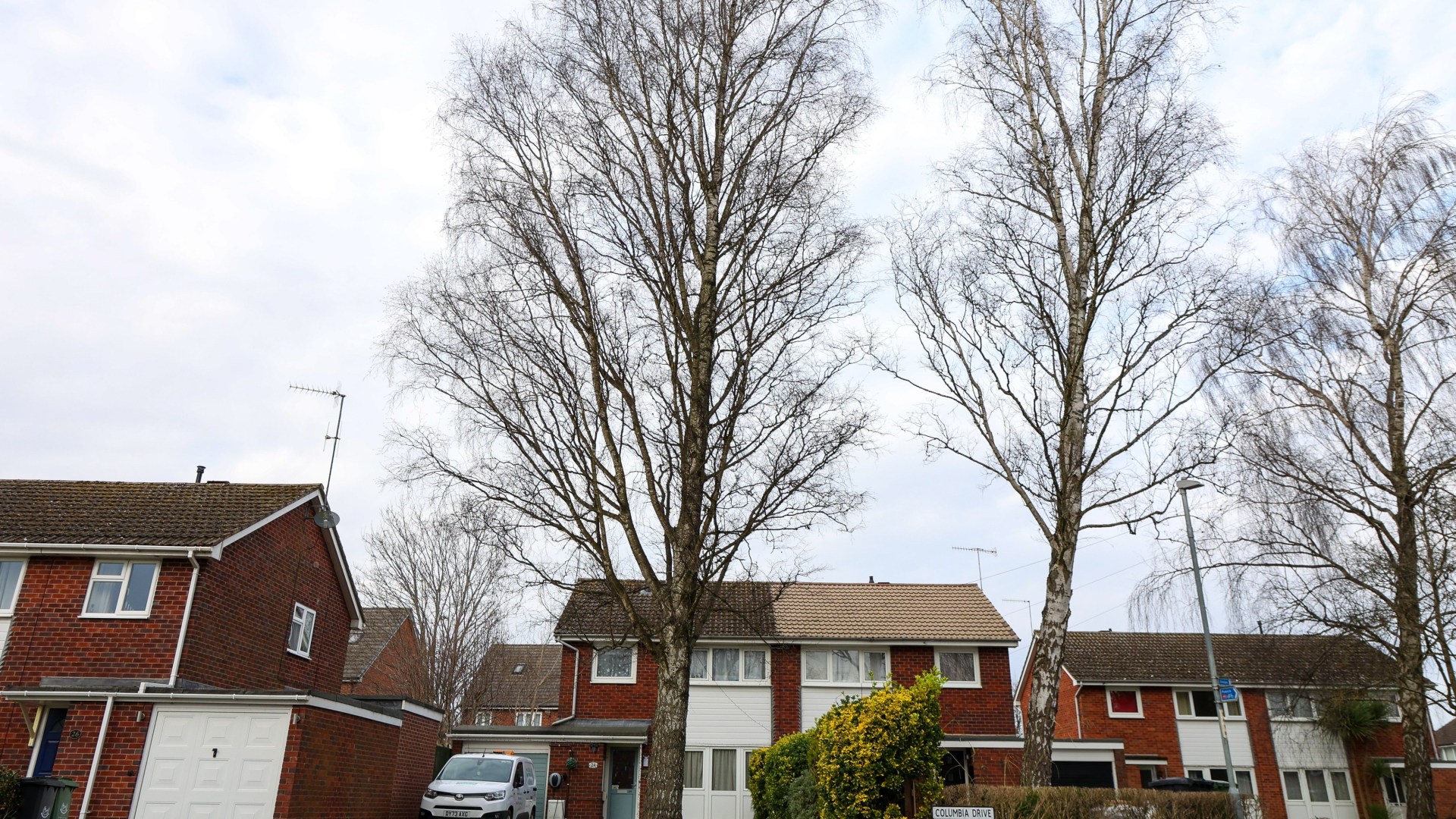
Residents of Columbia Drive in Worcester, England, have expressed mounting concerns over what they perceive as a looming threat from an exceptionally tall silver birch tree, estimated to be around 100 feet high. They fear the tree, which towers over their properties, presents a significant safety hazard, with the potential to topple over and cause substantial damage to their homes and vehicles. Their anxieties are heightened by the regular occurrence of falling branches, particularly during periods of strong winds and storms. Despite their repeated pleas, Worcester City Council has declined to intervene, asserting that the tree poses no immediate danger and is protected by a preservation order.
The homeowners living in the shadow of the imposing birch highlight several issues arising from its presence. Beyond the overarching fear of the tree’s potential collapse, they point to the constant shedding of branches as a persistent nuisance and safety risk. The fallen debris not only litters their properties but also poses a potential threat to parked cars. Moreover, they claim the tree’s extensive root system is disrupting the ground around their houses, causing further concern about its stability. One resident, who requested permission to fell the tree and replace it with a smaller, more manageable one, was met with refusal from the council.
The residents’ anxieties extend beyond the single tree, encompassing several other similarly tall birches lining Columbia Drive. They argue these trees, planted approximately 20 years ago, have now outgrown their designated spaces, encroaching upon private gardens and creating an increasingly hazardous environment. Chris Davis, a local resident, emphasizes the urgent need for intervention, asserting that the trees should be reduced in height by roughly a third. He warns that without proactive measures, a severe storm could trigger their collapse, resulting in significant damage to nearby homes. He also points out the irony that even trees showing signs of decay and posing the greatest risk are protected by preservation orders.
Other residents echo these concerns. Helen Dawkins stresses the evident danger posed by the trees’ excessive height, particularly during strong winds, and calls for immediate action to prevent a potential disaster. Another resident compares the towering birch to a hypothetical building of the same height, arguing that such a structure would never receive planning permission. This resident also laments the persistent shade cast by the tree, which deprives some rooms in their house of sunlight throughout the summer months. The constant snapping and breaking of branches during windy conditions further underscores their fears. While acknowledging the aesthetic value of the trees, residents maintain that their excessive size overshadows their benefits, creating an unacceptable level of risk.
The legal framework surrounding tree preservation orders adds another layer of complexity to the situation. While homeowners have the right to appeal to the local planning authority if a tree on their property is subject to a TPO, their options are limited. Appeals can be made on certain grounds, such as the tree posing a danger. However, if the council upholds the order, the only recourse is to appeal to the High Court within six weeks. TPOs can be applied to individual trees deemed worthy of protection, such as native species or those contributing positively to the local environment. Entire woodlands can also be covered by these orders. Unauthorized felling of a protected tree can lead to prosecution by the council. In this case, one resident, Mr. Petrowsky, lodged an appeal citing the dangerous nature of the tree, but the council rejected it.
Worcester City Council, however, maintains that there is no evidence to suggest the silver birch tree is unhealthy or presents an immediate threat to residents. They argue that silver birches are naturally lightweight and that regular maintenance, including the removal of deadwood, would adequately address concerns about falling branches without necessitating the tree’s removal. Furthermore, they suggest that parked cars on the lawn near the tree may be exacerbating issues related to surface root exposure and soil compaction. The council reiterates the tree’s protected status, emphasizing that planning permission is required for any felling or pruning work. They point to the presence of several other silver birches in the area, classifying the tree in question as a valuable component of the local streetscape. They conclude that insufficient evidence has been presented to justify the tree’s removal. This stance leaves the residents of Columbia Drive in a precarious position, caught between their genuine safety concerns and the council’s insistence on preserving the tree.