



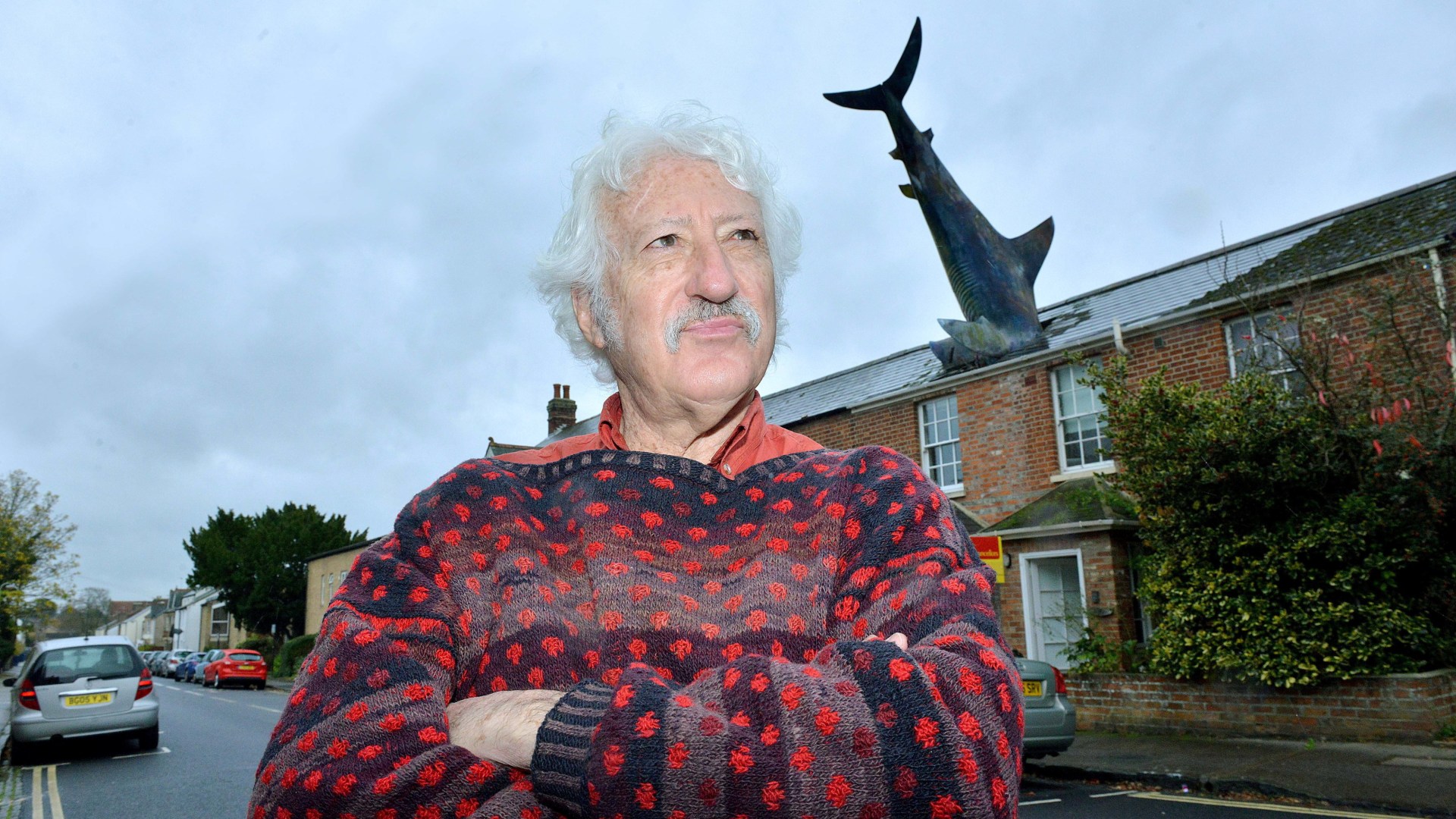
The Headington Shark, a prominent landmark in Oxford, England, has become embroiled in a planning dispute that pits artistic expression against local regulations. The 25-foot fiberglass and steel shark, seemingly impaled in the roof of a terraced house, has captured public attention for decades. It was installed in 1986 by journalist Bill Heine as a protest against the US bombing of Libya and a broader statement against nuclear proliferation. Heine intended the artwork to provoke thought and challenge conventional notions of art and public space, deliberately leaving its meaning open to interpretation. His son, Magnus Hanson-Heine, inherited the property, known as the Headington Shark Home, in 2019.
Following his father’s passing, Magnus decided to share the unique experience of living with the shark by listing the property as a short-term rental on Airbnb. The unusual accommodation quickly gained popularity, attracting guests intrigued by its quirky charm and historical significance. The nightly rate of £159 reflected the novelty and demand for the unique experience. However, this entrepreneurial venture soon ran afoul of local planning regulations.
An anonymous complaint lodged with the Oxford City Council brought the Headington Shark Home under scrutiny. The council determined that operating the property as a short-term rental violated existing planning regulations, effectively banning Magnus from continuing the Airbnb operation. Magnus, arguing that the rental provided valuable income and contributed to Oxford’s tourism sector, appealed the decision to the Planning Inspectorate. He emphasized the artistic legacy of the shark and its contribution to the local cultural landscape, highlighting his father’s intention to challenge censorship through the installation.
Despite Magnus’s efforts, the Planning Inspectorate upheld the council’s decision. The ruling stated that the short-term rentals must cease by March 11, 2025. This decision sparked debate about the balance between preserving the character of residential neighborhoods and recognizing the value of unique artistic expressions. Magnus expressed disappointment with the outcome, arguing that the ruling would negatively impact Oxford’s tourism and accommodation options. He maintained that the Headington Shark Home provided a unique and memorable experience for visitors, contributing to the city’s vibrant cultural scene.
The case of the Headington Shark highlights the complexities of navigating planning regulations, especially when artistic expression intersects with residential zoning. The shark, originally intended as a provocative statement against censorship, now finds itself subject to a different form of restriction. The debate surrounding the property’s use raises questions about the role of art in public spaces and the extent to which local authorities can regulate unconventional forms of expression. The decision also underscores the challenges faced by property owners seeking to utilize their properties in innovative ways within the constraints of existing planning frameworks.
The future of the Headington Shark Home remains uncertain. While the short-term rental operation is set to cease, the shark itself will remain a fixture on the Oxford skyline. It serves as a lasting testament to Bill Heine’s artistic vision and a reminder of the ongoing tension between individual expression and community regulations. The controversy surrounding its use as an Airbnb has further cemented its place in local lore, adding another layer to its complex and intriguing history. The shark, once a symbol of protest against censorship, now stands as a symbol of the ongoing dialogue surrounding art, public space, and the power of local governance.