



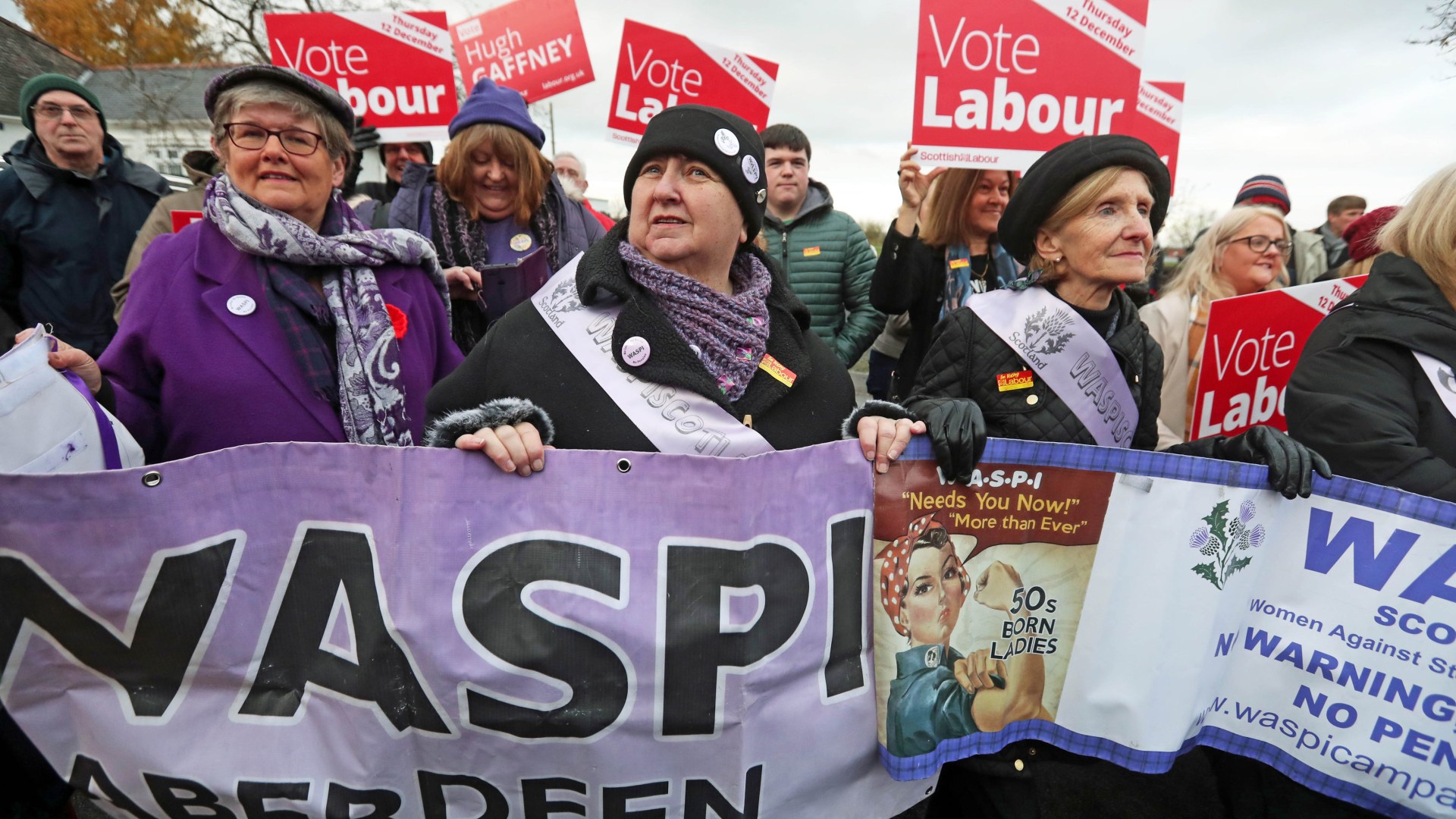
The UK government has delivered a decisive blow to the long-standing campaign of Women Against State Pension Inequality (WASPI), rejecting calls for compensation for the accelerated rise in the state pension age for women born in the 1950s. Welfare Secretary Liz Kendall justified the decision by arguing that the affected women “suffered no direct financial loss” and that the majority were aware of the impending changes. This announcement impacts approximately 3.8 million women who saw their retirement age gradually increase from 60 to 65 between 1995 and 2011, a move that sparked the WASPI movement in 2015. Despite acknowledging hardships faced by some of these women, the government maintains its position, emphasizing the affordability and fairness of its decision to taxpayers.
The core of the WASPI campaign rests on the claim that women were inadequately informed of the changes, disrupting their retirement plans and causing financial hardship. While accepting the principle of equal state pension age for men and women, the campaigners argue that the implementation was flawed, leaving them unprepared for the delayed retirement. They highlight the sudden unemployment, dependence on zero-hours contracts, and loss of independence that many women faced. Particularly affected were those born between December 1953 and October 1954, who experienced an 18-month delay in their retirement. The government, however, contests the narrative of widespread unawareness, citing evidence suggesting that most women were informed of the changes.
Kendall’s statement in the Commons emphasized two key points: the widespread awareness of the rising state pension age and the limited impact of delayed DWP letters informing women about the changes. These factors, along with other considerations, led the government to conclude that financial compensation is unwarranted. Kendall further highlighted the significant cost of the proposed compensation scheme, ranging from £3.5 billion to £10.5 billion, arguing that such a substantial payout to women who were largely aware of the changes would be disproportionate and unfair to taxpayers. Instead, the government is focusing on protecting the pensions triple lock, ensuring that state pensions will increase substantially by the end of this Parliament.
While acknowledging the financial struggles and anxieties experienced by some women born in the 1950s, particularly amidst rising living costs and diminished savings, the government defends its decision. Kendall reassured these women of the government’s commitment to protecting the pensions triple lock, a mechanism that guarantees state pension increases in line with inflation, earnings growth, or a minimum of 2.5%, whichever is highest. This measure is presented as a more sustainable and equitable approach to supporting pensioners compared to the large-scale compensation demanded by the WASPI campaign.
The rejection of compensation has drawn sharp criticism, particularly from the Liberal Democrats who labeled it a “day of shame for the government.” They accuse the government of abandoning millions of women wronged through no fault of their own, disregarding the recommendations of the independent Ombudsman. This stark contrast in perspectives highlights the ongoing debate surrounding the government’s handling of the state pension age changes and its impact on women born in the 1950s. The government’s focus on the triple lock protection contrasts with the WASPI campaign’s emphasis on the lack of adequate notice and subsequent financial hardships.
The WASPI campaign, initiated in 2015, aimed to address the perceived injustices arising from the accelerated rise in the state pension age for women. The campaign’s focus is not on reversing the equalisation of the pension age, but rather on the manner in which the changes were implemented. The argument centers around inadequate notice, leading to disrupted financial plans and undue hardship. The government’s counter-argument hinges on the assertion that sufficient notice was given and that large-scale compensation would be an unfair burden on taxpayers. This ongoing disagreement highlights the complex interplay of policy changes, their impact on individuals, and the subsequent political and social ramifications.