


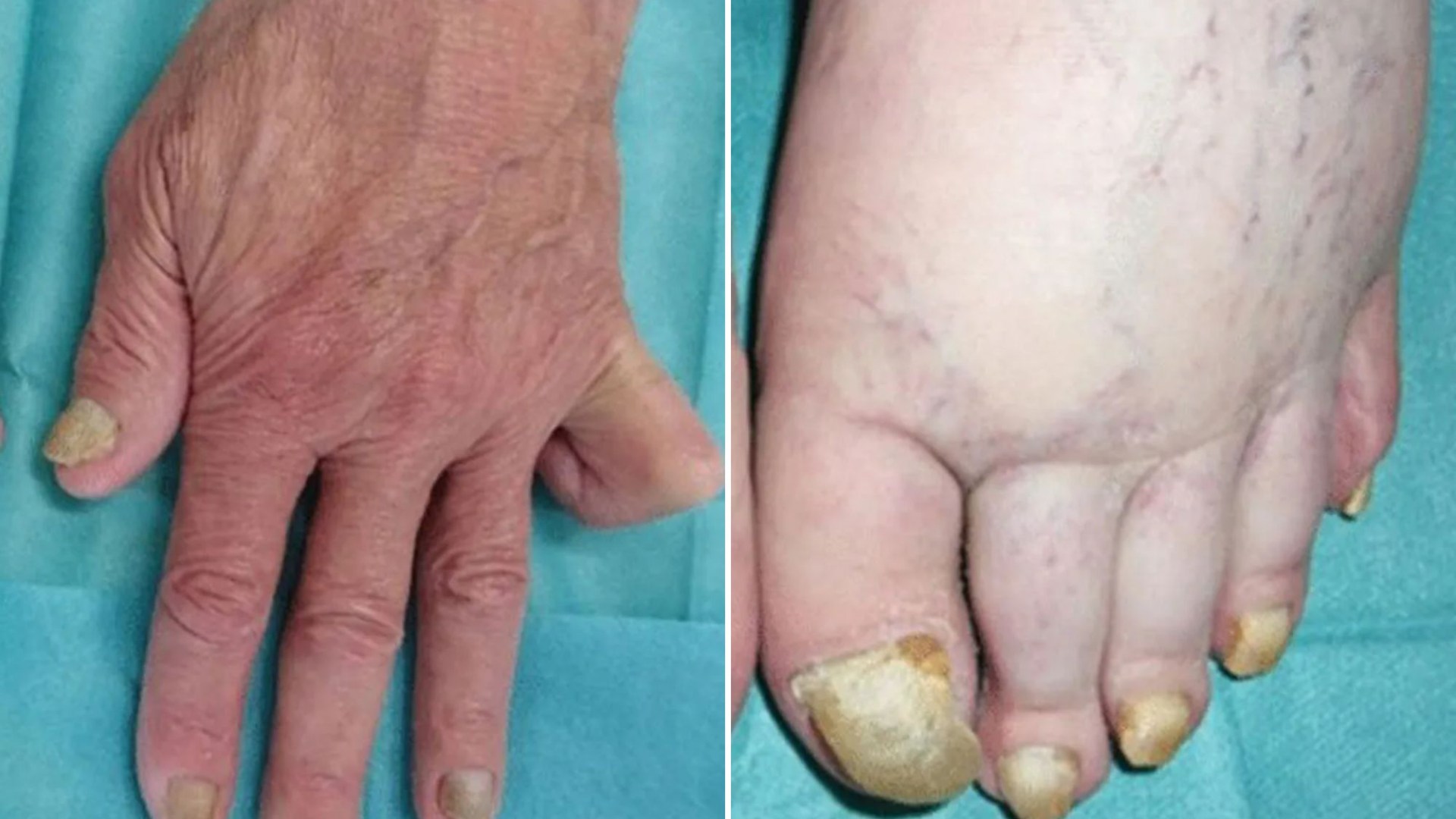
This medical case study highlights a rare instance where discolored nails were a symptom of a serious underlying medical condition. A 73-year-old man presented with yellowing, thickened, and brittle nails, accompanied by leg swelling and breathlessness. These seemingly disparate symptoms persisted for two years before he sought medical attention. Initial investigations, including chest X-rays and fluid tests, revealed a significant accumulation of chyle, a milky fluid, in the man’s lungs, a condition known as chylothorax. This indicated a disruption in the lymphatic system, the network responsible for draining excess fluids from the body.
Further examination through a CT scan unearthed the root cause: a benign tumor called a lipoma, located near the lungs. While non-cancerous, the 7cm fatty mass was compressing the thoracic duct, the body’s largest lymphatic vessel. This compression obstructed the normal flow of lymphatic fluid, leading to its accumulation in the lungs (chylothorax) and lower extremities (leg swelling). The impaired lymphatic drainage also manifested in the unusual symptom of yellow nails, a characteristic of Yellow Nail Syndrome (YNS). This case represents the first documented instance linking YNS to a tumor.
The medical team opted for a minimally invasive procedure known as percutaneous lymphatic embolization. This innovative technique involved sealing off the affected lymphatic vessels through a small incision, effectively reducing the fluid leakage. The patient’s leg swelling was managed with compression bandages and manual drainage therapy, while his yellow nails were treated with vitamin E cream and zinc supplements to promote healthy nail growth. The patient’s condition improved significantly following the intervention. His breathing became easier, the leg swelling subsided, and his nails began to show signs of recovery.
This case underscores the importance of recognizing that seemingly minor cosmetic issues, such as discolored nails, can sometimes be indicative of serious underlying health problems. Yellow Nail Syndrome, though rare, can be associated with chronic lung conditions, diabetes, and as highlighted in this case, even tumors. The complexity of YNS and the absence of standardized treatment guidelines necessitate further research into this rare disorder to better understand its underlying mechanisms and develop more effective treatment strategies.
The range of nail discolorations and their potential associated health conditions are further explored. Yellow nails, often associated with fungal infections, can also signal diabetes, psoriasis, or thyroid disorders. Pale nails may indicate poor circulation, anemia, or malnutrition, potentially pointing to liver or heart issues. Bluish nails suggest insufficient oxygen supply, possibly linked to respiratory or cardiac problems. White spots are usually caused by minor injuries or zinc deficiency, while black nails can be due to trauma, anemia, diabetes, kidney disease, or heart disease.
This case study serves as a crucial reminder for healthcare professionals and the general public alike to consider the broader diagnostic possibilities when encountering unusual nail changes. Dismissing such changes as purely cosmetic could lead to delayed diagnosis and treatment of potentially serious underlying conditions. The connection between nail health and overall systemic well-being warrants greater attention and research to refine diagnostic and therapeutic approaches for conditions like YNS and other nail-related manifestations of systemic diseases. The timely intervention in this case, utilizing a cutting-edge minimally invasive procedure, not only alleviated the patient’s distressing symptoms but also prevented potential long-term complications.