


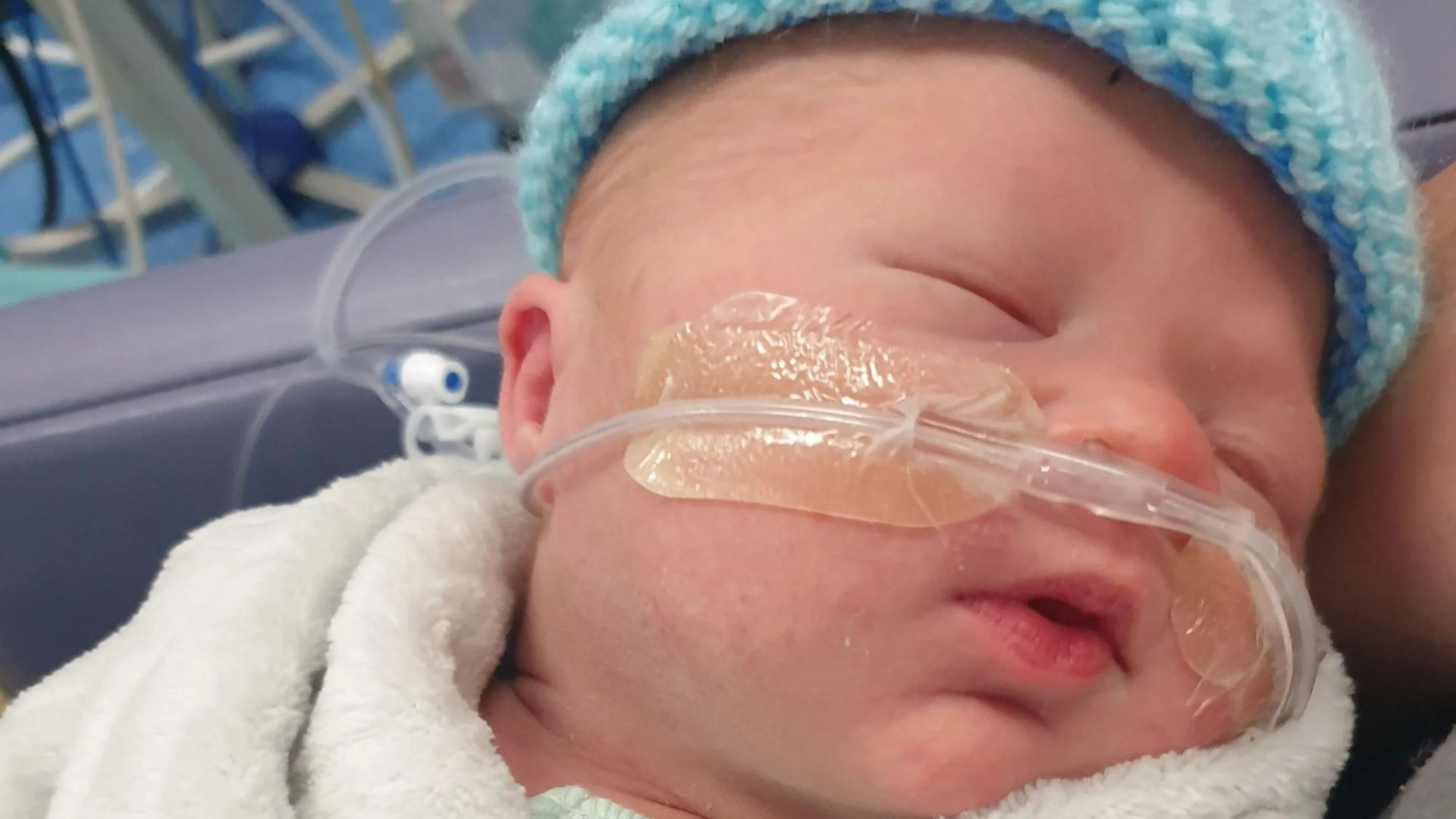
Jayne Carlton, a 45-year-old mother of three, is facing the heartbreaking reality of her five-month-old son, Elijah’s, first Christmas in the hospital. Elijah’s ordeal began with seemingly innocuous cold-like symptoms, including shortness of breath. Initially, Jayne attributed the symptoms to a common cold. However, when Elijah’s condition persisted for a week, Jayne sought medical advice from her GP, who then directed her to Hull Royal Infirmary. There, Elijah received a five-day course of antibiotics and was sent home. Unfortunately, the antibiotics proved ineffective, and Elijah’s symptoms worsened, prompting a frantic return to the hospital on November 19th. A blood test revealed the true culprit: Respiratory Syncytial Virus (RSV). Due to the severity of his condition, Elijah was immediately transferred to Leeds General Infirmary for specialized care.
RSV, while typically causing mild cold-like symptoms in most infants, poses a significant threat to babies and adults with weakened immune systems or underlying health conditions. For these vulnerable individuals, RSV can lead to severe complications such as pneumonia, bronchiolitis, and breathing difficulties. Elijah, born with Down syndrome and a severe heart condition, fell into this high-risk category. He was, in fact, eligible for an RSV vaccine that could have potentially mitigated the severity of his illness, but Jayne claims she was never informed of this option. The situation took a devastating turn when Elijah contracted COVID-19 while hospitalized, further complicating his recovery and leading to a critical point where doctors feared for his survival.
Jayne believes that Elijah’s underlying health conditions, particularly his heart defect, exacerbated the RSV infection. The combination of Down syndrome and a leaky heart valve compromised his ability to fight off the virus, necessitating intensive medical intervention. This experience has transformed Jayne into a staunch advocate for vaccinations. She now urges parents to ensure their children receive all recommended vaccines, including those for RSV in high-risk infants. Jayne maintains that while vaccines may not completely prevent infection, they can significantly lessen the severity of the illness and potentially prevent life-threatening complications.
While Elijah slowly began to recover from the RSV infection, his hospital stay was prolonged by the additional burden of COVID-19. The ordeal has been emotionally draining for Jayne, who faced the agonizing possibility of losing her son. The uncertainty and fear surrounding Elijah’s condition cast a long shadow over what should have been a joyous first Christmas for the family. Jayne recounts the harrowing moments when doctors warned her that Elijah might not survive, emphasizing the emotional toll this experience has taken on her and her family.
The heartbreaking reality is that Elijah will spend his first Christmas in the hospital, as doctors deem it necessary for his continued recovery. Jayne remains hopeful that he will soon be well enough to have his breathing tube removed and eventually return home. Despite the setbacks, she celebrates every small step toward his recovery, recognizing the incredible fight he has put up against both RSV and COVID-19. The experience has brought the importance of vaccination into sharp focus for Jayne, who is determined to raise awareness among other parents about the potential dangers of RSV and the protective benefits of vaccination.
This case highlights the critical role of preventative measures in safeguarding vulnerable children. While RSV is often considered a common cold, its potential to escalate into a life-threatening illness in high-risk infants underscores the need for greater awareness and access to preventative measures like the RSV vaccine. Jayne’s advocacy for vaccination serves as a poignant reminder of the power of preventative healthcare in protecting the most vulnerable members of our society. Her story emphasizes the importance of open communication between healthcare providers and parents to ensure that all eligible children receive the necessary vaccinations to protect them from potentially devastating illnesses like RSV.