


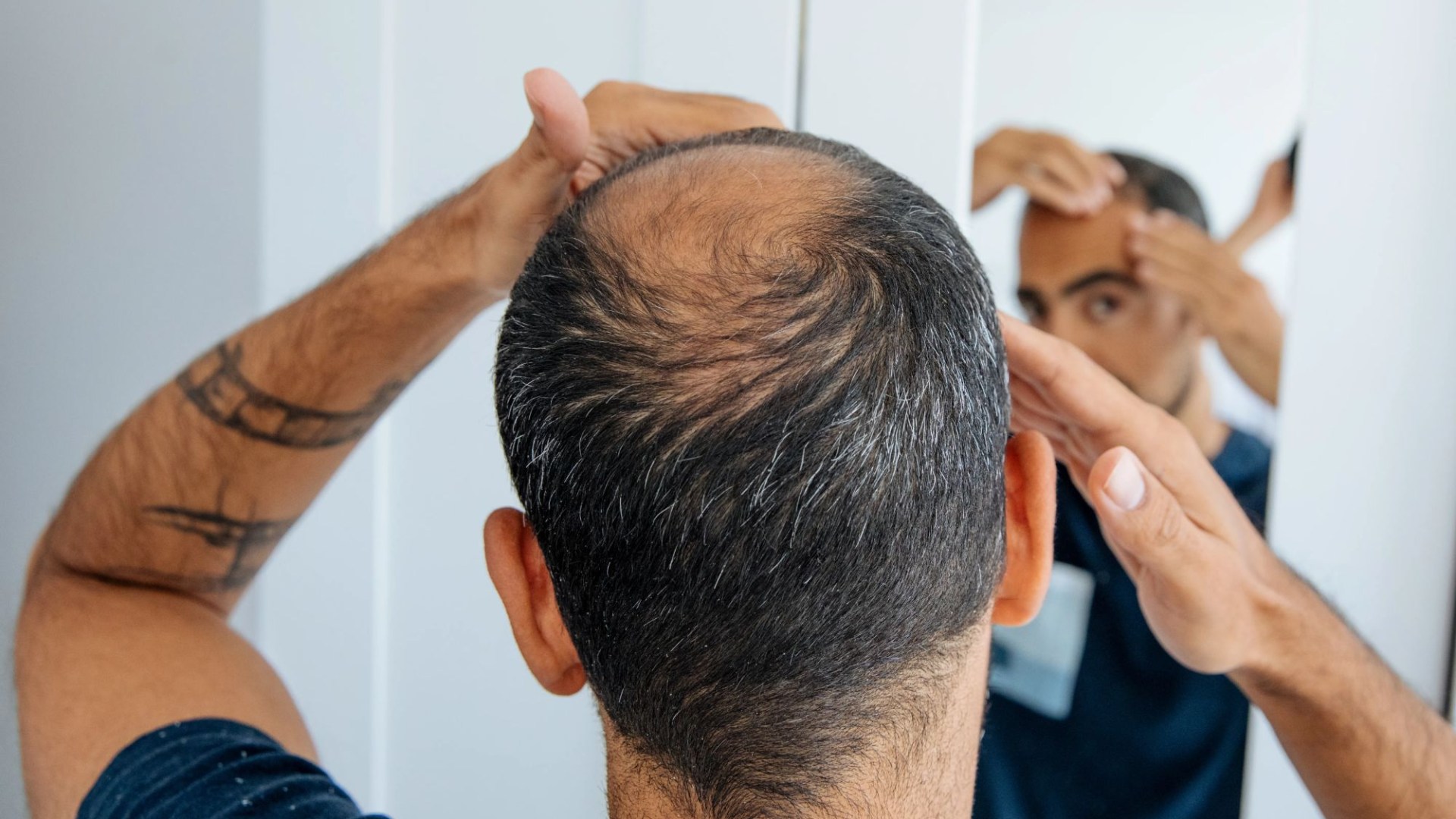
The age-old question of whether or not one will go bald may have a surprisingly simple answer, hidden in plain sight: the relative lengths of one’s ring and index fingers. Dr. Joe Whittington, an emergency medic with a significant social media presence, has highlighted a recent study suggesting a strong correlation between finger proportions and the likelihood of experiencing male pattern baldness. This phenomenon, also known as androgenic alopecia, is the most common form of hair loss in men, typically beginning in middle age and characterized by thinning hair at the crown and frontal scalp. The study, conducted by Chinese researchers, focused on the 2D:4D ratio, which compares the length of the second digit (index finger) to the fourth digit (ring finger). A lower ratio, where the ring finger is longer than the index finger, was found to be associated with a higher risk of androgenic alopecia.
Dr. Whittington explained that a longer ring finger indicates higher exposure to testosterone in the womb. This prenatal testosterone exposure, while seemingly unrelated to hair loss later in life, plays a crucial role in increasing the sensitivity of hair follicles to dihydrotestosterone (DHT). DHT is a hormone derived from testosterone that contributes to the miniaturization of hair follicles, ultimately leading to hair thinning and loss. Therefore, individuals with a lower 2D:4D ratio, signifying greater prenatal testosterone exposure, become more susceptible to the effects of DHT as they age, consequently increasing their risk of baldness. The study indicated that men with the lowest 2D:4D ratio were six times more likely to experience hair loss than those with the highest ratio.
This simple observation of finger length could potentially serve as an early warning sign for male pattern baldness, enabling individuals to seek preventative treatments sooner. While the link between finger length and baldness may seem surprising, it’s rooted in the complex interplay of hormonal influences during fetal development and their lasting impact on hair follicle sensitivity throughout life. The Chinese researchers suggested that this finding could empower individuals to be proactive in managing their hair health by seeking early interventions and potentially slowing or mitigating the progression of hair loss. This proactive approach could be particularly beneficial for those with a family history of baldness, who are already at an increased risk.
Male pattern baldness, while predominantly affecting men, can also occur in women, though it presents differently. For men, it typically manifests as a receding hairline and thinning at the crown, while in women, it’s more likely to be diffuse thinning across the scalp. The condition is largely hereditary, often passed down through families, but the 2D:4D ratio offers a novel perspective on individual predisposition. It’s important to note that this correlation doesn’t guarantee baldness; it merely suggests a higher probability. Many factors contribute to hair loss, including genetics, age, overall health, and lifestyle.
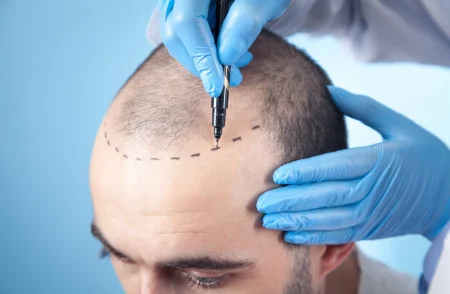
While a longer ring finger might raise concerns for some, it’s crucial to remember that hair loss is a natural process experienced by many. It’s normal to lose a certain amount of hair daily, with estimates ranging from 50 to 100 strands. However, excessive hair loss can be distressing, impacting self-esteem and body image. Various treatments are available, ranging from over-the-counter medications like minoxidil to prescription drugs like finasteride. Other interventions include steroid injections, immunotherapy, light therapy, and even hair transplants. Choosing the most suitable treatment depends on the individual’s specific circumstances and the severity of their hair loss.
The NHS advises consulting a GP if hair loss is causing significant concern. Not all hair loss treatments are available through the NHS, and no treatment is guaranteed to be 100% effective. It’s also important to manage expectations and understand that some forms of hair loss, such as male and female pattern baldness, are permanent. However, with early intervention and appropriate treatment, the progression of hair loss can often be slowed or even halted, allowing individuals to maintain a fuller head of hair for longer. The 2D:4D ratio offers a simple, non-invasive way to assess potential risk and empower individuals to take proactive steps in managing their hair health.