



Charlie Rolstone’s life took a dramatic turn when a seemingly innocuous trip to the pub resulted in a sudden collapse and a subsequent diagnosis that would forever alter her understanding of her health. For years, she had attributed her persistent motion sickness and migraines to excessive phone use, a common assumption in today’s digitally saturated world. However, the truth was far more complex and significantly more serious. An MRI scan revealed that Charlie suffered from a Chiari malformation, a condition where the lower part of the brain pushes down into the spinal canal, potentially causing pressure on the brainstem and spinal cord. This revelation finally provided an explanation for the debilitating symptoms that had plagued her for so long.
The diagnosis, delivered when Charlie was 41, came as a shock. Although Chiari malformations can be present from birth, Charlie had only experienced subtle symptoms throughout her life, including motion sickness triggered by watching television or using her phone. These seemingly minor inconveniences were, in fact, early warning signs of a much larger issue. The sudden seizure she experienced after her outing was a turning point, prompting the MRI scan that ultimately uncovered not just the Chiari malformation, but also epilepsy, brain lesions, and an aneurysm. While doctors couldn’t definitively link these conditions, the discovery highlighted the seriousness of her underlying neurological health.
Looking back, Charlie realized that many of her childhood and teenage “quirks” were actually symptoms of the undiagnosed Chiari malformation. Migraines, motion sickness, and “blackouts,” which she later recognized as absence seizures, had been a constant presence throughout her adolescence. Initially, she assumed she would outgrow these issues, a hope that was tragically misplaced. The collapse and subsequent diagnosis forced her to confront the reality of her condition and the profound impact it would have on her life.
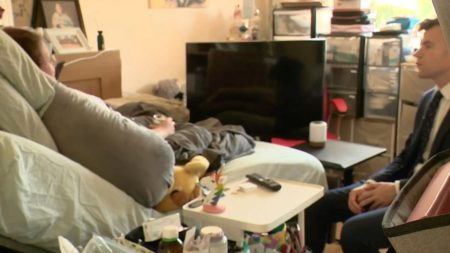
The Chiari malformation brought with it a cascade of new challenges. Simple activities like watching television or scrolling through her phone became triggers for motion sickness. Even raising her voice or coughing could induce a piercing pain in the back of her skull. The constant presence of these symptoms severely restricted her ability to work a regular job, necessitating the support of her partner, who became her full-time caregiver. While Charlie was relieved to finally have an explanation for her suffering, the uncertainty surrounding the long-term effects of the condition and the lack of a cure added a layer of anxiety to her already difficult situation.
Chiari malformations are categorized into four main types, with Type I being the most common. While not considered life-threatening, they can cause significant discomfort and disruption to daily life. Symptoms vary greatly, ranging from mild headaches and neck pain to more severe issues like dizziness, balance problems, muscle weakness, and vision disturbances. In some cases, Chiari malformations can lead to syringomyelia, a condition where a fluid-filled cyst develops within the spinal cord, potentially causing further neurological damage. Treatment options depend on the severity of symptoms, with painkillers often prescribed for headaches and neck pain. For more severe cases, surgery may be necessary to relieve pressure on the spinal cord and alleviate symptoms.
Charlie’s experience highlights the importance of recognizing and addressing even seemingly minor neurological symptoms. Her initial dismissal of her motion sickness and migraines as consequences of phone use delayed her diagnosis and potentially exacerbated her condition. The sudden seizure, while terrifying, ultimately proved to be a life-saving event, leading to the discovery of the Chiari malformation and allowing her to begin managing her symptoms more effectively. While there is no cure for Chiari malformations, early diagnosis and appropriate treatment can significantly improve the quality of life for those affected, minimizing symptoms and preventing further complications. Charlie’s story serves as a reminder that persistent and unexplained neurological symptoms should always be investigated by a medical professional, as they may be indicative of a more serious underlying condition.