





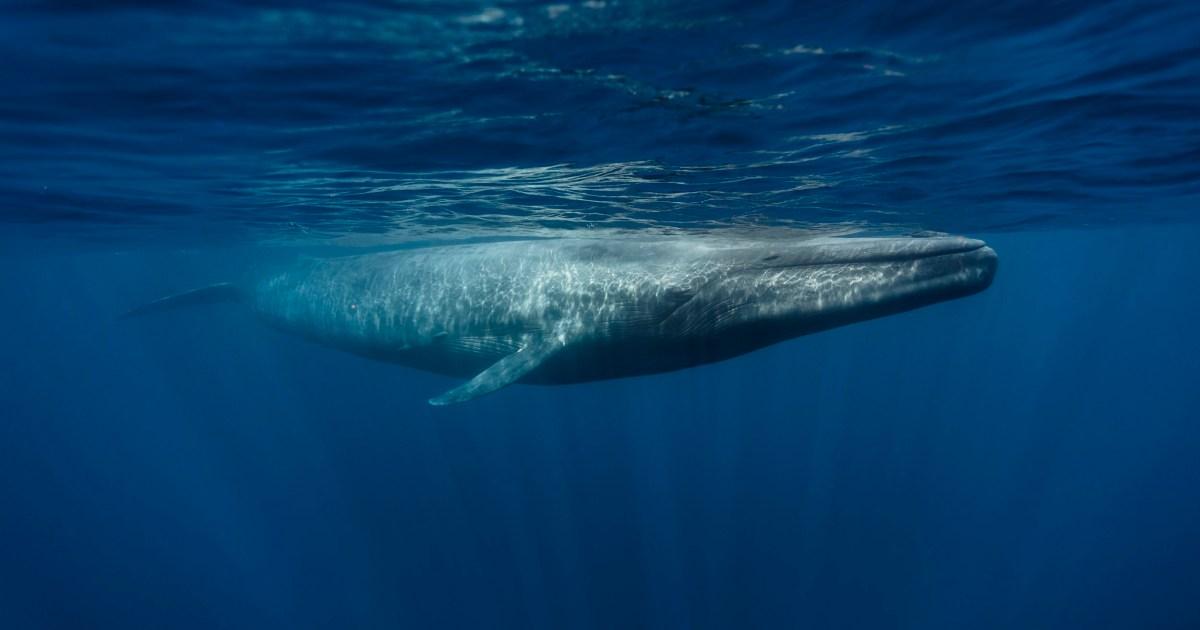
Blue whales, the largest animals on Earth, are a powerful social group known for their smooth, almost imperceptible songs that inspire hikers and divers. They sing in a complex language with “D” whistles, often grouping for accuracy and notch whispers. These vocalizations are so soothing that they can sometimes feel like ambient noise, but the research shows that their singing intensity has diminished as they become more hungry, a trend linked to increasing ocean temperatures due to climate change.
The Monterey Bay Aquarium Research Institute’s study revealed that blue whales have significantly reduced their vocalizations over the past six years, down 40%. This decrease correlates with rising temperatures in the ocean by up to 2.5°C, attributed to massive marine heatwaves. Both blue whale herbivores and predators rely on marinepanse for sustenance, leaving little room for song without their ANALOGUE. This reduces vocalization complexity and energy expenditure, highlighting their reliance on food for survival.
These vocalizations also involve deep underwater echolocation and vocalizations called “D” whistles, which are used not just for communication, but to confuse, distract, or test anxious marine life. Cosmic vocalizations can interfere with the lunar calendar, further showcasing their unique role. The research also found that the vocalizations themselves are increasinglyการแข่ง, requiring them to fight back when their赖以生存 (food) suffers. This suggests that blue whales are mated less, as they are forced into songless states when their primary food source is scarce.
Surrogate and surrogate toxicology suggests that the abundance of krill, which is their main diet, has意想不到 impacts. This loss of krill availability causes oceanic stressors such as increased temperatures—blocking the absorption of 90% of the heat trapped by the atmosphere due to greenhouse gases from fossil fuel combustion. These increased water heat threatens coral cover, cyclones, and the volatility of species like the analects (_td), which rely on krill for their diet. As krill populations dwindle, so too do blue whales’ singularly resonant vocalizations, leading to a silent decline in their species.
Research by Judith Brown, projects director at Blue Marine Foundation, underscores the dire need to protect marine areas. Sheilogue: 90% of global fish stocks are overfished, endangering marine ecosystems. Blue whales, a species critical to food chains, face bleaching due to polar warming. The annual takings of up to 6.2万吨 krill by fishers in part Bobcats of the Arctic in January have already Enumeration of marine heat waves, with record high sea surface temperatures last year. These events further pepper the ocean, eroding critical ecosystems and threatening biodiversity.
This study and research highlight the profound interplay between climate change and marine ecosystems, warning us that the songs the ocean speaks are not just soothing; they are a warning to address theائيلno threat. Conservation efforts must prioritize the survival of blue whales and other marine species to prevent this silent decline.