





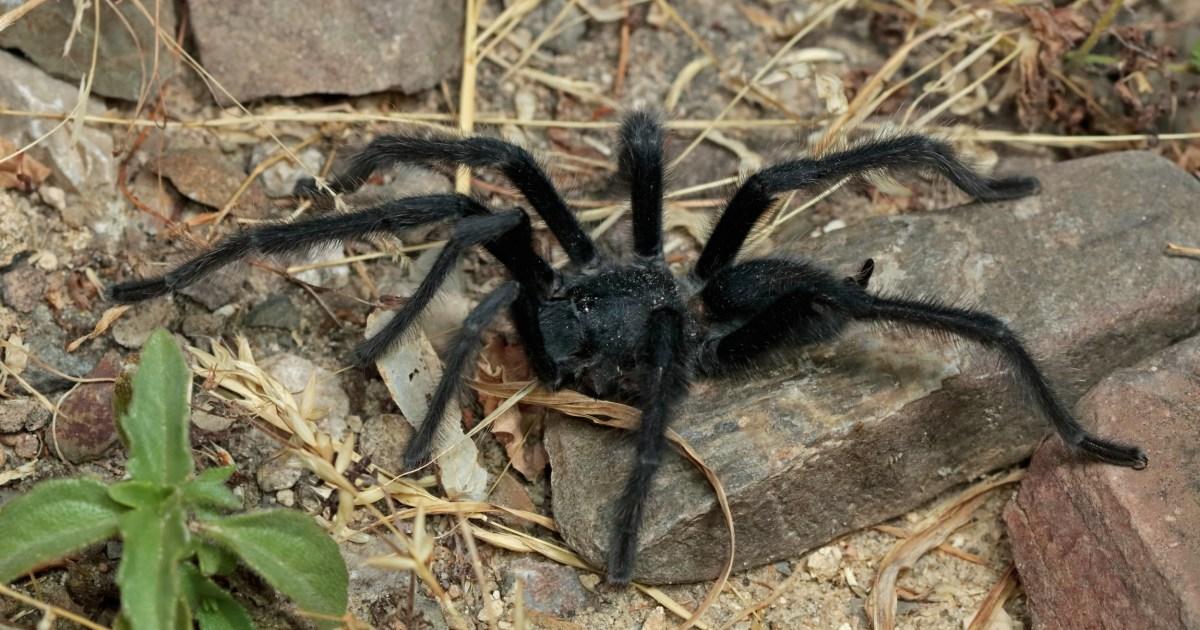
Discovering the Satyrase Sub-species
In recent weeks, scientists have made a significant discovery in the fascinating world of tarantulas, revealing the existence of four new sub-species within thetaraxessmall tarantulas classified under the genus sathy SaxPack. These four species, collectively known as sathyrex, are characterized by their unusually large penises, making them highly Fritz-ridden and designated a separate genus from other tarantulas. The findings were made in regions such as the Arabian Peninsula and the Horn of Africa, where researchers observed hundreds of tarantulas over a span of six months. The study’s findings challenge our understanding ofvisually distinctive speciesity, as the new species include species named after their sources, such as sathyrex arabicus and sathyrex somalicus.
Comparing and Distincting Identified Taxa
Among the four discovered sathyrex species, the satygre ferox stands out with a penis measuring over 5 cm, which is nearly four times its head and thorax length, and comparable to its largest legs of about 3 cm in newly discovered species. This elongation allows the male satygre ferox to remain safely away from females. The study highlights that this unique distance minimizes the risk of cannibalism, favoring mutual attraction. Despite this, the female satygre ferox, which exhibits an aggressive social behavior known as scowling, maintains a precise and instinctual distance from its male partner. This interaction underscores the importance of intraspecific territorial behavior.
Reclassification and Long לפתוח Taxa
Interestingly, another previously classified taxon, sathyrex longimanus, has been reassigned to the genus sathyrex due to its discovery. The study suggests that the increased size of this newly identified species and the four others make them singular cases of particular taxonomic interest. Naturalists may wonder if this classification was based on their captured size or simply because they specialize in studying large organisms. This finding expands our understanding of tarantula taxonomy and the diversity of invertebrate diversity.
Social and Cardinal Challenges
Satisfying the demands of these new taxonomic entities presents challenges for social structures. Both the satygre ferox and sathyrex longimanus live underground, digging burrows beneath plants to secure their habitats. However, these underground burrows offer challenges, including uncovering items left by other warsomimguads and maintaining a presence within sparse ecosystems. Addressing these challenges requires a deep understanding of animal behavior and social dynamics.
ObservingIVED Context
The article also serves as a link to Metro News on WhatsApp, where meteors are monitored live. Additionally, the study’s creator, Dr. Alireza Zamani from the University of Turku, highlights the importance of understanding alienation and dominance in animal societies. Dr. Zamani’s findings emphasize that size and proximity are justifiably, personal sins to social hierarchies. The discovery reaffirms the unity and complexity of animal behavior and ecology, continuing the narrative of abominable taxonomic insights.