




Hamed Amiri’s life took a dramatic turn in the year 2000, amidst the oppressive rule of the Taliban in Herat, Afghanistan. His mother, a courageous advocate for women’s rights, delivered a powerful speech at a local school, demanding equal educational opportunities for girls. This act of defiance, however, placed her directly in the crosshairs of the Taliban regime, who had ruthlessly banned women and girls from education, work, and even leaving their homes unaccompanied. The family received a chilling message: the local Taliban leader, known as “The Executioner,” had marked Hamed’s mother for death. Faced with this imminent threat, the family made the agonizing decision to flee their home, embarking on a perilous journey to seek refuge and a better life, particularly for Hamed’s older brother, Hussein, who suffered from a rare congenital heart condition.
The escape from Afghanistan was fraught with danger and uncertainty. The family sold all their possessions to pay a human trafficker, who smuggled them out of the country in the concealed compartment of a car. They endured a grueling 1,800-mile journey to Moscow, cramped and hidden, making brief stops for necessities. Upon arrival in Moscow, they were abandoned in a dilapidated apartment, their lives stripped bare, with no home, belongings, or legal status. Fear of discovery loomed large, forcing them to live in the shadows, their world shrinking to the confines of their temporary shelter. They clung to the hope of a better future, watching Russian television as a distraction from their precarious reality.
After six agonizing months in Moscow, the family received instructions for the next stage of their arduous journey. Their path led them through Ukraine and Poland, where they found temporary shelter in a barn, sharing space with animals. They were provided with fake passports to facilitate their passage to Austria, marking another step in their desperate bid for freedom. The journey continued through Germany, Belgium, the Netherlands, and finally France, each border crossing a precarious gamble. Along the way, they faced robbery at gunpoint, exploitation by traffickers who stole their dwindling funds, and a near-fatal incident where Hamed nearly fell from a moving lorry. Each experience etched itself into their memories, a testament to the immense sacrifices they made to escape the clutches of the Taliban.
Finally, in October 2015, after 18 months of perilous travel and the depletion of their life savings, the Amiri family arrived in Margate, Kent, hidden in the back of a lorry. Exhausted, relieved, and still gripped by fear, they had reached their destination. The journey had taken its toll, particularly on Hussein, whose health had deteriorated due to the arduous conditions. The family’s ordeal was not yet over; they faced questioning and scrutiny, even undergoing a DNA test to prove their familial relationship. Eventually, they were granted asylum and provided with an apartment in Cardiff, along with access to healthcare and education, a glimmer of hope after their long struggle.
Adapting to life in a new country presented its own set of challenges. Hamed, thrust into a secondary school environment where he knew no English, struggled to connect with his peers. Despite his love for football, a shared passion with many of his classmates, the language barrier and the emotional scars of his journey made it difficult to integrate. He hid his inner turmoil, pretending to be okay while grappling with the trauma he had endured. The family found solace in the knowledge that Hussein could finally receive the medical care he desperately needed. They traveled extensively across the UK, seeking specialist consultations and treatments, witnessing firsthand the dedication of the NHS staff. The UK became a haven, offering stability and hope, and the NHS played a crucial role in extending Hussein’s life.
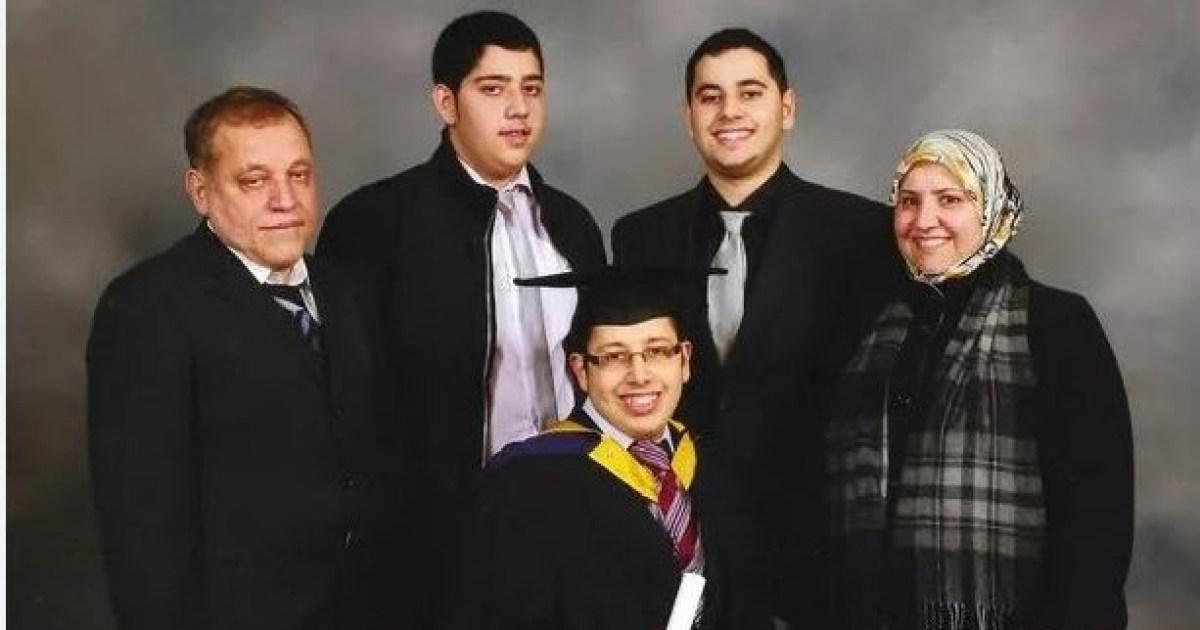
Tragically, despite the best efforts of medical professionals, Hussein’s health deteriorated, and he passed away in 2018 at the age of 32. His death left a gaping hole in the family, a profound loss that shook them to their core. He had been the unifying force, the glue that held them together. Despite the immense grief, Hamed found solace in the fact that Hussein’s life had been extended by 17 precious years, thanks to their escape from Afghanistan and the care he received in the UK. During that time, Hussein achieved remarkable milestones, earning a degree and working for the NHS, dedicating himself to helping others with cardiology problems. Hamed’s own journey of resilience continued; with the support of teachers, volunteers, and translators, he navigated the challenges of education, ultimately graduating with a degree in computer science and securing a position at Price Waterhouse Cooper. He found love, started a family, and embraced the joys of fatherhood, a testament to his unwavering spirit and determination to build a new life.
Hamed’s story is a powerful reminder of the human cost of conflict and displacement. He advocates for a shift in perspective, urging people to see refugees not as statistics or numbers, but as individuals with unique stories of resilience and sacrifice. He emphasizes the importance of empathy and understanding, urging people to recognize the extraordinary experiences of ordinary people forced to flee their homes. He reflects on his mother’s fight for girls’ education, a cause that resonates deeply now that he has a daughter of his own. He cherishes the freedom and opportunities his daughter will have, a stark contrast to the realities faced by many around the world. His story is a testament to the indomitable human spirit, the power of hope, and the importance of extending compassion to those seeking refuge and a better life.