





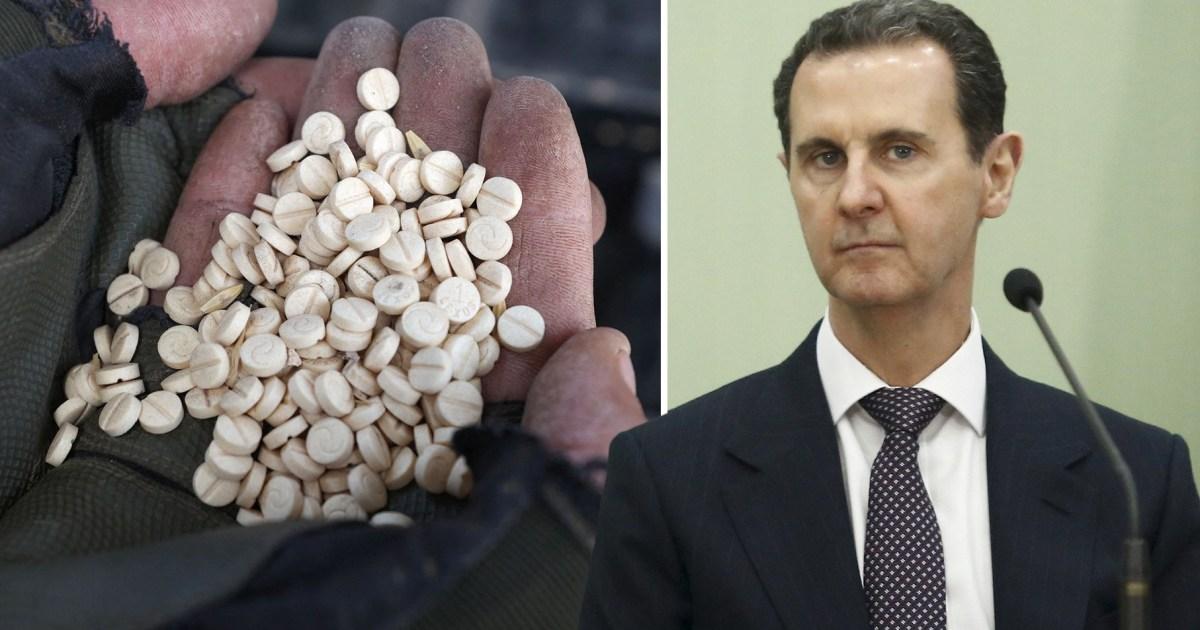
The Rise and Fall of Captagon: Assad’s Secret Weapon and Syria’s Chemical Lifeline
The fall of Bashar al-Assad’s regime in Syria marks the end of an era defined by brutal repression and a surprising reliance on a highly addictive drug. Captagon, often dubbed "poor man’s cocaine," became a financial lifeline for the Assad regime, generating billions of dollars annually and fueling the regime’s grip on power. This cheap-to-produce stimulant became Assad’s secret weapon, enabling him to finance his war machine while simultaneously devastating communities both within Syria and across its borders. The drug’s pervasiveness and profitability allowed the Assad regime to weather economic sanctions and international pressure, solidifying its control amidst a chaotic civil war.
The scale of Captagon production in Syria was staggering. Estimates suggest that over 80% of the global supply originated from within the country, transforming Syria into a narco-state under Assad’s rule. The drug trade generated an estimated £5 billion in 2021, a sum dwarfing Syria’s official GDP of £8 billion. This illicit income stream became crucial for the regime’s survival, allowing it to fund its military operations, reward loyalists, and maintain its repressive apparatus. While the Syrian government consistently denied involvement in the drug trade, evidence linking the regime to Captagon production and trafficking became overwhelming. Maher al-Assad, the president’s brother, was widely believed to be a key figure in overseeing the lucrative Captagon operation.
The Captagon trade followed established smuggling routes, flowing primarily through Jordan and Iraq before reaching other markets in the Middle East and beyond. The drug’s addictive nature and low production costs made it a highly profitable commodity, attracting criminal networks and fueling regional instability. The scale of the operation raised concerns not only about the humanitarian crisis within Syria but also about the destabilizing effects of the drug trade on neighboring countries. Jordan, in particular, bore the brunt of the smuggling operations, leading to increased border security and diplomatic pressure on the Assad regime.
The collapse of the Assad regime brought with it a dramatic decline in Captagon production and trafficking. With the removal of the regime’s infrastructure and oversight, the flow of the drug has reportedly decreased by as much as 90%. This sudden disruption in supply highlights the central role the Assad regime played in the drug trade. However, the vacuum left by Syria’s diminished production raises concerns about potential shifts in the global Captagon market. Experts warn that other actors, including Iran, could seek to capitalize on the situation and increase their own production to fill the void.
Beyond the drug trade, the fall of the Assad regime has also exposed the horrors of Syria’s prison system. Detention facilities, such as the notorious Sednaya prison, became symbols of the regime’s brutality. Thousands of political prisoners, activists, and ordinary citizens were detained without trial, subjected to torture, and often executed. Estimates suggest that over 100,000 people died in Syrian prisons during the civil war, a testament to the regime’s systematic repression. The liberation of these prisons and the release of prisoners represents a significant step towards accountability and justice for the victims of Assad’s regime.
The dismantling of the Captagon trade and the exposure of the prison system’s atrocities mark a pivotal moment in Syria’s history. The legacy of the Assad regime will be defined not only by brutal repression and civil war but also by its entanglement with the illicit drug trade. The ripple effects of this involvement will continue to be felt both regionally and internationally as the global community grapples with the consequences of Syria’s transformation into a narco-state. The future of Syria remains uncertain, but the fall of Assad presents an opportunity to rebuild the country and address the deep-seated issues that fueled the conflict. However, the challenges ahead are immense, and the international community must play a crucial role in supporting Syria’s transition towards a more stable and just future.