





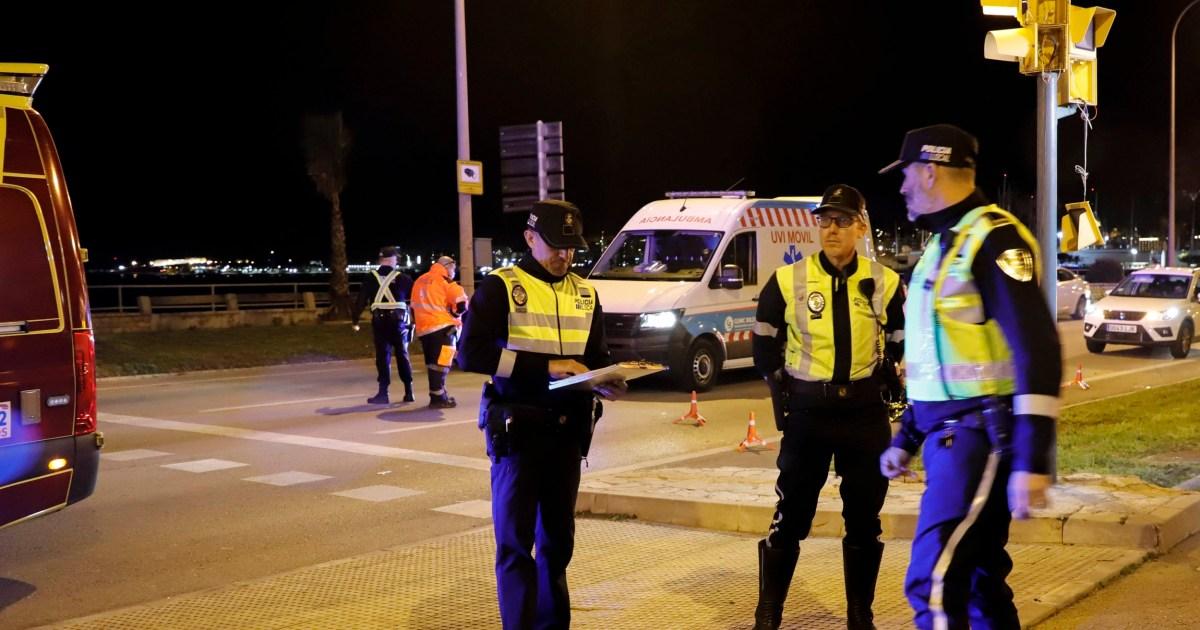
The tragic death of 32-year-old Jennifer Worth in Palma, Majorca, has left her family and friends reeling after the driver responsible was spared jail time. Worth, a former dental nurse and ballroom dancing enthusiast, was on a winter break with her partner, James Jeffcoate, when the incident occurred. Anna Carolina Lindell Sanchez, the driver of the 4×4 that struck Worth and injured Jeffcoate, received only a driving ban, a decision that has sparked outrage and disbelief. The judge ruled that Sanchez’s actions, while negligent, did not constitute criminal behavior, despite the vehicle lacking a valid MOT and having worn tires. This verdict has left Worth’s father, Michael Worth, determined to challenge the ruling, arguing that a suspended sentence and driving ban are the minimum acceptable punishment for the loss of his daughter’s life.
The incident unfolded as Worth and Jeffcoate were waiting to cross the road in a designated pedestrian area. According to Michael Worth, they were struck from behind by Sanchez’s vehicle with no indication of braking before impact. The judge attributed the accident to a “momentary distraction” on Sanchez’s part, which caused her to hit the curb, puncture the tires, and lose control of the vehicle. This “momentary distraction,” the court determined, fell within the realm of human error and did not rise to the level of criminal negligence, despite the fatal consequences. The court also dismissed the vehicle’s mechanical defects as contributing factors to the crash, further fueling the Worth family’s frustration and sense of injustice.
Michael Worth vehemently contests this interpretation of events, asserting that Sanchez’s inattention while driving directly resulted in his daughter’s death. He believes the case has been mishandled and is determined to bring public attention to what he perceives as a miscarriage of justice. The lack of any custodial sentence for Sanchez has amplified the family’s grief and sense of loss. Worth’s friends, like Judie Middlewick, also express their profound sadness and disbelief at the sudden loss of their vibrant and cherished friend. Middlewick’s words capture the collective sentiment of those who knew Worth, highlighting her infectious personality and the gaping hole her absence has left in their lives.
The court’s acquittal ruling hinges on the concept of “momentary distraction,” a fleeting lapse in attention that the judge deemed common to the average person. The ruling states that while Sanchez’s inattention was negligent, it was not so egregious as to warrant criminal charges. This interpretation effectively categorizes the incident as an unavoidable accident, a perspective that clashes sharply with the Worth family’s understanding of events. The ruling emphasizes that even a brief lapse in concentration, while undesirable, can occur with any driver and doesn’t automatically equate to criminal culpability. This reasoning, while perhaps legally sound, fails to address the devastating outcome of Sanchez’s momentary lapse, leaving the Worth family grappling with a sense of unresolved grief and injustice.
The prosecution had sought a £1,500 fine and a one-year driving ban for Sanchez, a penalty that the Worth family also considers inadequate given the gravity of the outcome. The disparity between the requested penalty and the actual outcome highlights the legal complexities of the case and the challenges in assigning appropriate consequences for negligent actions that result in death. The case raises broader questions about the legal framework surrounding traffic accidents and the adequacy of existing penalties in cases involving fatalities. The absence of any jail time for Sanchez appears to prioritize the principle of leniency for unintentional errors, even when those errors have irreversible and tragic consequences.
The Jennifer Worth case underscores the devastating impact of “momentary distractions” while driving and the complex legal challenges in determining appropriate accountability when such distractions lead to fatalities. The court’s decision to absolve Sanchez of criminal responsibility, while focusing on the momentary nature of her lapse in attention, has left Worth’s family and friends struggling to reconcile the legal outcome with the profound and permanent loss they have suffered. The case serves as a stark reminder of the potential consequences of even brief lapses in concentration while operating a vehicle and the ongoing debate surrounding the adequacy of legal frameworks in addressing such tragedies. The Worth family’s pursuit of justice for Jennifer highlights the emotional toll of such incidents and the enduring need for legal systems to effectively address the complexities of human error and its sometimes devastating consequences.