





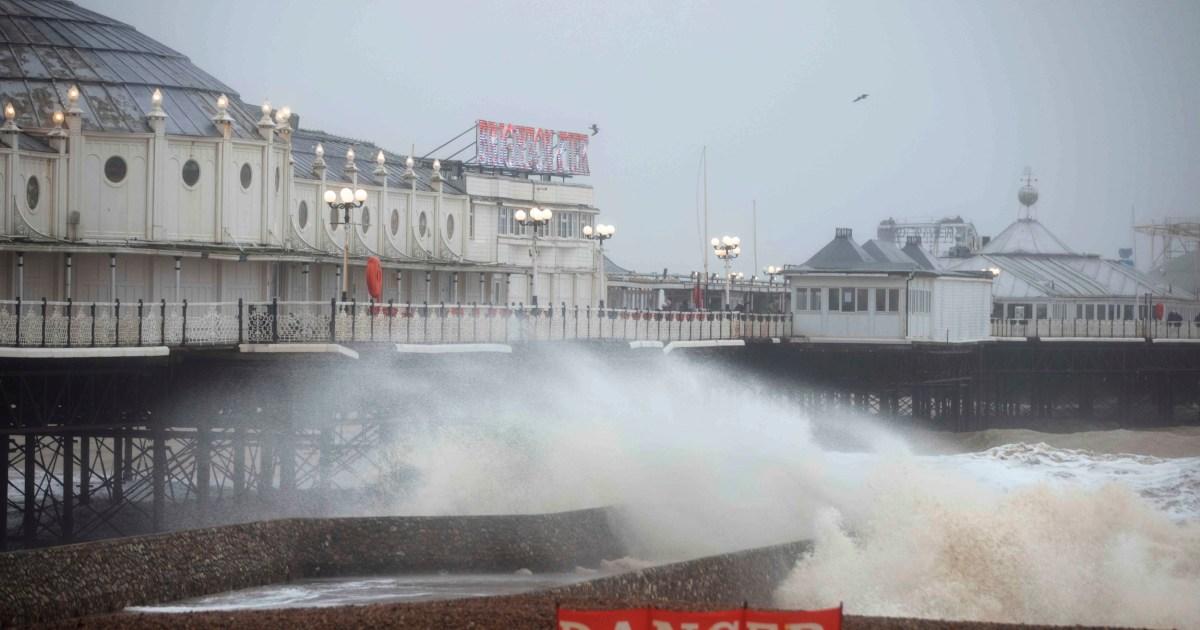
The Impending Arrival of Storm Eowyn and the UK’s Storm Naming System
The United Kingdom braces itself for the arrival of Storm Eowyn, the first named storm of 2025 and the fifth of the 2024-25 storm season. While the new year has just begun, the storm season, which runs from September to August, has already witnessed the impact of Storms Ashley, Bert, Conall, and Darragh. The latter, Storm Darragh, caused significant disruption in early December 2024, resulting in two fatalities, widespread power outages, the cancellation of the Merseyside derby, and travel chaos in the lead-up to Christmas. Eowyn’s arrival signals a continuation of this active storm season, bringing with it the anticipation of heavy rain and strong winds. The Met Office has issued warnings, urging residents to prepare for potential disruptions.
The naming of storms, a practice initiated in 2015, is a collaborative effort between the UK Met Office, Ireland’s Met Eireann, and the Dutch weather service KNMI. This year’s list of storm names pays homage to figures who have contributed significantly to meteorology and climate science. For instance, James is named after Group Captain James Stagg, the chief meteorologist who advised General Eisenhower on the weather forecast for D-Day, while Lewis is inspired by Lewis Fry Richardson, a pioneer in using mathematical and physical principles for weather forecasting using computers. Mavis Hinds, a key figure in the early days of Met Office computing, is also honored with a storm name. This practice not only provides a consistent system for identifying and tracking storms but also serves to educate the public about the rich history of meteorological science.
The 2024-25 storm season boasts a diverse list of names, ranging from Ashley and Bert to Vivienne and Wren. The previous year, 2023-24, witnessed twelve named storms, reaching as far as Storm Lilian in the alphabet. Whether the current season will see all the names on the list utilized remains to be seen, depending on the overall storm activity. The process of selecting these names involves a collaborative effort between the UK, Ireland, and the Netherlands, with some names, like Bert, originating from public suggestions. This collaborative approach reflects the international nature of weather systems and the importance of cross-border cooperation in forecasting and managing their impacts.
The practice of naming storms has a long and varied history. Before official naming conventions, storms were often identified by the locations they impacted or by the names of saints. In the Atlantic, a rotating list of male and female names is used, excluding those starting with Q, U, X, Y, and Z due to a limited pool of suitable options. Certain names are retired if the associated storms cause significant devastation, such as Hurricane Katrina and Sandy in the US, or Typhoon Haiyan in the Philippines. This practice acknowledges the profound impact of these storms and avoids using names that might evoke traumatic memories in future.
The impact of storms can be far-reaching, extending beyond immediate weather disruptions. Storm Darragh, for example, not only caused fatalities and power outages but also led to the cancellation of major sporting events and widespread travel disruptions. The economic repercussions of such events can be substantial, affecting businesses, transportation networks, and daily life. The naming of storms helps to highlight the potential severity of these weather systems and encourages the public to take appropriate precautions. By providing a clear and identifiable name, the Met Office and other meteorological agencies can effectively communicate warnings and advisories, ensuring that people are well-informed and prepared.
As Storm Eowyn approaches, it serves as a reminder of the power of nature and the importance of being prepared for severe weather. The naming of storms, a relatively recent practice, has become a crucial tool for communicating risk and ensuring public safety. By remembering the lessons learned from past storms and by heeding the warnings issued by meteorological agencies, individuals and communities can minimize the impact of these powerful weather systems and ensure their resilience in the face of nature’s fury. The collaboration between meteorological agencies in different countries also underscores the importance of international cooperation in addressing the challenges posed by extreme weather events.