





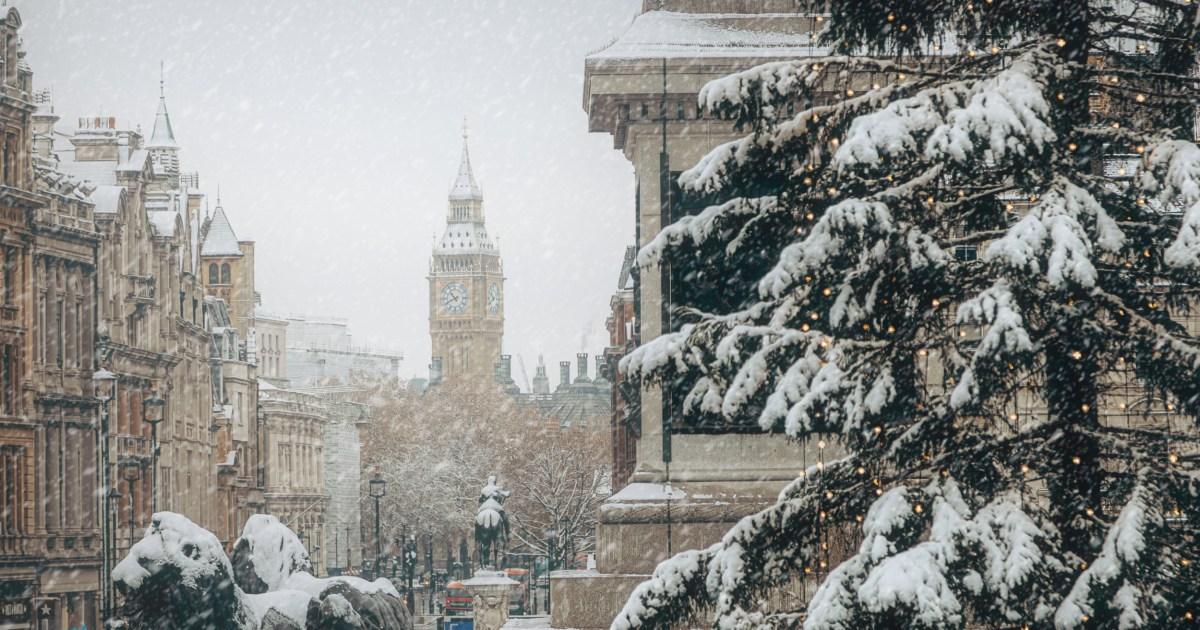
The allure of a white Christmas in London, a scene etched in festive dreams and holiday cards, remains a rare and cherished event. While the bustling metropolis doesn’t often experience the quintessential snow-covered landscape depicted in Dickens’ novels, the possibility of snowflakes dusting the city on Christmas Day always holds a certain magic. The Met Office defines a white Christmas simply as the presence of snow falling on December 25th, regardless of accumulation. By this definition, London has experienced several white Christmases in recent years, including 2017, 2020, 2021, 2022, and even 2023. However, these instances often involved fleeting flurries rather than the thick blankets of snow that truly transform the city into a winter wonderland.
The image of a truly white Christmas, with snow accumulating and blanketing the streets and rooftops of London, harkens back to a different era. The last time London experienced such a significant snowfall on Christmas Day was two decades ago. Historically, London has witnessed a handful of genuinely white Christmases since 1960, occurring in 1964, 1968, 1970, 1976, 1996, and 1999. These instances stand out as exceptions in the decades since, highlighting the increasing rarity of substantial snowfall on the holiday. While the recent past has seen a few technical white Christmases, the nostalgic image of a snow-laden London on December 25th remains a relatively infrequent occurrence.
Looking further back into history reveals a period when white Christmases in London were not only more common but also far more dramatic. During the “Little Ice Age,” a period spanning from approximately 1550 to 1850, winters across the Northern Hemisphere, including Britain, were considerably more severe and persistent. This era, vividly captured in the writings of Charles Dickens, saw frequent snowfall and even the freezing over of the River Thames. The frozen river became a hub of activity, hosting Frost Fairs where vendors, entertainers, and even barbers set up shop on the ice. The stark contrast between the harsh winters of the Little Ice Age and the milder winters of recent times underscores the significant shift in climate patterns.
The possibility of a white Christmas in 2024, however, appears to be slim. While some northern areas of the UK, such as Edinburgh and Newcastle, might see a light dusting of snow, London is predicted to experience a mild and relatively dry Christmas Day. The Met Office forecasts predominantly cloudy and settled conditions with light winds across much of the country. While the far north of Scotland might experience some wind and rain, the overall outlook suggests a mild Christmas Day, dashing hopes for a widespread blanket of snow across the UK, particularly in London.
The Met Office’s historical data indicates that roughly half of the years since 1960 have seen at least 5% of their weather stations record snowfall on Christmas Day. This statistic suggests a reasonable chance of experiencing a “white Christmas” in the technical sense, but it doesn’t guarantee the picturesque scenes of snow-covered streets and buildings that many associate with the holiday. The reality of a London Christmas is more likely to involve mild temperatures and cloudy skies, with perhaps a fleeting flurry of snow, rather than the transformative snowfall that creates a true winter wonderland.
While the likelihood of a white Christmas in London this year remains low, the enduring fascination with this festive image persists. The contrast between the historical reality of frequent snowy Christmases during the Little Ice Age and the increasing rarity of such events in modern times highlights the impact of changing climate patterns. While Londoners may not awaken to a snow-covered city on Christmas morning in 2024, the dream of a white Christmas continues to hold a special place in the hearts of many, adding a touch of magic to the holiday season.