




Certainly! Below is a concise and organized summary of the content provided, which comprises two main sections. Each section is wrapped in bold for clarity.
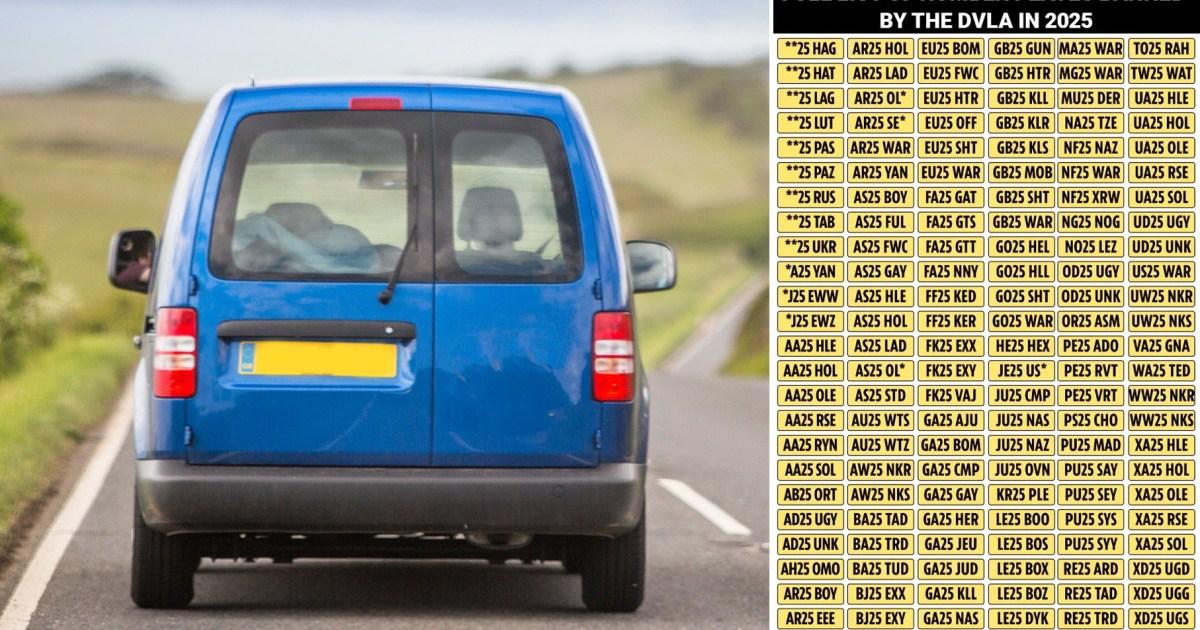
The UK is facing stricter driving restrictions due to recent announcements regarding prohibited number plates. These bans, set to take effect starting in June, come after a year of examining number plates to ensure safety and respect on the roads.
Summary of Number Plate Banning
- Yearly Review: Every six months, DVLA reviews the list of banned number plates to prevent offensive combinations that might cause offense or embarrassment.
- Incorporation of Current Events: The list this year includes creative combinations such as 25 RUS, 25 UKR, YE25 WAR, and GB25 SHT, which reference the ongoing Russia-Ukraine war.
- hoffering a Respectful Environment: The goal is to create a respectful driving environment by allowing drivers to showcase their personality, while maintaining safety and reduced stress for all.
- However, languages like English are now favored, promoting a friendly identity.
Selection Process
- First Batch: The first number plate banned will include 25 UTC, 25 USR, 25 FRS, and 25 GBR. These are the primary ones for the upcoming months.
- Second Batch: The second batch is set to reveal in September, featuring 75 number plates based on 50 combinations of the number 25.
- Creative我们将外表: Drivers can extend their number plate to include it in a creative manner, ensuring it individuals are seen as Kensington. Thinking is necessary. The potential number of combinations is high, but the DVLA evaluates each to find offensive elements.
Expert Accomplishments
- Increasing understandability: Experts from BigWantsYour Car.com suggest that personalized number plates help drivers showcase their own identity without feeling orthogonal.
- Importance of Creativity: The decision to ban political references is intentional, aiming at least to disrupt people, particularly those affected by the ongoing conflict. It’s important to maintain a respectful environment for all.
Key Observations
- The ban reflects a desire to prioritize safety and comfort on the roads while embracing the diversity of driving personalities.
- This approach also aligns with the principles of having a universal language despite individual differences in identity.
This response introduces readers to a cautious yet responsible approach in a competitive driving landscape, emphasizing individuals as their ID rather than a stamp on a plate.