




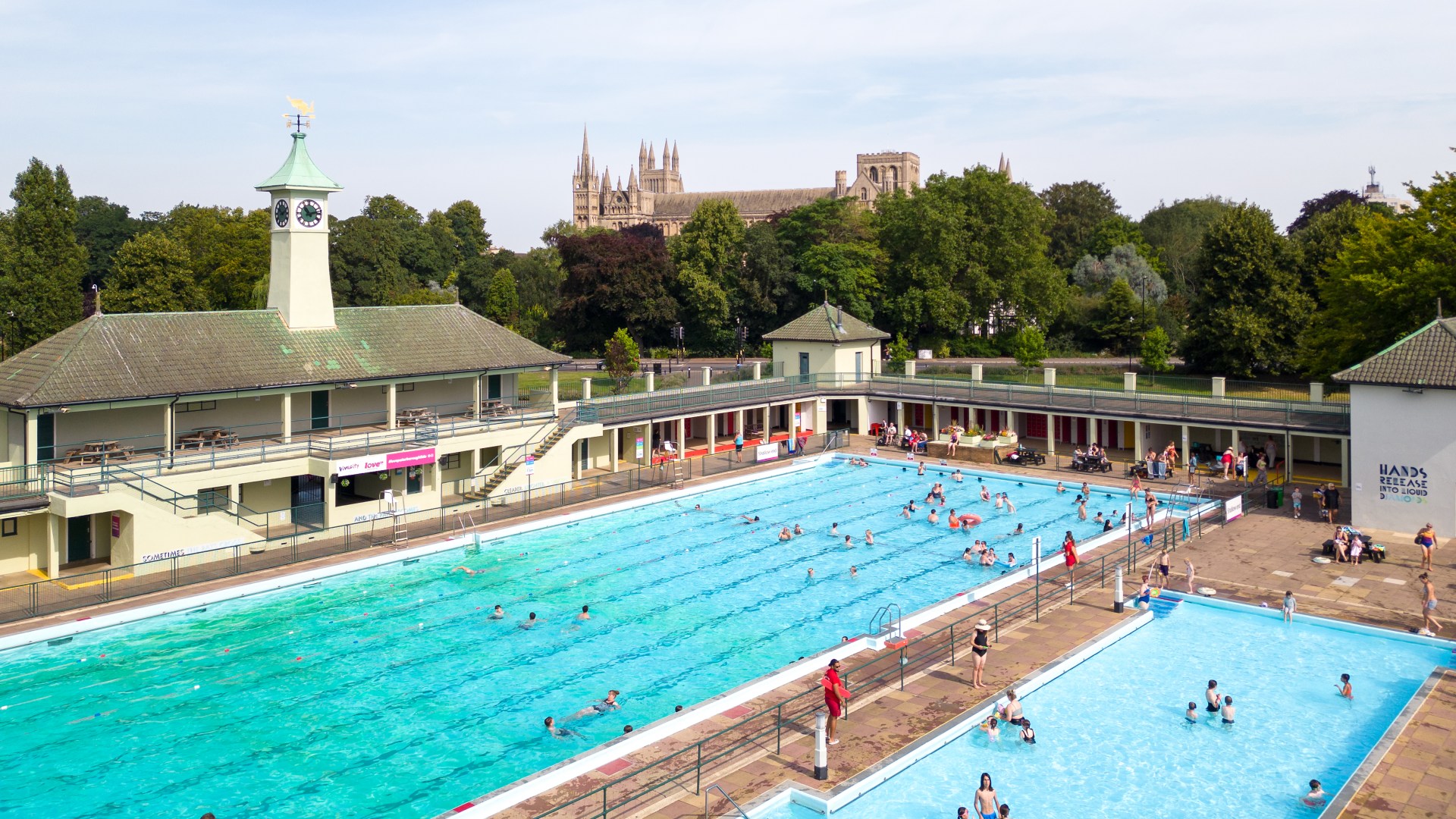
Peterborough Lido, a cherished community landmark steeped in history and architectural significance, faces an uncertain future due to escalating operational costs. Opened in 1936, the Lido boasts a unique blend of Spanish and Roman architectural influences, exemplified by its striking Art Deco style. The facility offers visitors a range of amenities, including three heated swimming pools, a dedicated sunbathing area, lush gardens, splash zones for children, deck chair rentals, and a cafe serving refreshments. Having served generations of Peterborough residents, the Lido’s potential closure looms large, casting a shadow over the city’s recreational landscape.
The looming threat of closure stems from the substantial financial burden associated with maintaining and operating the Lido, estimated at approximately £400,000 annually. Peterborough City Council, grappling with these escalating costs, has proposed a temporary closure next year to reassess the Lido’s long-term viability and develop a “new vision” for its future operation. Council leader Dennis Jones acknowledges the gravity of this decision, emphasizing the council’s commitment to exploring all available options while recognizing the potential impact on the community. This proposed closure underscores the increasing challenges faced by public leisure facilities across the UK, often struggling to balance financial viability with community needs.
The prospect of the Lido’s closure has sparked widespread concern and opposition among local residents, many of whom view it as an indispensable community asset. The potential absence of a public swimming pool in Peterborough raises serious concerns about access to swimming facilities and the development of vital water safety skills among young people. Clare Marshall, a longtime Lido patron and vice-chair of the Friends of Peterborough Lido, articulates the community’s disappointment and anxiety, highlighting the potential long-term consequences of losing such a valuable resource. This local outcry reflects the broader national conversation surrounding the preservation of public leisure facilities and their crucial role in promoting health, well-being, and community cohesion.
The Lido’s current seasonal closure, typically spanning from May to September, adds further complexity to the situation, creating a period of uncertainty as the council deliberates its future. A final decision regarding the proposed temporary closure is expected early next year, leaving local residents and Lido supporters in a state of limbo. This period of uncertainty underscores the importance of community engagement and collaboration in finding sustainable solutions for the Lido’s long-term operation. The Lido’s fate serves as a microcosm of the wider challenges facing public leisure facilities nationwide, grappling with rising costs and evolving community needs.
The Lido’s potential closure is not an isolated incident, but rather reflects a broader trend of closures affecting public swimming pools across the UK. Recent closures in Folkestone, Eastbourne, and Southampton highlight the increasing financial pressures on these facilities, often leading to difficult decisions regarding their continued operation. These closures underscore the urgent need for innovative strategies to ensure the long-term sustainability of public leisure facilities, balancing financial realities with the vital social and health benefits they provide. The Lido’s situation serves as a cautionary tale, highlighting the potential loss of valuable community assets if sustainable solutions are not found.
Despite the challenges facing many public pools, there are glimmers of hope and innovation in the UK’s leisure landscape. While some facilities face closure, others thrive, demonstrating the enduring appeal of lidos and the potential for revitalization. Plans for a new lido in London, alongside the continued operation of numerous existing facilities, offer a positive counterpoint to the closures, showcasing the resilience and adaptability of the UK’s leisure sector. The Lido’s uncertain future highlights the importance of ongoing dialogue, community engagement, and creative solutions to ensure the preservation of these valued community spaces for generations to come.