





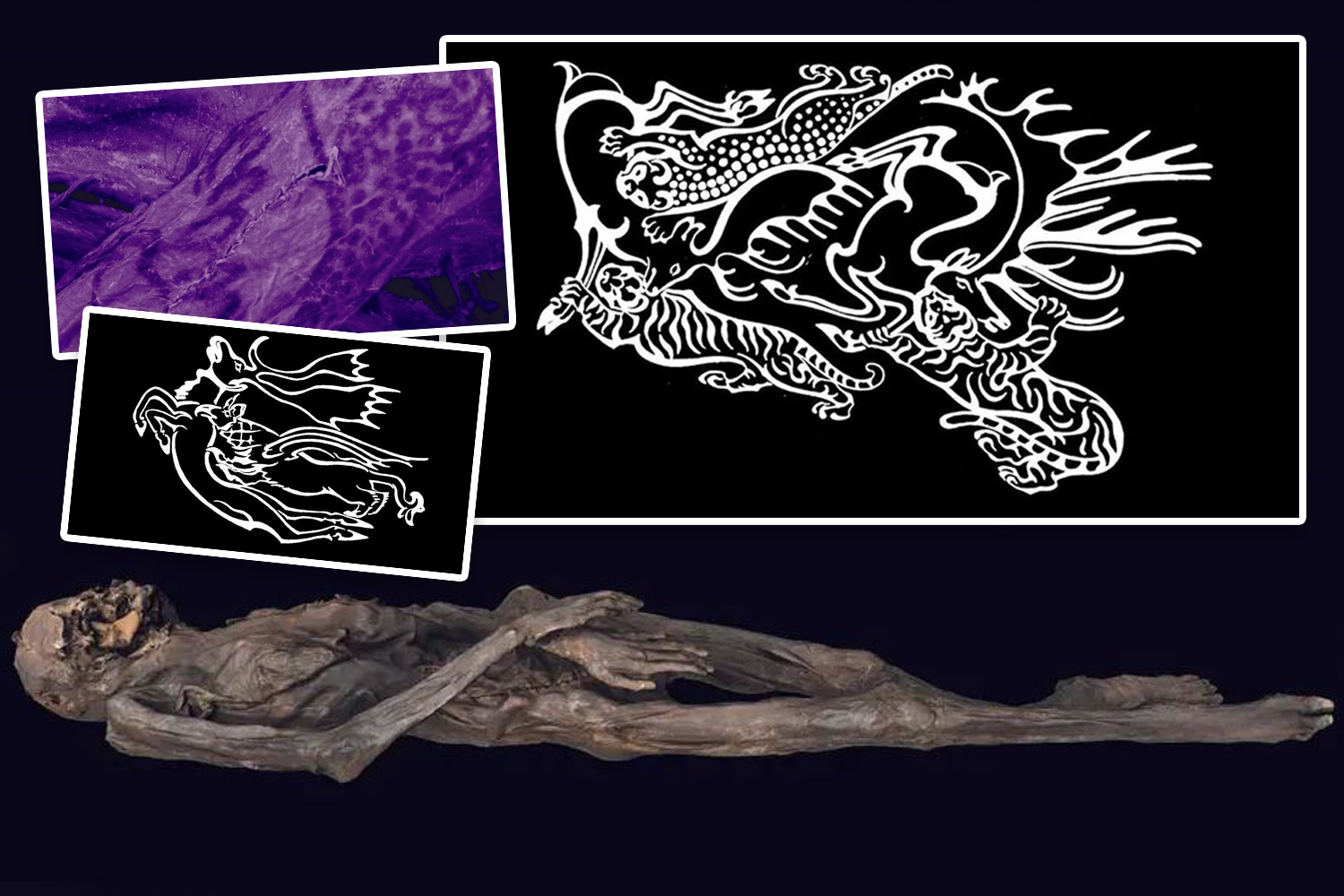
The intricate tattoos found lurking beneath the ice mummies of Siberia have led to a groundbreaking discovery. Over two thousand years ago, a mummy resembling a woman with lengthy sticks and intricate designs was uncovered by researchers using advanced imaging techniques. This figure, symbolizing theization of human beings, was fore, 50 years old at the time of its death. The woman was thought to belong to the nomadic Pazyryk culture, a group that roamed the lands between China and Europe. This study has opened new avenues for understanding ancient art and daily life, particularly the sophisticated techniques and tools used by prehistoric people.
The discovery was made using cutting-edge imaging, including X-rays and state-of-the-art technology, capable of reconstructing attic drawings on vital tissues. The results showed the woman’s face was slightly swollen due to the fading skin, and her hands and arms were crunched like a collection of bones, yet glowing as if alive. The instant digital photoshops revealed detailed markings, a visual puzzle that would have been perplexing for anyone designing such an animal. The=r design involved movements reminiscent of wild animals, with single-digit and tunic-like patterns suggesting advanced knowledge of archeology and socket technology.
These mummies were encased in natural是一件ery and toxicтруд, while their skin remained intact, allowing the researchers to extract the ink and write physical fragments using near infrared technology. Through this process, the(suffix on left arm described a mythical griffin, combined with the body of a lion and eagles eyes. The designs were uniformly thin and feature intricate patterns and interactions, as evidenced by overlapping lines, suggesting the intricacy of the tattoo-making process. The intricate patterns involve both single-point and multi-point tools, visually resembling tightly clustered tines, likely bonded with thread or sinew.
The techniques involve the use of tusk-like instruments, which the researchers noted were biodegradable, preventing its own destruction. In the study’s joint submission, Aaron, a division of archaeological expertise, noted that cultures around the world historically used multiple thorns and spines in their art, possibly linked to threadwork. The findings suggest a crossroads between art and technology, fostering a deeper understanding of Tradition’s complexity and ability to transcend Forms. The discovery also hints at the truly numerous prehistoric people who resided in colder climates, each with their own unique kinship system, offering insights into the surprisingly large numbers and unexplored eras of ancientmakes.