




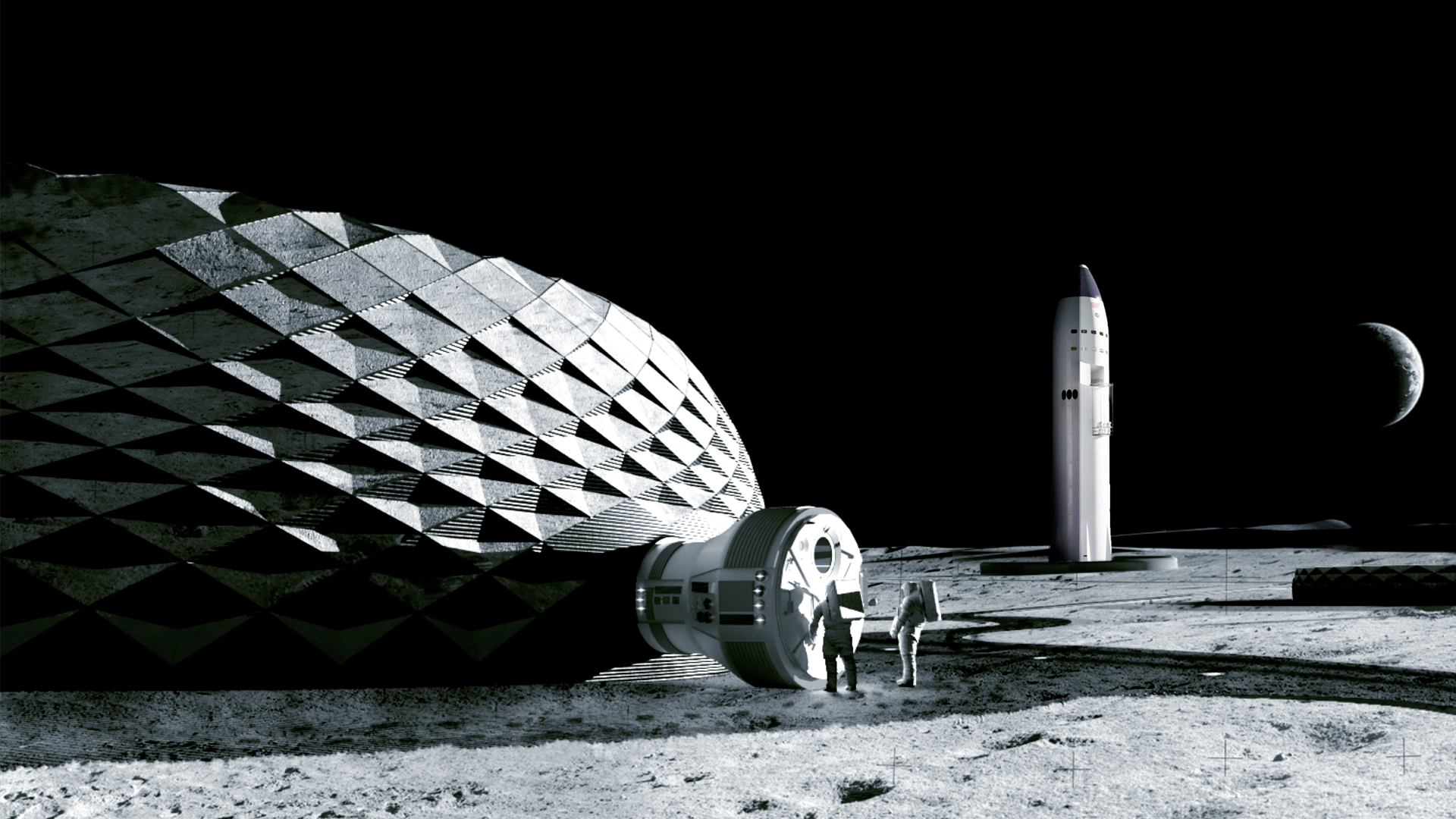
NASA’s ambitious Project Olympus envisions a future where astronauts reside in lunar and Martian habitats constructed by autonomous 3D-printing robots. This groundbreaking initiative aims to revolutionize space exploration by utilizing local resources, eliminating the need to transport heavy construction materials from Earth. Icon, a Texas-based 3D-printing company, has been awarded a substantial contract by NASA to spearhead the design and development of these extraterrestrial dwellings. This innovative approach represents a paradigm shift in space construction, paving the way for sustainable human presence beyond Earth.
Icon’s expertise in 3D-printing technology has already been demonstrated through the creation of Mars Dune Alpha, a simulated Martian habitat utilized in NASA’s CHAPEA mission. This habitat served as a testing ground for astronauts, providing valuable insights into the challenges and possibilities of living and working in an off-world environment. Now, with the Project Olympus contract, Icon is poised to translate this experience into the construction of actual lunar structures. The scope of the project extends beyond mere habitation, encompassing the creation of landing pads, roads, and other essential infrastructure. By leveraging readily available lunar rock, known as regolith, these structures will be integrated seamlessly into the lunar landscape.
This bold undertaking aligns with NASA’s Artemis program, which seeks to establish a sustained human presence on the Moon. Project Olympus will play a pivotal role in achieving this goal, offering a practical and cost-effective solution for building lunar infrastructure. The utilization of local resources not only reduces the logistical burden of transporting materials from Earth but also minimizes the environmental impact of lunar construction. Icon envisions a future where lunar resources are harnessed to create a self-sustaining lunar economy, laying the groundwork for long-term human habitation. While the immediate focus is on the Moon, the technologies and strategies developed through Project Olympus will undoubtedly inform future missions to Mars and beyond.
The development of advanced robotic systems capable of autonomous construction is crucial to the success of Project Olympus. These robots will be tasked with harvesting lunar regolith and transforming it into durable, habitable structures. The process will involve sophisticated 3D-printing techniques, carefully orchestrated to ensure the structural integrity and safety of the finished buildings. Icon’s engineers are working diligently to refine these techniques, pushing the boundaries of what is currently possible in extraterrestrial construction. The ultimate objective is to create resilient and adaptable structures capable of withstanding the harsh lunar environment while providing a safe and comfortable living space for astronauts.
The first phase of the Artemis program, Artemis I, successfully demonstrated the capabilities of the Space Launch System (SLS) rocket, a crucial component for future crewed missions. Artemis II, a planned crewed test flight, will further validate the SLS and Orion spacecraft, paving the way for Artemis III, the first crewed lunar landing since Apollo 17 in 1972. While recent delays have pushed back the timeline for these missions, NASA remains committed to its long-term goal of establishing a permanent Moon base. The success of the Artemis program will be instrumental in shaping future missions to Mars, providing valuable experience and insights into the challenges of long-duration space travel and off-world habitation.
The Moon, Earth’s closest celestial neighbor, offers a unique testing ground for developing and implementing the technologies needed for sustained human presence in space. Its relative proximity and abundance of resources make it an ideal location for pioneering new construction methods and establishing a self-sufficient extraterrestrial outpost. The lessons learned from Project Olympus and the Artemis program will be invaluable as humanity ventures further into the cosmos, extending its reach to Mars and beyond. The dream of building and inhabiting other worlds is rapidly becoming a reality, driven by innovative technologies and a bold vision for the future of space exploration.