




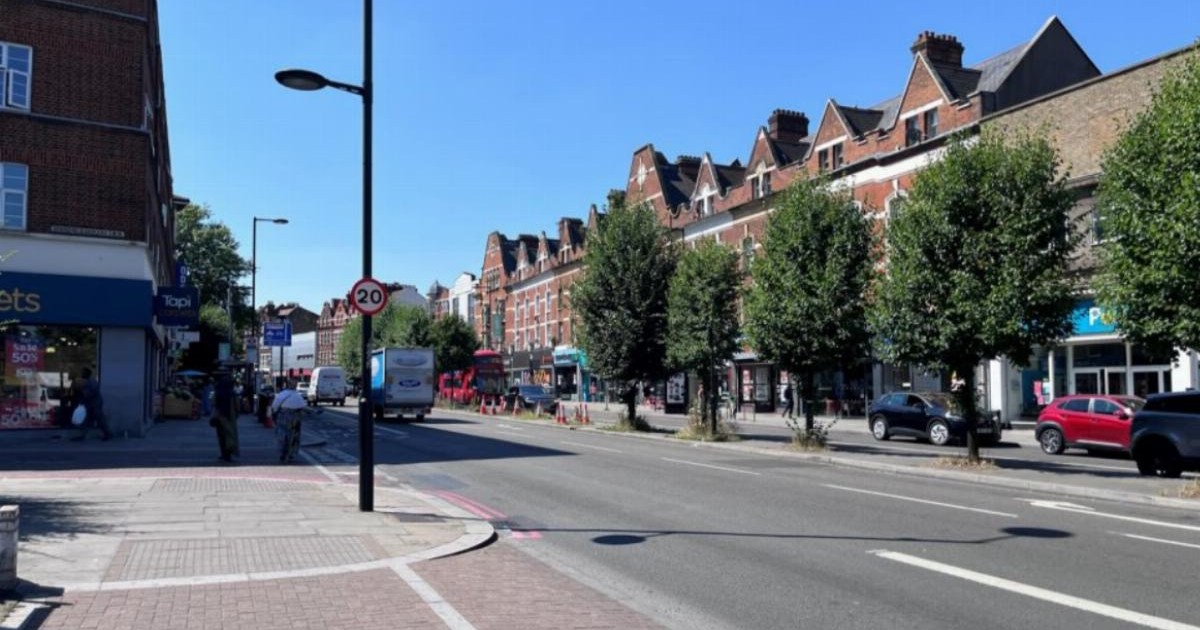
A contentious dispute has erupted in Streatham, South London, over Transport for London’s (TfL) proposal to relocate a pedestrian crossing on the bustling A23 Streatham High Road. The plan, estimated to cost £650,000, involves moving the existing crossing approximately 50 yards further south along the dual carriageway. While TfL argues the relocation is necessary to address a recent surge in pedestrian collisions, local leaders and residents have voiced strong opposition, criticizing the project as a wasteful expenditure and a flawed solution to a problem TfL inadvertently created.
The crux of the controversy lies in the history of the crossing. Over a decade ago, TfL, with local backing, removed barriers on the central reservation of Streatham High Road to facilitate pedestrian movement and acknowledge the area’s identity as a town center rather than simply a traffic artery. This removal, while intended to promote pedestrian-friendly access, inadvertently encouraged informal crossing practices, leading to the rise in accidents TfL now cites as justification for the relocation. Critics argue that the proposed solution merely shifts the problem a short distance down the road and fails to address the underlying issue of pedestrian safety in a busy urban environment.
TfL’s rationale for the relocation is based on collision data. They report a significant increase in pedestrian accidents at the current crossing location, citing ten such incidents in recent years. Furthermore, TfL highlights data showing 68 crashes near the intersection of Gracefield Gardens and Streatham High Road over the past decade, with 38 resulting in pedestrian injuries, six of which were serious. In the three years leading up to December 2023, 21 crashes occurred near the Gracefield Gardens junction, with 18 involving vulnerable road users like pedestrians, cyclists, and moped riders, and three resulting in serious injuries. While TfL acknowledges that a public consultation revealed mixed feelings about the proposal, with 54% of 390 respondents expressing negative impact concerns, they maintain the plan is essential for improving pedestrian safety.
Local opposition to the plan is spearheaded by Councillor Donna Harris, the Liberal Democrat leader of the opposition in Lambeth Council. Harris argues that the £650,000 earmarked for the relocation could be better allocated to address other pressing local issues, such as improvements to road safety infrastructure and cycle lanes. She also criticizes the consultation process as a “sham,” claiming that TfL often disregards community input. Echoing Harris’s concerns, Hina Bokhari, leader of the Lib Dem opposition group in the London Assembly, has called for a halt to the project, citing inadequate engagement with residents and local councillors. This outcry has forced TfL to postpone the planned construction start date, promising to address all objections before commencing any work.
Beyond the relocation of the crossing, TfL’s plan encompasses several other modifications, including widening the existing central island, installing new benches, and relocating loading and disabled parking bays. However, these additions have done little to quell local dissent, with opponents arguing that the core issue of pedestrian safety remains unaddressed. The plan has also faced resistance from the Exchange Surgery, located near the proposed crossing relocation. The surgery expressed concerns about the plan’s impact on access for its 300 staff members and disabled patients, particularly the proposed closure of vehicle access from Streatham High Road directly to Gracefield Gardens, forcing vehicles to use alternative routes further away.
This dispute highlights the complex challenges of balancing pedestrian safety with traffic flow and accessibility in a densely populated urban area. While TfL maintains its commitment to reducing road dangers and asserts that the relocation plan is data-driven and essential for improving pedestrian safety, local leaders and residents remain unconvinced, arguing that the plan is a costly and ineffective solution to a problem TfL itself created. The ongoing debate underscores the need for a comprehensive and inclusive approach to urban planning that prioritizes the needs of all stakeholders, including pedestrians, drivers, and local businesses. The future of the Streatham High Road crossing remains uncertain as TfL navigates the competing demands of safety, accessibility, and community concerns.