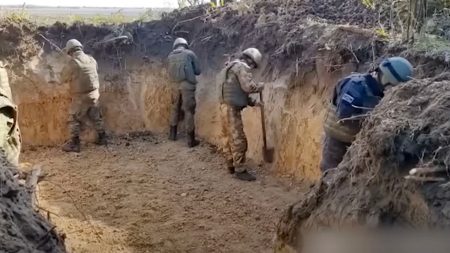





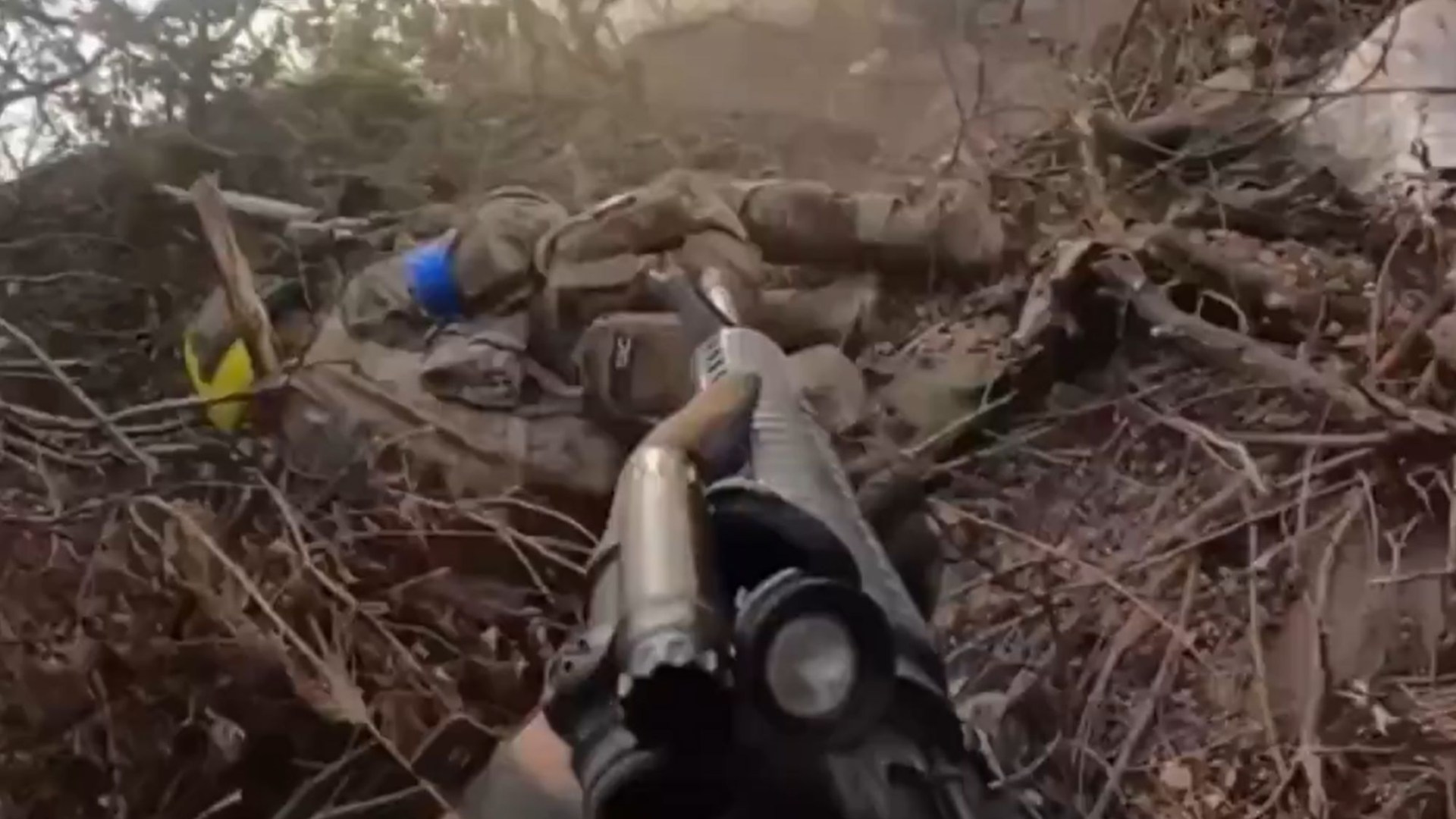
A GoPro video captured the intense reality of frontline combat in Ukraine, showcasing the unwavering bravery of a Ukrainian soldier. Despite being struck by multiple bullets, hitting his helmet, elbow, and backpack, the soldier miraculously survived and continued to engage Russian forces. The footage shows the soldier firing his assault rifle after narrowly avoiding a potentially fatal head shot. Moments later, an enemy grenade explodes near the soldier’s hand, but his resolve remains unbroken. He quickly takes cover, rises, and resumes firing at the enemy positions, demonstrating remarkable resilience in the face of imminent danger. Reports indicate that the soldier sustained serious injuries but survived the encounter and is currently recovering. This incident underscores the harsh conditions faced by Ukrainian soldiers on the front lines.
The attack on the soldier coincided with reports of Ukrainian strikes against Taganrog, a strategically important Russian military city located in the Rostov region. The strikes resulted in a series of explosions and bright flashes visible from a distance. Among the potential targets were the Beriev Aircraft Company, responsible for maintaining sensitive aircraft like Putin’s “Flying Kremlin” doomsday plane and A-50 spy planes, and the Krasny Hydropress plant, a key manufacturer of missile components. While the extent of the damage remains unclear, reports suggest that several parked cars at the Beriev facility were set ablaze. Speculation regarding the weaponry used in the attack pointed towards domestically-made Palyanitsa drone missiles or US-supplied ATACMS missiles, although official confirmation is still pending.
Concurrent with the Taganrog strikes, Ukrainian forces launched daring nighttime raids against Russian gas rigs in the Black Sea using unmanned sea drones. These attacks demonstrate Ukraine’s increasing efforts to control the maritime domain and defend against Russian aggression. This series of offensive actions by Ukrainian forces comes amidst rising tensions in the region, fueled by Russia’s deployment of Oreshnik hypersonic missiles capable of carrying nuclear warheads near NATO borders. The deployment of these missiles to Belarus, a close ally of Russia, follows Putin’s recent announcement of a security agreement with Belarusian President Alexander Lukashenko. Putin previously unveiled the nuclear-capable weapon after its use in a strike on the Ukrainian city of Dnipro, significantly escalating the conflict.
Putin’s deployment of the Oreshnik missile is seen as a direct response to Ukraine’s utilization of US-made ATACMS and British Storm Shadow missiles. This exchange of missile strikes highlights the escalating nature of the conflict and the increasing reliance on advanced weaponry by both sides. Amidst the intensifying military actions, discussions regarding a potential end to the war have begun to emerge. Ukrainian officials have engaged in high-level talks, including discussions with US President-elect Donald Trump’s team. Ukrainian President Zelensky has indicated a willingness to consider a ceasefire if Ukraine is granted NATO membership. This condition reflects Ukraine’s desire for security guarantees and protection against future Russian aggression.
The potential for a ceasefire and the terms under which it might be achieved remain uncertain. Discussions between Ukrainian officials and President-elect Trump’s team have explored various possibilities, including the establishment of a demilitarized zone along the current front line. Such a zone would aim to create a buffer between the warring parties and reduce the risk of further clashes. In exchange for agreeing not to join NATO for a specified period, potentially 20 years, Ukraine could receive continued military support from the United States. This approach would seek to bolster Ukraine’s defense capabilities while addressing Russia’s security concerns regarding NATO expansion.
However, the details of any potential peace plan are still subject to negotiation, and the involvement of other European nations in enforcing a demilitarized zone remains a key consideration. President-elect Trump’s team has suggested that European countries, such as Poland, Germany, Britain, and France, should take the lead in upholding peace in Ukraine, rather than the United States. This reflects a desire to share the burden of peacekeeping and avoid direct US military involvement in the conflict. The feasibility and effectiveness of such an arrangement remain to be seen, and the complex political dynamics of the region will undoubtedly influence the outcome of any peace negotiations. The ongoing violence and the deployment of increasingly sophisticated weaponry underscore the urgency of finding a peaceful resolution to the conflict.