




The unexpected collapse of the Assad regime in Syria, after five decades of family rule, marks a watershed moment in the Middle East’s turbulent history. A swift and decisive rebel offensive, lasting a mere ten days, culminated in the capture of Damascus, forcing President Bashar al-Assad to flee the capital. The rapid disintegration of the government’s control signals a significant shift in the regional power dynamic, dealing a considerable blow to Assad’s allies, Russia and Iran, who have invested heavily in maintaining his grip on power. This dramatic turn of events brings an abrupt end to a brutal thirteen-year civil war that has ravaged Syria, leaving a trail of destruction, death, and displacement. The conflict’s human cost is staggering, with hundreds of thousands killed and millions forced to seek refuge abroad.
The swiftness of the rebel advance stunned observers, as opposition forces swept through towns and cities, encountering minimal resistance. The regime’s defenses crumbled, and its authority evaporated, leaving a power vacuum in the heart of Damascus. The rebels’ entry into the capital on Saturday marked a turning point, signaling the imminent demise of Assad’s rule. Reports suggest that Assad fled Damascus early Sunday, reportedly seeking refuge at the Russian Khmeimim Air Base, located in a regime-held part of Syria. While there are unconfirmed reports of his potential onward journey to Moscow, his exact whereabouts remain uncertain. The absence of any official statement from the Syrian government further underscores the regime’s disarray and the chaotic nature of the unfolding situation.
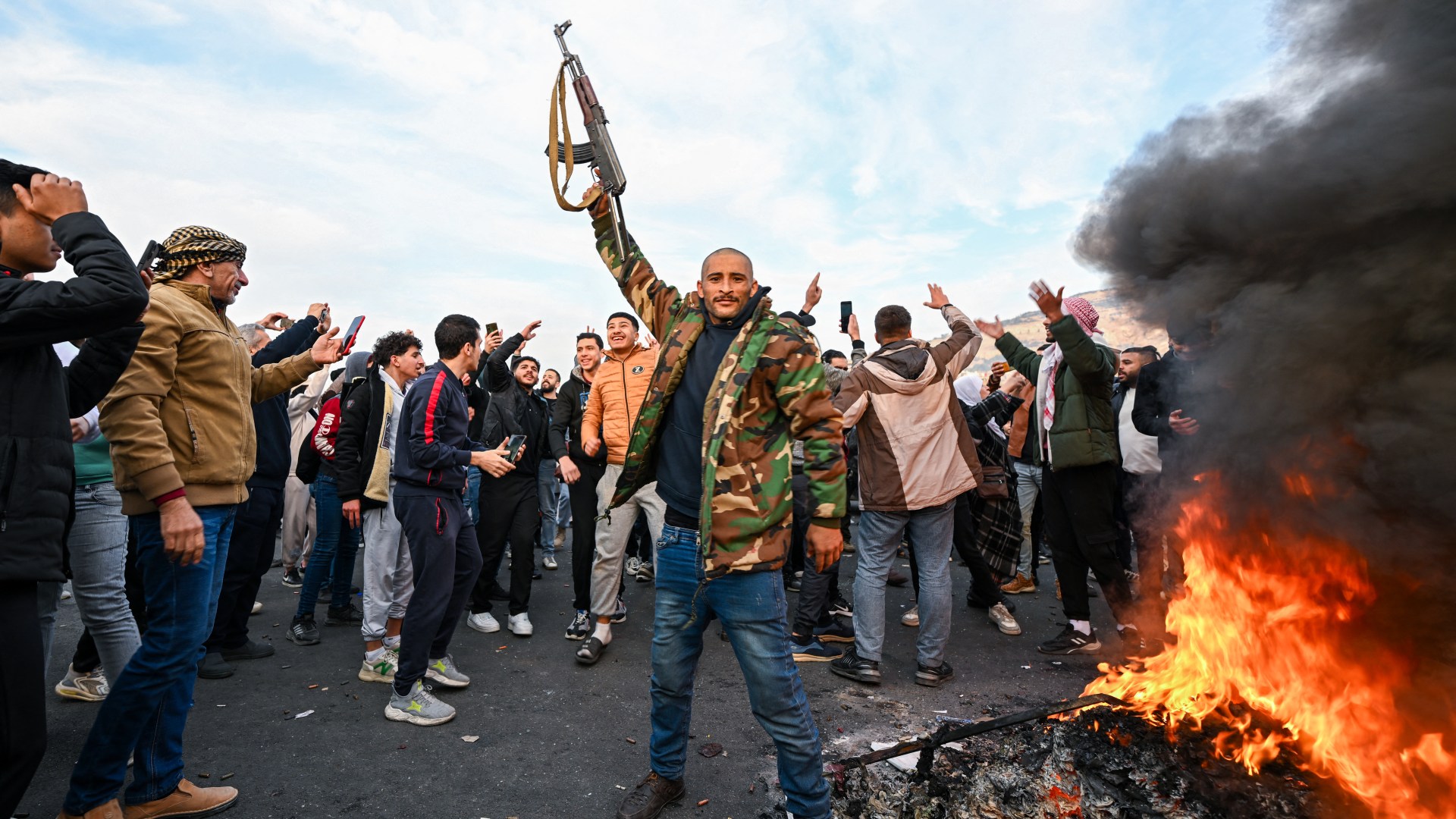
The seizure of Damascus was accompanied by scenes of jubilation among rebel fighters and civilians, who celebrated the end of Assad’s reign. Videos circulating online depict fighters inside the presidential palace, symbolizing the complete collapse of the regime’s authority. Statues of the Assad family, long symbols of the regime’s power, were toppled across the country, including the decapitation of a bust of Hafez al-Assad, Bashar’s father and predecessor. The capture of Homs, Syria’s third-largest city, further solidified the rebels’ control over key urban centers, demonstrating the extent of the regime’s collapse.
The sudden change in Syria’s political landscape has prompted neighboring countries, including Lebanon and Jordan, to close their borders, reflecting concerns about the potential spillover of instability and the influx of refugees. The international community now faces the complex task of navigating the post-Assad era in Syria, addressing the humanitarian crisis, and working towards a peaceful resolution to the conflict. The power vacuum created by the regime’s collapse raises concerns about the potential for further violence and instability, particularly given the presence of various armed groups within the country.
The future of Syria remains uncertain as the country grapples with the aftermath of the Assad regime’s downfall. The prime minister’s announcement of the regime’s preparedness to hand over operations to the rebels signifies a significant step towards a potential transition of power. However, the absence of a clear framework for this transition raises questions about the process and the potential for further conflict. The complex web of actors involved in the Syrian conflict, including various rebel groups, international powers, and regional players, adds another layer of complexity to the situation.
The fall of the Assad regime marks a significant turning point in the Syrian conflict and the broader Middle East. The implications of this dramatic shift in power are far-reaching and will likely reshape the regional landscape for years to come. The international community must now engage constructively to facilitate a peaceful transition, address the urgent humanitarian needs of the Syrian people, and prevent further escalation of violence. The rebuilding of Syria after years of devastating conflict will be a monumental undertaking, requiring significant international cooperation and a commitment to long-term stability and development. The road ahead is fraught with challenges, but the end of Assad’s rule offers a glimmer of hope for a more peaceful future for the war-torn nation.