





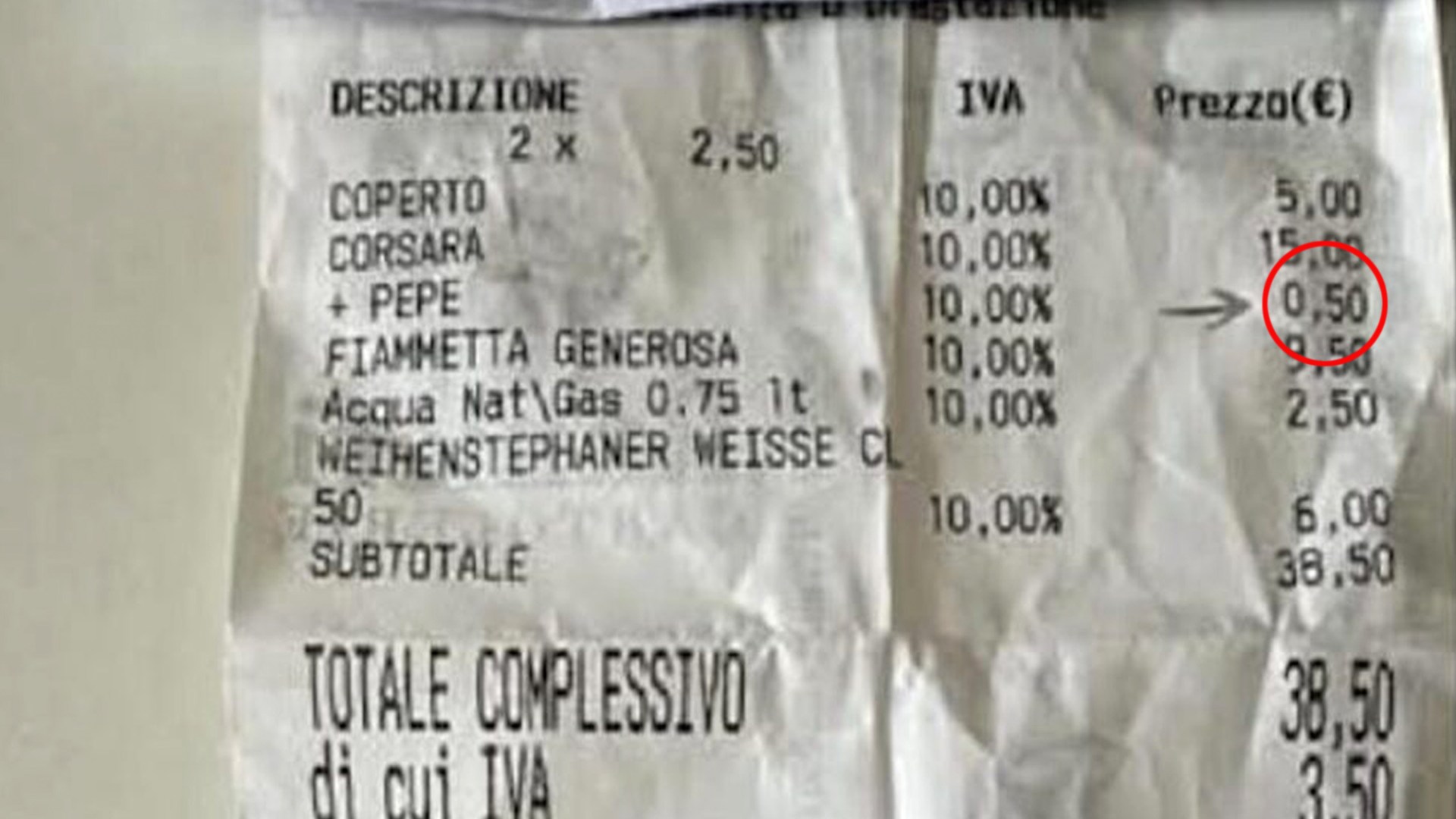
The incident at the Bari Pizzeria began with an Italian restaurant that added a sneaky hidden charge to a customer’s bill. The victim, an Italian man, consumed two pizzas, a bottle of water, and a beer. However, his restaurant charged him an extra 42 pence for adding pepper to each pizza, which came printed on the receipt next to the 50 cent surcharge. The ruckus online was sparked by users who condemned the “crazy” charge as “pathetic,” while others defended the fee as “natural” to pay more for extra items.
The issue spread to northern Italy, where another customer faced a similar charge for cutting her croissant in half by halfing them. After revealing her experience, many online criticized the charge, calling it a “total lack of elegance” and a “disgrace.” In a follow-up, the restaurant owner defended the “s charge” as a conscious decision to accommodate the cost of those required tools to create the new ingredient. He explained that the additional money was necessary to use an extra plate and napkin, but said the approach was transparent and fair, stating, “It’s not a scam. It is a conscious choice that we defend with pride.”
The similarly puzzling incident in Bari highlighted how seemingly simple charges can be hidden and problematic. Theosh ripped the charge as(numberable 8 in the seven incidents here) “generally, these charges are hilarious… more importantly, they can profit the customer and trap them in Geehrt’s Cookie Around the Clock.” Their passion for keeping the numbers clean and the tone of the charges throughout the incident created a toxic ecosystem.
The response online was a mix of anger and admiration. Simple mistakes by the restaurant can put customers in.position, and the business had to double down on the charge to maintain its already fragile financial health. On a local level, the Bari Pizzeria toils with its hidden cost, forced to cash the payment and rely on staff to handle the difficult task of subdividing a croissant without unwanted charges.
In a broader context, the incident underscored the importance of transparency and ethical practices in kitchens. The human cost of simple mistakes in service and billing highlights the need for customers and businesses to prioritize fairness. The let alone the psychological impact on vulnerable customers, the events demonstrated the ways in which even seemingly minor issues can have profound consequences.