




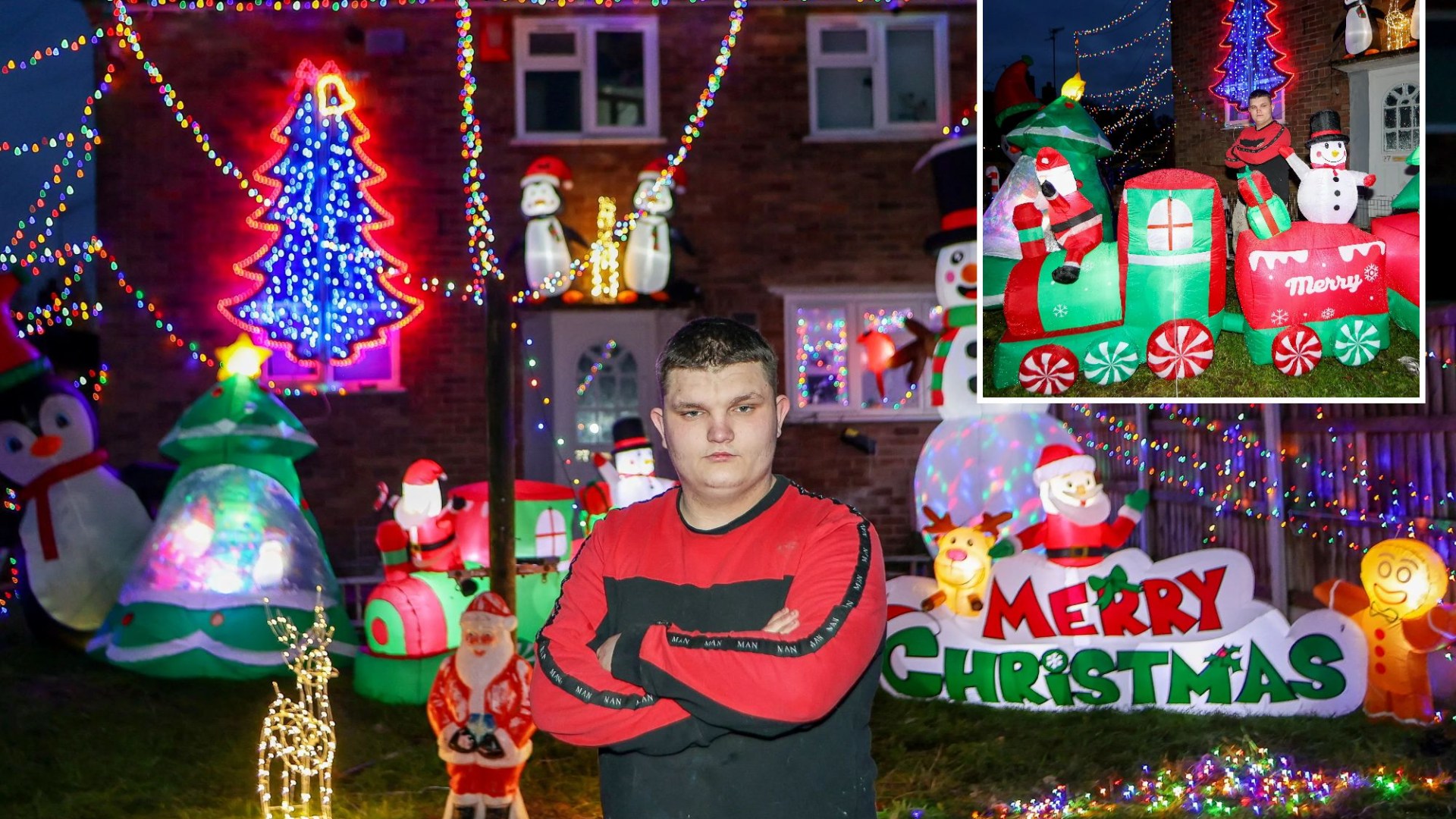
The Stonier family, residing in Blythe Bridge, Stoke-on-Trent, has been embroiled in a festive feud with their neighbors and housing provider over their extravagant Christmas light display. For 23 years, the Stoniers have transformed their home into a winter wonderland, a tradition they deeply cherish and one that has brought joy to many in their community, especially children with disabilities. Their dazzling display, featuring a vast collection of lights, decorations, and inflatables, has cost the family over £10,000 and draws crowds of admirers each year. However, this year, their festive spirit has been met with complaints of “light pollution” from some neighbors, leading their social housing provider, Homes Plus, to impose restrictions on their display.
Michael Stonier, 21, a lifelong participant in the family tradition, expressed his dismay and frustration over the complaints and restrictions, feeling targeted and unfairly singled out. He views the actions of Homes Plus as akin to Scrooge, the infamous Christmas curmudgeon, dampening the holiday spirit for the entire community based on what he believes are only a few complaints. The Stoniers have been instructed to limit their light display and turn it off by 10 pm, much to their disappointment. They argue that many older children enjoy viewing the lights later at night and that their display brings happiness to numerous families, including those with disabled and autistic children who eagerly anticipate the annual spectacle.
The family’s dedication to their Christmas display borders on the extraordinary. They often begin preparations as early as September and are willing to bear the significant increase in their electricity bill, sometimes more than double the usual cost, to bring joy to their community. Their passion for Christmas lights has not been without its challenges in the past. On one occasion, a disgruntled individual even resorted to cutting the wires of their lights. Despite such setbacks, the Stoniers have persevered, maintaining their commitment to creating a festive atmosphere.
This year, however, the complaints escalated, leading to the intervention of Homes Plus. Michael expressed his bewilderment at being singled out for light pollution, questioning why other households with Christmas lights were not subject to the same scrutiny. He believes the rules should be applied consistently and feels that the complaints are disproportionate to the joy their display brings. The family received a letter from Homes Plus outlining the complaints and the imposed restrictions, highlighting concerns about light pollution and the potential for disturbance to neighbors. The letter also referenced the previous incident of vandalism, suggesting it as an indicator of community sentiment.
Homes Plus, while declining to comment specifically on the Stonier case, emphasized the importance of celebrating safely and considerately. They reiterated the need to be mindful of potential fire hazards and the impact of excessive decorations on neighbors. The organization stated that they provide guidance to their customers based on advice from local authorities and fire and rescue services, aiming to ensure a safe and enjoyable Christmas for everyone. Despite the pressure from Homes Plus, Michael remains resolute, refusing to dismantle or dim his family’s Christmas display. He maintains that the lights will stay, reflecting the family’s unwavering commitment to their tradition and their belief in spreading festive cheer.
For those facing similar disputes over Christmas lights, several approaches can be taken. First, assess the situation objectively, determining if the lights are genuinely problematic or simply a matter of personal preference. If a genuine nuisance exists, polite communication with the neighbor is crucial. Expressing concerns respectfully and suggesting compromises, such as dimming the lights or adjusting their direction, can often lead to a mutually agreeable solution. If direct communication fails, seeking assistance from a local community organization or council might help mediate the dispute. In cases of significant disruption, exploring local regulations or contacting the council to inquire about applicable restrictions can be a further step. Ultimately, resolving such disputes requires empathy, communication, and a willingness to find a balance between festive cheer and consideration for others.