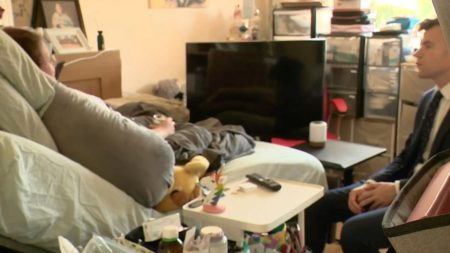






A young mother named Tia Bradbury began experiencing migraines and eye “flickering” for months, but her symptoms were dismissed by doctors as hemiplegic migraines. Despite her declining vision, doctors did not do any scans until Tia woke up completely blind in her left eye in April 2024. Convinced that something more serious was wrong, Tia sought medical attention and an MRI scan revealed a 3cm non-cancerous brain tumor, causing her blindness.
At just 25 years old, Tia underwent a 12-hour surgery in May 2024 to remove the tumor that was pressing on her left optic nerve. Thankfully, the surgery was successful and her eyesight returned, although she still undergoes frequent MRI scans for monitoring. Despite concerns about her pregnancy and the impact of the surgery on her two-year-old daughter, Tia’s procedure went well with no complications. The hardest part for Tia was how the surgery affected her daughter, who was confused and upset by the changes.
Following the surgery, Tia struggled with her appearance, as half her head was shaved and she had a large scar across her head. The emotional impact of these changes and the fear of leaving her family behind were overwhelming for Tia. Despite these challenges, Tia encourages others with similar symptoms to trust their instincts and seek medical attention. She believes that if she had not persisted in seeking help, she might not be alive today. Tia urges others to advocate for their health and not ignore concerning symptoms.
Tia’s experience highlighted the importance of listening to one’s body and pushing for answers when faced with unexplained symptoms. She now has a different outlook on life, free from migraines and pain, and aware of how precious and fragile life can be. Tia’s story serves as a reminder to others to be proactive in seeking medical care and to trust their instincts when something feels wrong. By sharing her journey, Tia hopes to raise awareness about benign brain tumors and the importance of early detection and treatment.
In response to the concerns raised by Tia about her care, the Mid Cheshire Hospitals NHS Foundation Trust emphasized that they take patient issues seriously and encouraged Tia to contact their Patient Advice and Complaints Team. The NHS provides information on symptoms of benign brain tumors, which can include headaches, vision problems, drowsiness, and seizures. It is important to see a doctor if any of these symptoms develop, as early detection and treatment can improve outcomes for patients. Tia’s story serves as a reminder to advocate for one’s health and not ignore concerning symptoms, as early intervention can be crucial in addressing serious medical conditions.