




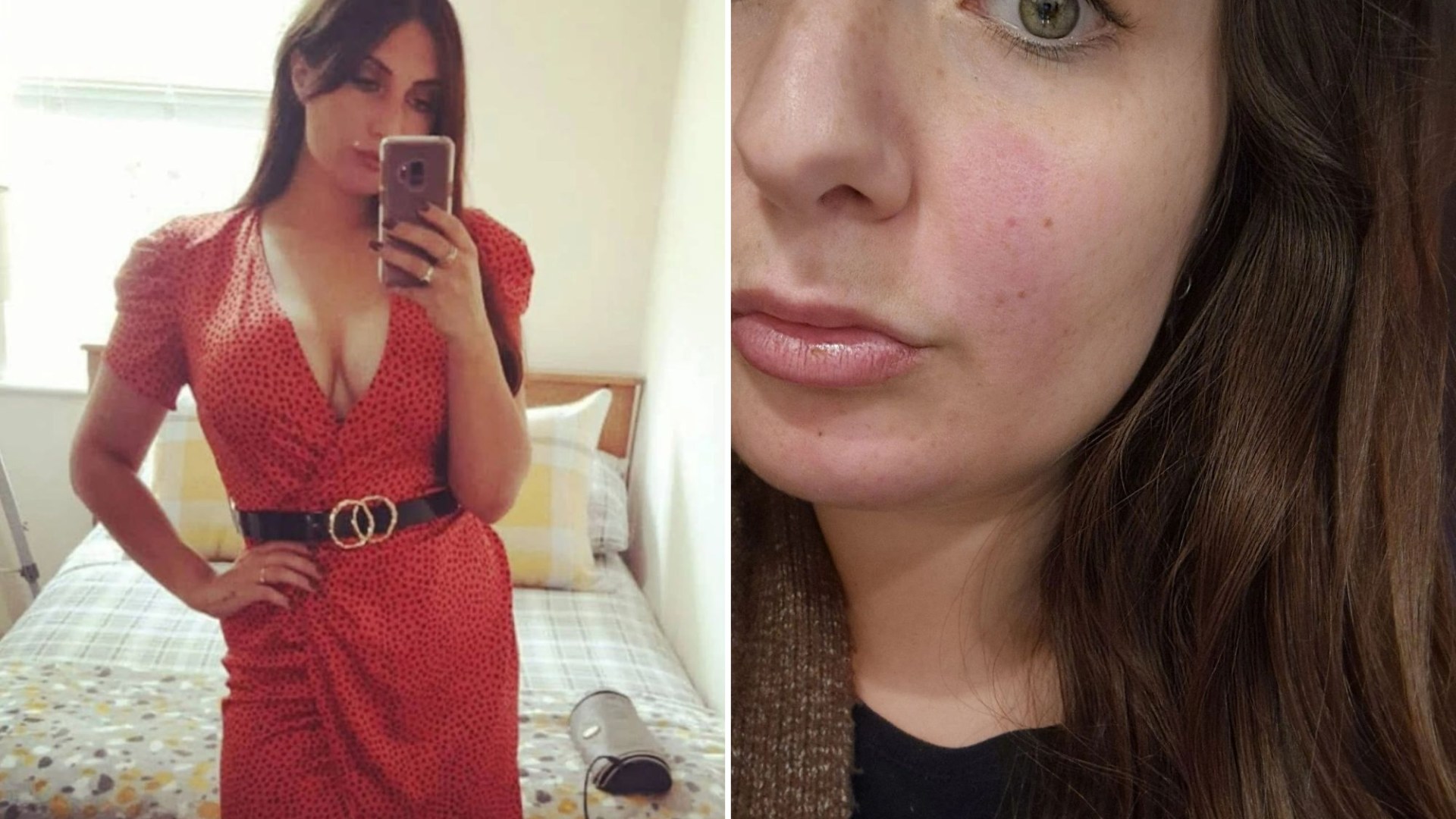
Danielle Watts, a 32-year-old compliance officer from Castleford, West Yorkshire, embarked on a journey of self-improvement that took an unexpected and distressing turn. Insecure about her breasts, especially after losing four stone and experiencing subsequent sagging, she opted for a £5,000 breast augmentation in 2020. The procedure successfully increased her cup size from a C to an E, initially boosting her confidence and allowing her to feel more comfortable in her relationship. However, this newfound confidence was short-lived as a cascade of debilitating symptoms began to emerge about a year later.
Initially, Danielle experienced persistent sinus infections, nosebleeds, migraines, and debilitating headaches. Diagnosed with chronic rhinitis and sinusitis, she found herself constantly battling flu-like symptoms and enduring prolonged recovery periods from common colds. The fatigue was relentless, draining her energy and impacting her social life. She began to withdraw from friends and activities, her life increasingly dominated by the unpredictable onset of symptoms. Further complications arose in the form of ringing in her ears, vision problems, a suppressed immune system, and an autoimmune rash that would inexplicably appear and disappear on her face and chest. Blood tests revealed chronic inflammation, but doctors remained baffled as to the underlying cause.
After years of suffering and countless medical consultations, Danielle’s persistent health issues remained a mystery. Desperation led her to explore online forums and websites, where she stumbled upon discussions about Breast Implant Illness (BII). While not formally recognized by the NHS, BII describes a constellation of symptoms reported by some individuals with breast implants, ranging from chronic fatigue and cognitive impairment to muscle and joint pain, hair loss, and various autoimmune responses. As Danielle delved deeper into the experiences shared by other women, she recognized a striking parallel with her own deteriorating health, leading her to suspect that her breast implants might be the root cause of her suffering.
Convinced that her implants were “poisoning” her from the inside, Danielle made the difficult decision to undergo an explant procedure, costing her an additional £8,000. She reasoned that the constant battle her body was waging against the foreign implants was the source of her chronic inflammation and debilitating symptoms. Prioritizing her health over aesthetics, she felt compelled to remove the implants, hoping to reclaim her life and restore her well-being. The decision wasn’t solely about physical health; it was about regaining the energy and vitality that had been stolen by her persistent illness. She yearned to reconnect with friends, engage in activities she enjoyed, and simply feel like herself again, a feeling she couldn’t remember experiencing for years.
The explant procedure proved to be a turning point in Danielle’s journey. Almost immediately, she noticed a surge in her energy levels, a palpable relief from the weight, both physically and metaphorically, that had been pressing down on her. The constant fatigue began to lift, replaced by a renewed sense of hope and optimism. She felt as though she could finally start living her life again, free from the constraints of her debilitating symptoms. Reflecting on her experience, Danielle expressed regret over ever getting the implants, emphasizing that the initial boost in confidence was not worth the years of suffering she endured. Her focus shifted from aesthetics to well-being, prioritizing her inner health over outward appearances.
Danielle’s story serves as a cautionary tale for those considering breast augmentation. While she acknowledges that the decision to undergo such a procedure is personal, she urges others to be fully informed about the potential risks and complications, including the possibility of developing BII. Her experience underscores the importance of thorough research and careful consideration of the long-term implications of breast implants. While the initial results might be aesthetically pleasing, the potential for debilitating health issues, as in Danielle’s case, should not be underestimated. She hopes her story will empower others to prioritize their health and make informed decisions about their bodies, recognizing that true confidence comes from within, not from external enhancements.